Planning your first motorhome adventure can feel overwhelming, but with the right guidance, you'll soon discover the freedom and flexibility that makes this type of travel so special. Whether you're exploring the Yorkshire Dales, heading to the Scottish Highlands, or discovering hidden coastal gems, these motorhome tips will help you navigate your journey with confidence. From practical driving advice to essential campsite etiquette, we've gathered the knowledge you need to make your motorhome experience both comfortable and memorable.
Getting familiar with your motorhome before departure is crucial for a stress-free holiday. Many first-time renters feel anxious about handling a larger vehicle, but spending time understanding your motorhome's dimensions and features makes a world of difference.
Start with a thorough walkthrough. When collecting your motorhome, take advantage of the full demonstration offered by your hire company. Don't rush this process, even if you're eager to start your adventure. Ask questions about every switch, tap, and storage compartment.
Key areas to focus on during your walkthrough include:
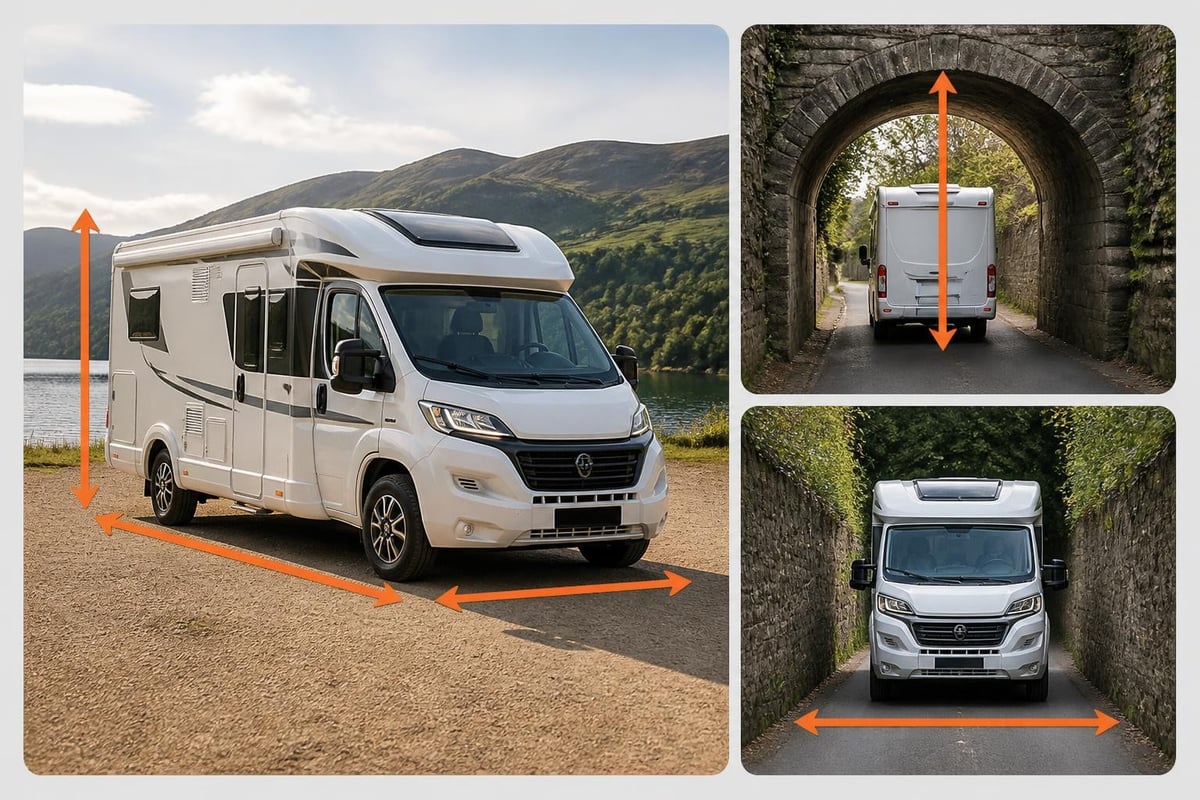
Knowing your motorhome's exact height, width, and length prevents costly mistakes. Write these measurements down and keep them visible in the cab. Most modern motorhomes have height warnings displayed near the driver's seat, but it's worth creating your own reference card.
Bridge strikes remain one of the most common motorhome accidents in the UK. Always add 15cm to your motorhome's stated height to account for roof fixtures, aerials, and satellite dishes you might have raised. This safety margin has saved countless travellers from expensive repairs.
| Dimension | Why It Matters | Common UK Challenge |
|---|---|---|
| Height | Bridge clearances, car park barriers | Many UK villages have low railway bridges (3.0-3.5m) |
| Width | Narrow country lanes, passing places | Traditional stone walls and hedgerows leave minimal clearance |
| Length | Turning circles, parking spaces | Medieval town centres with tight corners and limited parking |
Driving a motorhome requires different techniques than your family car, but these motorhome tips will help you adapt quickly. The key is patience, planning, and understanding how your vehicle handles in various situations.
Acceleration and braking distances increase significantly in a motorhome. Start braking earlier than usual, particularly when approaching roundabouts or traffic lights. The additional weight means you need more space to stop safely, especially on wet roads or downhill stretches.
Cornering demands special attention. Your motorhome's higher centre of gravity means taking corners more slowly than you would in a car. Reduce speed before entering bends, not during them. This approach prevents uncomfortable swaying and keeps your passengers comfortable.
For comprehensive guidance on driving a motorhome safely, including specific techniques for different road conditions, experienced motorhomers recommend practising in quiet areas before tackling busy routes. The practical advice from experienced motorhome users emphasizes building confidence gradually through practice and planning.
British roads present unique challenges for motorhome drivers. Narrow country lanes, historic town centres, and winding coastal roads require careful navigation and sometimes creative problem-solving.
Plan your routes carefully. Standard sat-navs don't account for vehicle height, width, or weight restrictions. Consider investing in motorhome-specific navigation apps or devices that filter routes according to your vehicle's dimensions. These tools prevent those heart-stopping moments when your sat-nav directs you down a lane barely wider than your wing mirrors.
Essential driving techniques include:
Rural Yorkshire offers stunning scenery but also presents challenging narrow lanes. When meeting oncoming traffic on single-track roads, assess which vehicle has the easiest reversing option. Often, the motorhome driver should reverse to a passing place if their view backwards is clearer.
Arriving at your destination should be a relaxing experience, not a stressful scramble. Following a systematic approach to setting up your motorhome at a campground ensures you're comfortable quickly and helps avoid common mistakes.
Levelling your motorhome is the foundation of a comfortable stay. An unlevel motorhome causes doors to swing open, affects fridge efficiency, and makes sleeping uncomfortable. Most campsites in the UK provide reasonably level pitches, but carrying levelling ramps gives you flexibility.
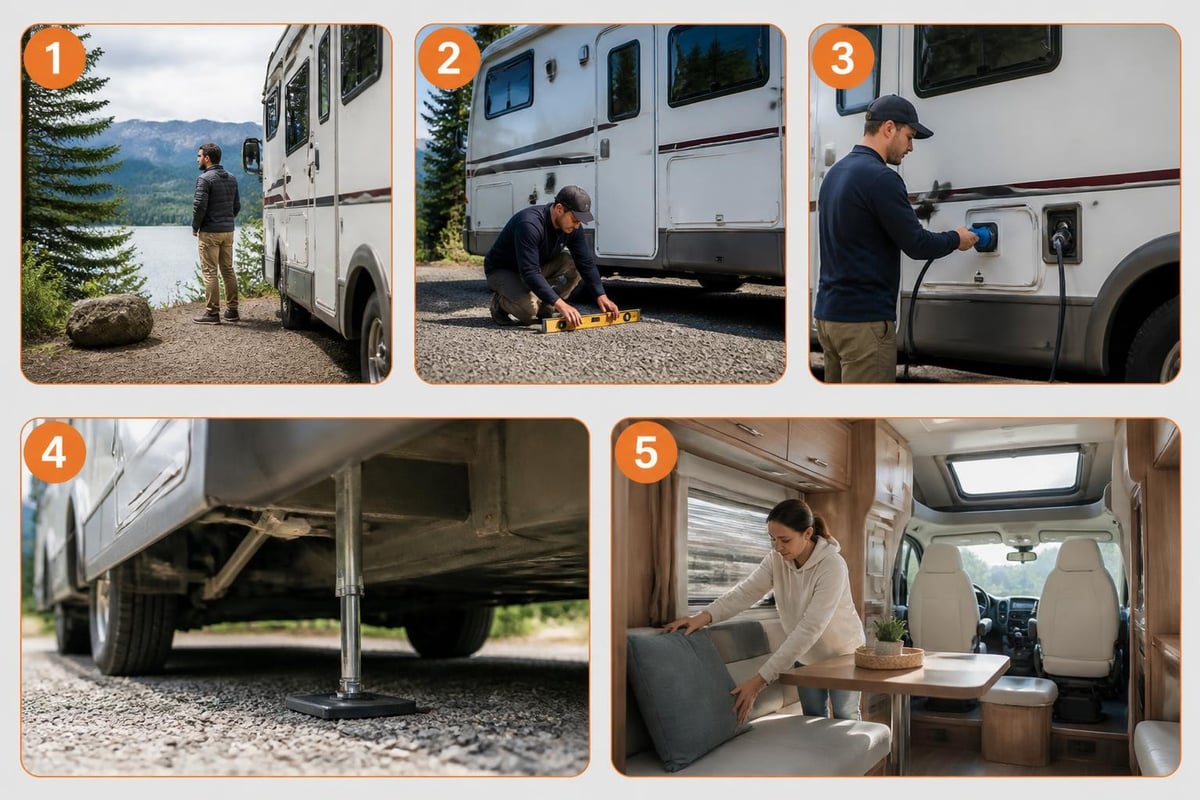
Follow this logical order for efficient setup:
Respecting fellow campers enhances everyone's experience. These motorhome tips for campsite etiquette often go unmentioned but make a significant difference to your welcome at sites across the UK.
Quiet hours matter. Most UK campsites enforce quiet times between 11pm and 7am. This means no generator use, minimal conversation outside, and no running engines. If you need to leave early for a morning attraction, prepare everything the night before to minimise noise.
Pitch spacing in British campsites is typically generous, but sound travels easily. Keep music at reasonable levels, even during the day. Remember that families might have young children sleeping, and retirees often enjoy peaceful afternoons.
| Etiquette Aspect | Good Practice | Common Mistake to Avoid |
|---|---|---|
| Noise levels | Keep voices conversational after 9pm | Loud music or television through open windows |
| Waste disposal | Use designated chemical toilet points | Disposing of grey water on grass pitches |
| Pitch boundaries | Respect neighbouring spaces | Allowing children to run through other pitches |
| Generator use | Only during permitted hours (usually 10am-1pm, 4pm-7pm) | Running generators during quiet hours |
Understanding your motorhome's water and waste systems ranks among the most important motorhome tips for maintaining comfort and hygiene throughout your trip. These systems are straightforward once you understand the basics, but they require regular attention.
Fresh water management starts with knowing your tank capacity. Most motorhomes have tanks ranging from 80 to 150 litres. This might sound generous, but a family of four can use this surprisingly quickly with showers, washing up, and toilet flushing.
Conservation strategies include:
Your motorhome has two types of waste water: grey water (from sinks and showers) and black water (from the toilet). Managing these properly is essential for both legal compliance and environmental responsibility.
Grey water tanks typically hold 60-100 litres. Empty these at designated waste points, never on grass or into storm drains. Many UK campsites provide drive-over waste points that make this process quick and clean.
Toilet cassettes require emptying when the indicator shows they're two-thirds full, or every 2-3 days. The essential knowledge for new motorhomers includes mastering this task early, as it becomes routine after the first few attempts.
Chemical toilet maintenance tips:
Efficient power management extends your freedom when wild camping or using sites without electrical hookup. Understanding your motorhome's electrical systems prevents flat batteries and ensures you can use appliances when needed.
Most motorhomes have dual battery systems. The vehicle starter battery powers the engine and cab electrics, whilst the leisure battery (or batteries) powers your living area lights, water pump, and 12V sockets. These systems should remain separate to prevent draining your starter battery.
When connected to mains hookup, your motorhome's charger replenishes the leisure batteries and powers 240V appliances directly. Without hookup, you're relying solely on leisure batteries, which typically last 2-3 days with conservative use.

Smart power usage lets you enjoy several days without hookup, perfect for exploring remote areas of the Yorkshire Dales or North York Moors.
Power-saving strategies:
Solar panels provide excellent supplementary charging, particularly during summer months. Even a modest 100W panel significantly extends your off-grid capability by topping up batteries throughout daylight hours.
Successful motorhome adventures balance spontaneity with practical planning. These motorhome tips for route planning help you discover Britain's beauty whilst avoiding common frustrations.
Build flexibility into your schedule. Unlike hotel-based holidays, motorhome travel lets you adjust plans based on weather, your interests, or recommendations from fellow travellers. However, completely winging it can lead to disappointment, particularly during peak season when popular campsites fill quickly.
The ideal approach combines pre-booked stops at must-visit locations with gaps for spontaneous discoveries. For a week-long trip, book 3-4 nights at specific sites, leaving other nights flexible for last-minute decisions.
The UK offers incredible variety in camping experiences, from basic farm sites to luxury resorts with swimming pools and restaurants. Understanding what different sites offer helps match your accommodation to your plans for each area.
Consider your daily activities when choosing sites. If you're planning full days exploring, a basic site with good facilities might suffice. For relaxing days, you might prefer sites with additional amenities or beautiful settings where you'll spend time at your pitch.
Site selection factors include:
Yorkshire offers exceptional variety, from clifftop sites overlooking the North Sea to riverside pitches in the Dales. West Yorkshire's proximity to both countryside and cultural attractions makes it an ideal base for exploring northern England.
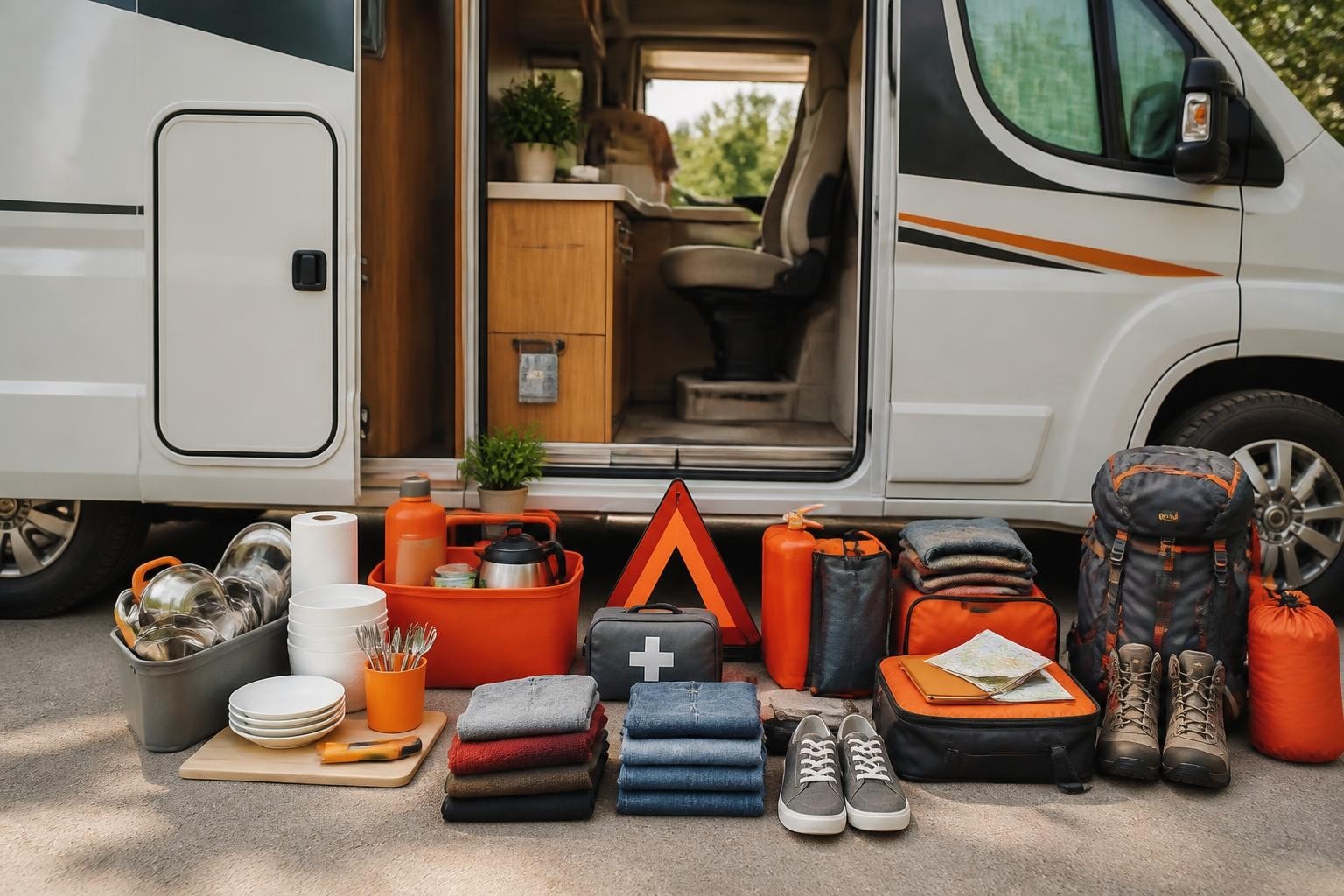
What you bring significantly affects your motorhome's handling and fuel efficiency. Smart packing ranks among the most valuable motorhome tips for both comfort and safety.
Every motorhome has a maximum authorised mass (MAM) shown on the vehicle's data plate. This legal limit includes the motorhome itself, passengers, fuel, water, gas, and all your belongings. Exceeding this limit risks fines, invalidates insurance, and compromises safety.
Calculate your payload capacity:
| Component | Typical Weight |
|---|---|
| Vehicle unladen weight | Check V5C document |
| Driver + passengers | 75kg per person |
| Fresh water (full tank) | 80-150kg depending on tank size |
| Gas bottles (two 6kg propane) | 15kg |
| Available for belongings | Remaining capacity |
Distribute weight low and central for optimal stability. Heavy items belong in low storage compartments over or near the axles. Placing weight at the rear causes tail-wagging instability, whilst excessive front weight affects steering.
Pack a motorhome maintenance kit including:
Clothing should be minimal and versatile. The UK's changeable weather demands layers rather than extensive wardrobes. A waterproof jacket, warm fleece, and comfortable walking shoes cover most situations.
British weather shapes motorhome travel more than most factors. Preparing for various conditions ensures comfort regardless of what the skies deliver.
Summer motorhoming (June-August) offers long daylight hours and generally warmer temperatures, but also brings peak season crowds and higher site fees. Book popular locations well in advance during these months. Midges can be problematic in Scottish and Welsh locations, so pack insect repellent and consider sites with coastal breezes.
Shoulder seasons (April-May, September-October) provide excellent value with fewer crowds and pleasant weather. These months showcase Britain beautifully, with spring flowers or autumn colours enhancing landscapes. However, weather becomes less predictable, so ensure your heating system works efficiently.
Winter motorhoming requires additional preparation:
Yorkshire's climate varies significantly with elevation. Coastal areas enjoy milder temperatures whilst the Pennines can be surprisingly harsh, even in summer. Pack for conditions 5-10 degrees cooler than valley forecasts if heading to higher ground.
Protecting your motorhome and belongings provides peace of mind throughout your holiday. These security-focused motorhome tips help safeguard both vehicle and contents.
Never leave valuables visible through motorhome windows. Even in seemingly safe locations, opportunistic theft occurs. Store laptops, cameras, and bags in cupboards or under seats when leaving your motorhome unattended.
Physical security measures include:
Many motorhomes now include tracking systems that help police recover stolen vehicles. Check whether your hire motorhome includes tracking, and ensure you have comprehensive insurance coverage.
Wild camping's legality varies across the UK. Scotland's access rights permit responsible wild camping in most areas, whilst England and Wales restrict it to land with owner permission.
When parking overnight outside formal campsites:
Regular checks during your motorhome holiday prevent small issues becoming major problems. Adding these quick inspections to your daily routine takes minutes but saves potential headaches.
Each morning before driving, walk around your motorhome checking:
At each campsite, verify:
Monitor your motorhome's warning lights and gauges whilst driving. Modern motorhomes have sophisticated systems that alert you to problems, but only if you notice the warnings. Understanding what each light indicates prevents ignoring important alerts.
Despite careful planning, occasional problems arise during motorhome travel. Knowing how to handle issues calmly makes them minor inconveniences rather than trip-ruining disasters.
Your hire company should provide 24-hour breakdown assistance. Keep their contact details easily accessible in your phone and written down somewhere accessible. Most motorhome hire includes comprehensive breakdown cover through organisations like AA or RAC.
Common issues and immediate responses:
For guidance on common motorhome repair challenges, experienced travellers recommend carrying basic tools and understanding your specific motorhome's systems through the demonstration provided at collection.
Minor repairs often prove simple with correct information. However, never attempt repairs beyond your capability or comfort level. Your hire company prefers you call for advice rather than potentially causing additional damage through well-intentioned but incorrect repairs.
Mastering these motorhome tips transforms your holiday from potentially stressful to genuinely liberating, letting you focus on creating memories rather than worrying about logistics. Whether you're planning a weekend escape to the Yorkshire coast or a fortnight exploring Scotland's highlands, The Camper Co provides expertly maintained motorhomes with comprehensive demonstrations and 24-hour support, ensuring you set off with confidence and return with stories worth sharing.