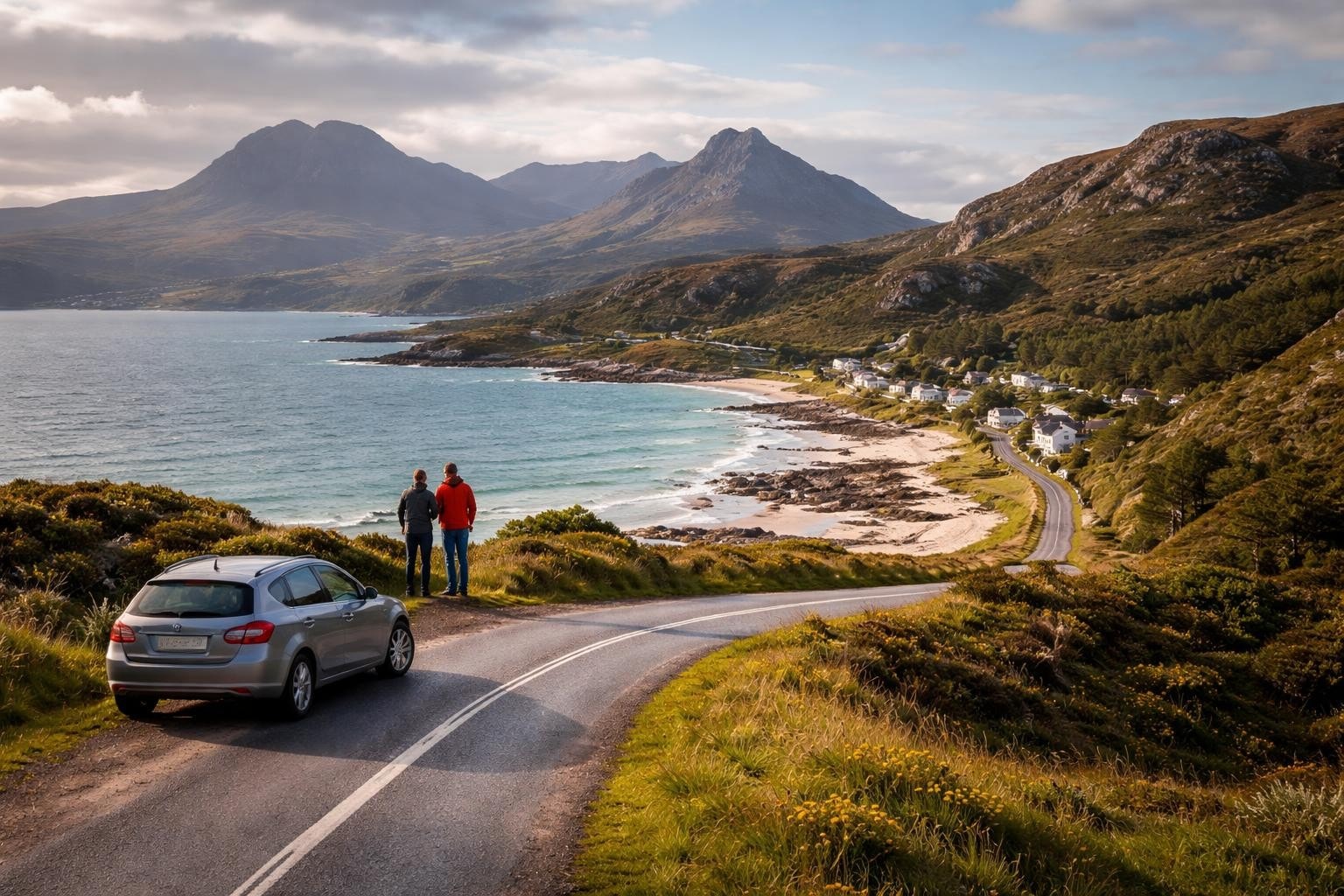
Scotland's North Coast 500 has rapidly become one of the most celebrated driving routes in the world, offering motorhome travellers an unforgettable journey through some of Britain's most dramatic and unspoiled landscapes. This circular route, stretching over 500 miles around the northern Highlands, combines rugged coastlines, ancient castles, pristine beaches, and mountain passes into a single spectacular adventure. Whether you're setting off from Yorkshire or planning your Scottish escape, understanding what makes this route special will help you prepare for the journey of a lifetime.
The North Coast 500 was officially launched in 2015, designed to showcase the stunning scenery and rich heritage of the Scottish Highlands. Often dubbed Scotland's answer to Route 66, this route has transformed tourism in the region and earned recognition as one of the world's most scenic coastal drives.
Starting and finishing in Inverness, the nc500 route takes you through some of Scotland's most diverse landscapes. You'll traverse the west coast's wild Atlantic shores, navigate the dramatic northern coastline, and return along the gentler eastern seaboard. Each section offers completely different scenery, from the mountains of Torridon to the white-sand beaches of the northwest.
Travelling the nc500 route in a motorhome provides unparalleled freedom and flexibility. Unlike fixed accommodation, you can adjust your pace, linger at viewpoints that capture your imagination, and wake up to new vistas each morning.
Key advantages of motorhome travel on the NC500:
The route's infrastructure has developed significantly to accommodate motorhome travellers, with dedicated facilities and stopping points throughout. However, planning remains essential, particularly during peak season when popular spots can fill quickly.
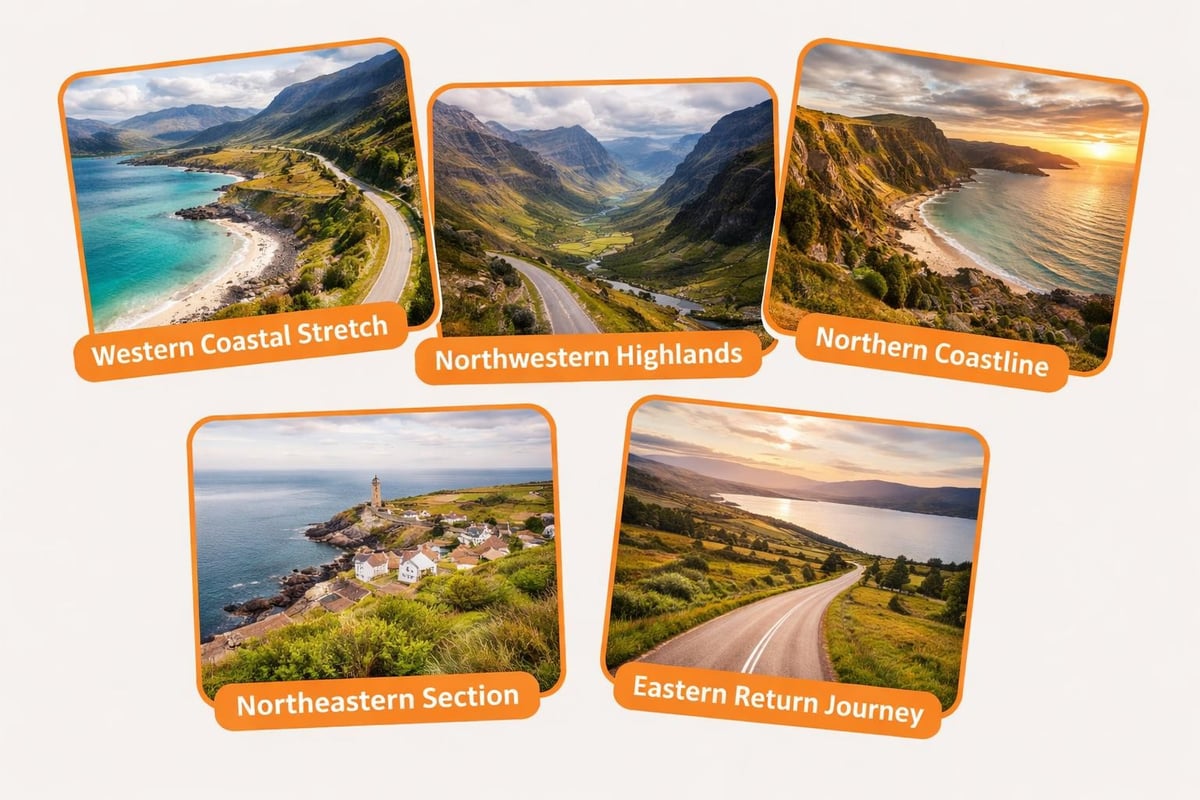
Understanding the distinct character of each section helps you plan your journey and allocate appropriate time for the experiences that matter most to you.
| Route Section | Distance | Key Features | Recommended Time |
|---|---|---|---|
| Inverness to Torridon | 85 miles | Mountain scenery, Loch Carron | 1-2 days |
| Torridon to Durness | 115 miles | Dramatic coastal views, Smoo Cave | 2-3 days |
| Durness to John o'Groats | 80 miles | White beaches, Cape Wrath | 1-2 days |
| John o'Groats to Dornoch | 65 miles | Historic castles, coastal villages | 1-2 days |
| Dornoch to Inverness | 55 miles | Gentler scenery, distilleries | 1 day |
Departing Inverness, the nc500 route initially heads west towards the dramatic landscapes of Wester Ross. This section introduces you to the Highlands' raw beauty, with towering peaks and deep sea lochs creating endless photographic opportunities.
The single-track roads with passing places become common here. These require patience and courtesy, but they're part of the route's charm, slowing your pace and helping you appreciate the surroundings. Take time to explore Applecross via the Bealach na Bà pass, one of Britain's highest roads, offering breathtaking views across to Skye.
As you continue north from Torridon, the landscape becomes increasingly dramatic and remote. This is where the nc500 route truly showcases Scotland's wild side, with mountains rising directly from the sea and scattered crofting communities dotting the coastline.
Ullapool serves as an excellent base, offering facilities, shops, and a chance to restock supplies. The fishing village atmosphere and harbour setting make it a highlight, whilst nearby Stac Pollaidh provides accessible mountain walking for those wanting to stretch their legs.
Success on the nc500 route depends heavily on proper planning, particularly when travelling by motorhome. The route's popularity has grown exponentially, making advance preparation more important than ever.
Spring (April-May) brings wildflowers and fewer crowds, though weather remains unpredictable. Days lengthen significantly, giving you more driving hours in comfortable daylight. Some facilities may still operate on reduced winter hours.
Summer (June-August) offers the longest days and warmest weather, but this is peak season. Expect busier roads, fuller campsites, and higher prices. The famous Scottish midges also emerge during calm, damp conditions, particularly near water.
Autumn (September-October) provides stunning colours across the hillsides and clearer air for photography. Crowds thin considerably after the school holidays end, though some facilities begin closing for winter.
Most travellers tackle the nc500 route anticlockwise, heading west from Inverness. This approach presents the most dramatic scenery earlier in your journey and keeps you on the inside lane for easier stopping at viewpoints along the coast.
However, travelling clockwise offers distinct advantages:
Neither direction is definitively better. Your choice might depend on your starting point, time of year, or personal preference for experiencing landscapes.
While the journey itself matters as much as any destination, certain stops along the nc500 route deserve special attention. These locations combine natural beauty, historical significance, or practical convenience.
Smoo Cave near Durness offers an impressive sea cave system accessible without specialist equipment. The main chamber is vast and atmospheric, whilst the waterfall within creates a dramatic spectacle after rainfall.
Duncansby Stacks beyond John o'Groats provide a fitting climax to the northern section. These towering sea stacks rise from the churning North Sea, with puffins nesting on the cliffs during summer months.
Achmelvich Beach showcases Caribbean-like white sands and turquoise waters, though with distinctly Scottish water temperatures. The beach is sheltered and perfect for a break, with basic facilities nearby.
The development of the NC500 has helped preserve and promote these attractions, bringing much-needed tourism revenue to remote communities whilst raising awareness of conservation needs.
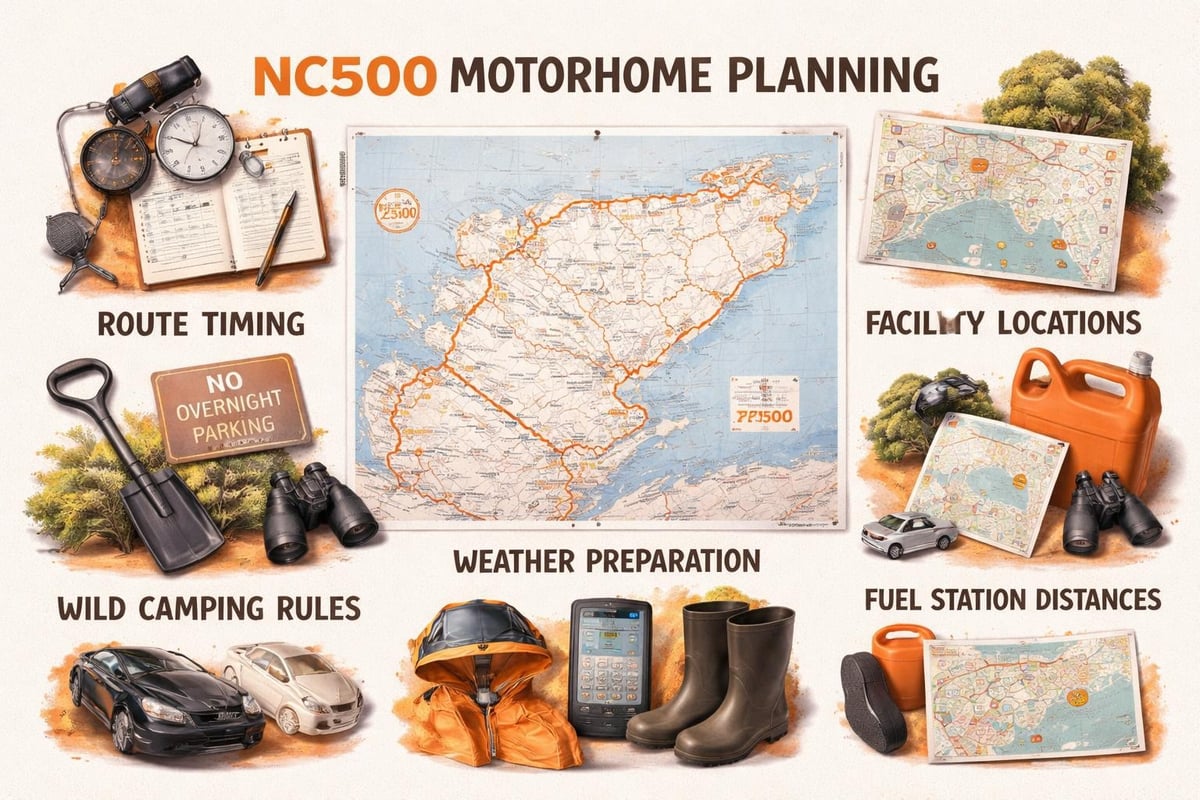
Finding suitable overnight accommodation represents perhaps the biggest planning challenge when tackling the nc500 route in a motorhome. The route's popularity has strained existing facilities, making advance booking essential during peak season.
Established campsites range from basic facilities in village halls to well-equipped sites with electric hookups, showers, and waste disposal. Booking ahead is crucial, particularly at popular locations like Ullapool, Durness, and Dornoch.
Popular campsite locations:
Scotland's access laws differ from England's, but wild camping in motorhomes faces increasing restrictions along the nc500 route due to past irresponsible behaviour. Many areas now have overnight parking restrictions to protect the environment and local communities.
When stopping overnight:
The Scottish Outdoor Access Code provides guidance, but remember that motorhomes aren't covered by the same rights as tent camping. Supporting local facilities benefits the communities hosting your journey.
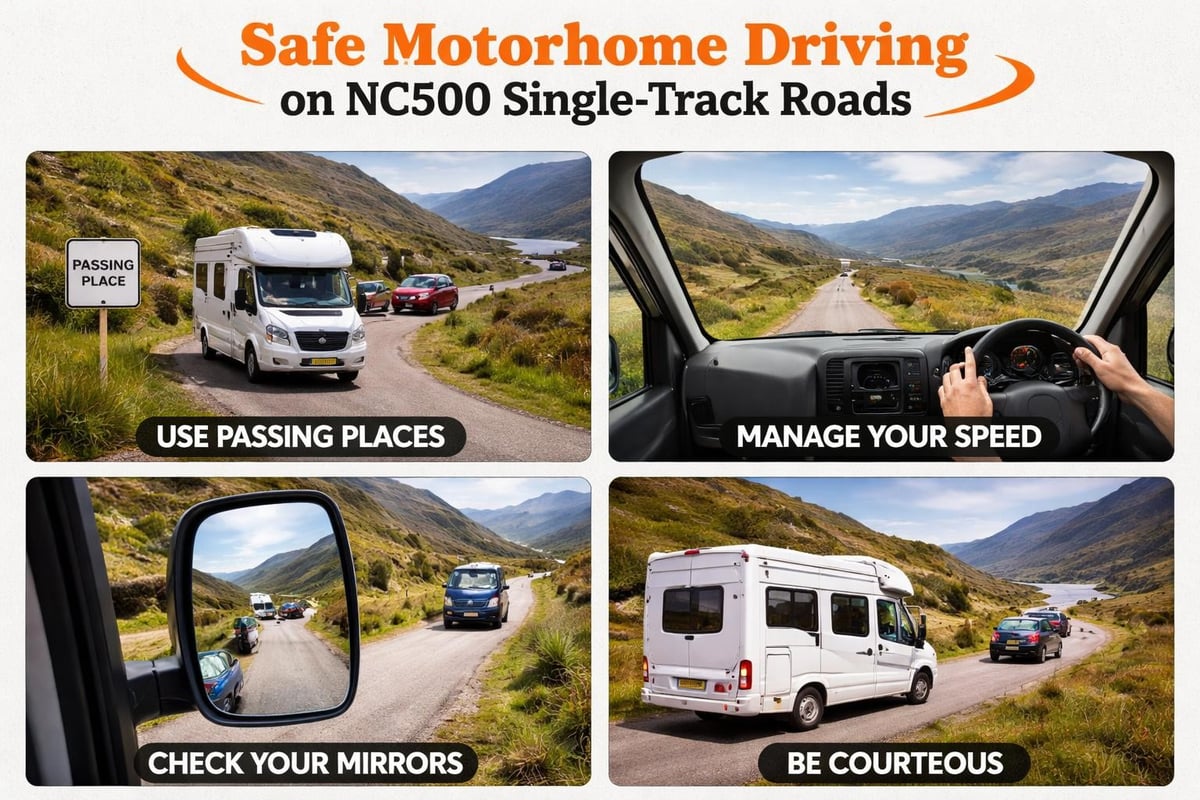
The nc500 route includes significant sections of single-track road, requiring different skills and awareness than motorway driving. Understanding these challenges beforehand prevents stress and ensures safety.
Passing places are marked with white diamonds or poles. They're positioned regularly but not uniformly, sometimes requiring one vehicle to reverse. Pull in on your left if the passing place is on your side, or wait opposite if it's on the right to let oncoming traffic use it.
Traffic should flow smoothly if everyone follows basic courtesy. Faster vehicles should be allowed to pass when safe. If several cars accumulate behind you, use the next suitable passing place to let them through.
Modern motorhomes measure significantly wider than average cars. The nc500 route's narrower sections require careful navigation, particularly around blind corners where meeting oncoming traffic demands precise positioning.
Road surfaces vary considerably. Main routes maintain good tarmac, but some sections feature potholes, gravel patches, or rougher surfaces after winter weather. Drive according to conditions rather than assuming standards match lowland roads.
Remote sections of the nc500 route mean planning for basics becomes essential. Running low on fuel or supplies in sparsely populated areas can disrupt your journey significantly.
| Location | Services | Notes |
|---|---|---|
| Inverness | Multiple stations | Fill up before departing |
| Ullapool | Several options | Last major town on west coast |
| Durness | Single station | Can close early or on Sundays |
| Bettyhill | Limited hours | Check opening times |
| Wick/Thurso | Good provision | Reliable options in both towns |
| Dornoch | Available | Regular hours |
Fill your tank whenever it drops below half in remote areas. Some stations keep limited hours or close Sundays. Diesel is universally available, but unleaded can occasionally run short at smaller stations during peak season.
Don't expect consistent mobile signal throughout the nc500 route. Large sections, particularly in the northwest, have no coverage from any network. Download maps, guides, and any essential information before losing signal.
Some villages offer WiFi in cafes or visitor centres, but speeds can be limited. View this disconnection as part of the experience, allowing you to engage more fully with the landscapes and communities you're visiting.
Scottish Highland weather changes rapidly and dramatically. Conditions can shift from sunshine to rain within minutes, with wind, mist, and even snow possible outside summer months.
Pack layers regardless of season. Waterproof and windproof outer garments are essential, along with warm clothing for cool evenings. The RAC’s driving advice emphasises preparing for all conditions, even in summer.
Highland midges deserve special mention. These tiny insects swarm in calm, damp conditions from May through September, particularly at dawn and dusk. Midge nets and repellent make outdoor activities far more pleasant during peak season.
Ensure your motorhome hire includes comprehensive breakdown coverage extending to the Scottish Highlands. Recovery from remote locations is expensive without proper insurance. Check your coverage specifically mentions single-track roads and the NC500.
Carry basic emergency supplies including water, food, warm clothing, and a first aid kit. Mobile signal can't be guaranteed for calling help, so self-sufficiency matters more than on conventional routes.
The National Geographic recognition of the nc500 route as Britain's best driving route has brought unprecedented attention to these remote areas. Supporting local businesses helps sustain the communities that make this journey possible.
Choose local shops, cafes, and restaurants over bringing all provisions from home. These businesses often struggle during winter and depend on summer visitors for annual viability. Fresh local produce, from seafood to baked goods, enhances your culinary experience whilst supporting the region.
Many communities offer locally made crafts, artwork, and food products. These make meaningful souvenirs whilst providing income to rural artisans and producers.
Remember that people live and work in the areas you're visiting. Treat facilities respectfully, keep noise down at overnight stops, and follow local guidance about access and parking. The nc500 route's success depends on maintaining positive relationships between visitors and residents.
Consider visiting outside peak season if your schedule allows. This reduces pressure on infrastructure whilst still supporting local businesses, many of which extend their operating seasons to accommodate NC500 traffic.
Whilst the nc500 route provides a complete circular journey, several detours and extensions deserve consideration if time permits.
Isle of Skye connects via bridge near Kyle of Lochalsh, adding dramatic mountain scenery and additional coastal exploration. Plan at least two extra days to do Skye justice.
Orkney Islands are accessible by ferry from John o'Groats or Scrabster near Thurso. These islands offer Neolithic sites, seabird colonies, and distinct culture. Allow a minimum of two days, preferably more.
Great Glen Way from Inverness to Fort William provides an alternative return route, passing through stunning mountain scenery and alongside Loch Ness. This extension suits those wanting more inland experiences.
Setting off from Yorkshire to tackle the nc500 route requires additional planning for the journey to and from Inverness. The drive from Leeds to Inverness covers approximately 360 miles, taking around seven hours without stops.
The most direct route follows the A1(M) and M6 north before joining the A9 at Perth for the final stretch to Inverness. Alternatively, the scenic route through the Lake District and along the west coast adds time but increases enjoyment.
Consider whether to break the journey with an overnight stop. Stirling, Perth, or Pitlochry make convenient waypoints, allowing you to arrive in Inverness refreshed and ready to begin the nc500 route properly.
Plan your total trip duration carefully. A week allows completion of the nc500 route itself, but ten days to two weeks provides more comfortable pacing with time for detours and weather delays. The Camper Co offers flexible hire periods to match your schedule, ensuring you're not rushed through this spectacular journey.
Before departing Leeds, ensure your motorhome is properly equipped for Highland conditions:
The route's popularity has brought environmental challenges, from litter to erosion at popular viewpoints. Travelling responsibly ensures this remarkable route remains pristine for future visitors.
Apply these fundamental principles throughout your nc500 route journey:
The official NC500 guide emphasises responsible travel, recognising that visitor behaviour determines the route's long-term sustainability.
Never discharge waste water or toilet cassettes except at designated facilities. Many locations now provide motorhome service points with fresh water, waste disposal, and chemical toilet emptying. Using these facilities, even if it means driving slightly out of your way, protects the environment and local water sources.
Pack out all rubbish. Recycling facilities exist in larger towns, but smaller villages may lack capacity. Carrying rubbish until you reach appropriate disposal points demonstrates respect for the communities hosting your visit.
The nc500 route offers motorhome travellers an unmatched opportunity to experience Scotland's dramatic beauty, from isolated beaches to towering mountains, all whilst enjoying the freedom and comfort of your own accommodation on wheels. Starting your adventure with a well-equipped motorhome from The Camper Co ensures you have the reliable, comfortable vehicle needed to tackle this legendary route with confidence, allowing you to focus on creating memories that will last a lifetime across one of the world's most spectacular coastal drives.