

The electric campervan is transforming the way we experience road trips, offering a cleaner, quieter, and more innovative journey across the UK and Europe. As these vehicles surge in popularity, 2026 stands out as the year to embrace this exciting shift in travel.
This guide is your comprehensive companion for planning an electric campervan adventure. Here, you will discover the latest technology, must-see models, and practical advice for making the most of your journey.
We will cover the benefits, evolving technology, top electric campervan options, essential planning tips, charging infrastructure, and the growing importance of sustainability. Ready to explore the future of road trips? Let’s get started on your 2026 electric campervan journey.
The electric campervan movement is reshaping how we experience road trips across the UK and Europe. In just a few short years, these innovative vehicles have surged from a niche idea to a mainstream travel choice. Families, couples, and solo adventurers are now embracing the blend of freedom, comfort, and sustainability offered by the electric campervan.
What is driving this rapid transformation? At the heart of the revolution are ambitious environmental goals. Governments are setting strict emissions targets and pushing for net zero by 2050. Travellers are also becoming more eco-conscious, demanding greener options for their holidays. The electric campervan answers this call, offering a tangible way to reduce carbon footprints without sacrificing adventure.
Battery technology has taken huge leaps forward, making electric campervans more practical than ever. Modern models now boast real-world ranges of 100 to 200 miles, with fast charging that can deliver 80% capacity in about 35 minutes. Mainstream manufacturers are investing heavily, introducing new models like the Ford E-Transit and Volkswagen ID.Buzz. According to electric RV market growth analysis, the sector is set for exponential growth as innovation and sustainability converge.
How does an electric campervan compare to traditional diesel or petrol models? The differences are clear in running costs, maintenance, and user experience:
| Feature | Electric Campervan | Diesel/Petrol Campervan |
|---|---|---|
| Running Costs | Lower (cheaper charging) | Higher (fuel costs) |
| Maintenance | Fewer moving parts | More frequent servicing |
| User Experience | Quieter, smoother drive | Noisier, more vibration |
| Emissions | Zero tailpipe emissions | CO2 and particulates |
The Bailey Endeavour EV stands out as a pioneering electric campervan concept. With a real-world range of 108 miles and rapid charging, it demonstrates what is possible when manufacturers prioritise both innovation and sustainability. Payload remains a consideration, as battery weight can affect available storage, but clever design solutions are closing this gap.
Industry experts, eco-travellers, and leading brands all agree: the shift to electric campervan travel is not just a trend, but a lasting change. They highlight the improved driving experience, lower emissions, and the joy of exploring with a lighter environmental touch. As 2026 approaches, there has never been a better time to plan your own electric campervan adventure.
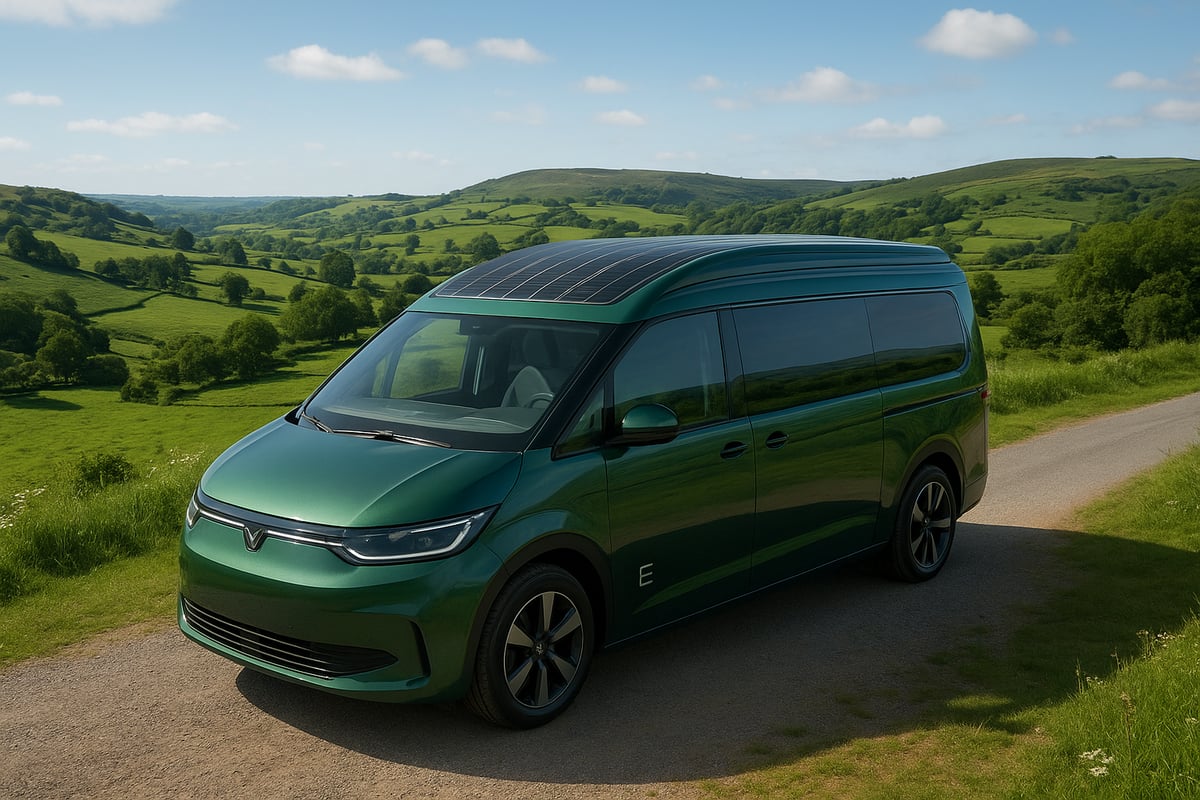
The world of electric campervan travel is evolving rapidly, and 2026 stands out as a landmark year for breakthroughs in both comfort and capability. As manufacturers refine designs and technology, travellers can now expect more from their electric campervan experience than ever before.
Modern electric campervan models offer not only improved range and faster charging but also a suite of smart features for daily living. Whether you are a seasoned road tripper or considering your first journey, understanding the latest technology is key to planning a seamless adventure.
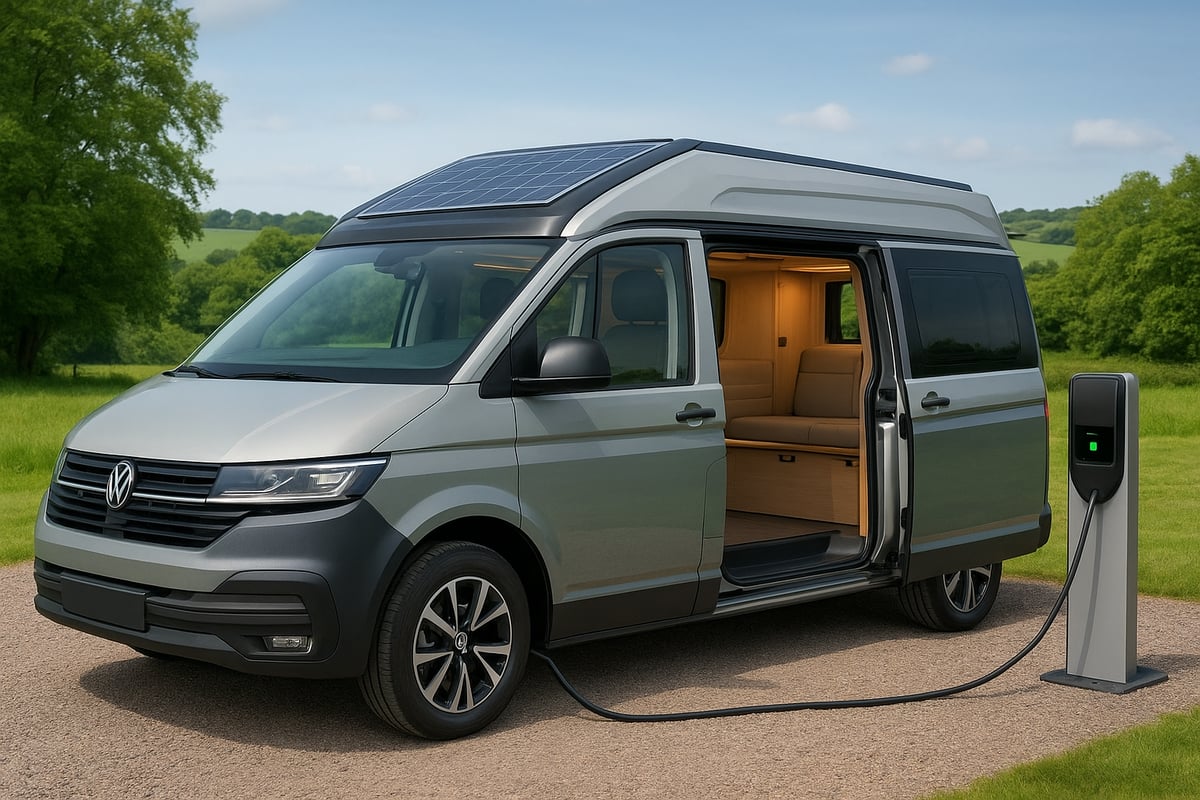
The heart of any electric campervan is its battery. In 2026, lithium-ion batteries remain the standard, but advancements in energy density and management are transforming what is possible. Many new models feature batteries ranging from 60kWh to 90kWh, supporting real-world ranges between 100 and 200 miles. For example, the Ford E-Transit offers a 68kWh battery, balancing capacity with weight for practical road use.
Fast charging is now a game changer. DC rapid chargers can replenish 80 percent of battery capacity in about 35 minutes, dramatically reducing downtime. This means more time exploring and less time waiting. Solar integration is also becoming mainstream, with many electric campervan roofs equipped with high-efficiency panels to extend off-grid capability.
Payload remains an important consideration. Batteries add significant weight, so clever engineering is needed to maximise storage and stay within the 3,500kg limit for a standard UK driving licence. Manufacturers are refining chassis designs to ensure electric campervan payloads are practical for families and adventure gear.
Eco-conscious buyers will appreciate that these innovations are closely linked to broader trends in the leisure vehicle market, as discussed in the 2025 leisure vehicle trends article. With battery technology improving each year, the electric campervan is finally a viable choice for longer journeys.
Inside a 2026 electric campervan, travellers will discover a fully electric lifestyle. Traditional gas and diesel appliances have been replaced by induction hobs, efficient microwaves, and electric heating systems. These are managed through integrated smart control panels, often with voice activation or touch-screen interfaces for lighting, climate, and energy monitoring.
Sustainability is at the forefront of interior design. Many electric campervan interiors now use recycled fabrics, ocean plastics, and wood sourced from certified forests. This commitment to eco-friendly materials extends to worktops made from recycled kitchen appliances and low-impact flooring.
Comfort is another area where the electric campervan excels. Adaptable lounge spaces, electric drop-down beds, and modular storage create a flexible living environment. For instance, the Bailey Endeavour EV features configurable lounges and ambient smart lighting, allowing travellers to tailor the space for work, dining, or relaxation.
These smart systems are not just about convenience. They enable precise energy management, so users can maximise the electric campervan’s battery life while enjoying modern comforts. With every appliance drawing from a central battery bank, travellers have full visibility and control over their energy usage, making off-grid adventures more accessible than ever.
Safety and compliance are crucial for any electric campervan owner. In the UK, most electric campervan models are designed to stay under the 3,500kg limit, allowing drivers with a standard category B licence to get behind the wheel. However, heavier battery packs can push some models above this threshold, requiring a category C1 licence.
Manufacturers equip electric campervan vehicles with advanced safety features. These include electric-specific fire suppression systems, robust battery management units, and reinforced crash protection for high-voltage components. Legal requirements are also evolving, especially regarding charging infrastructure and emissions compliance in low-emission zones.
When it comes to insurance, electric campervan policies now reflect the unique aspects of electric drivetrains and battery systems. Owners should ensure their cover includes battery health and charging equipment, as well as breakdown support tailored to electric vehicles.
It is essential to check payload limits, as exceeding these can affect both safety and legality. The E-Transit platform, for instance, uses a reinforced chassis to accommodate the added battery weight without sacrificing storage or comfort. Staying informed about licensing, safety, and legal guidelines will help every electric campervan traveller enjoy a smooth and secure journey.
The electric campervan market is rapidly evolving, and 2026 is shaping up to be a landmark year for innovation and choice. Whether you are interested in mainstream models or prefer bespoke conversions, there are options to suit every type of traveller. Below, we explore the most exciting electric campervan models to watch, highlight key features, and offer practical guidance for making the right choice.
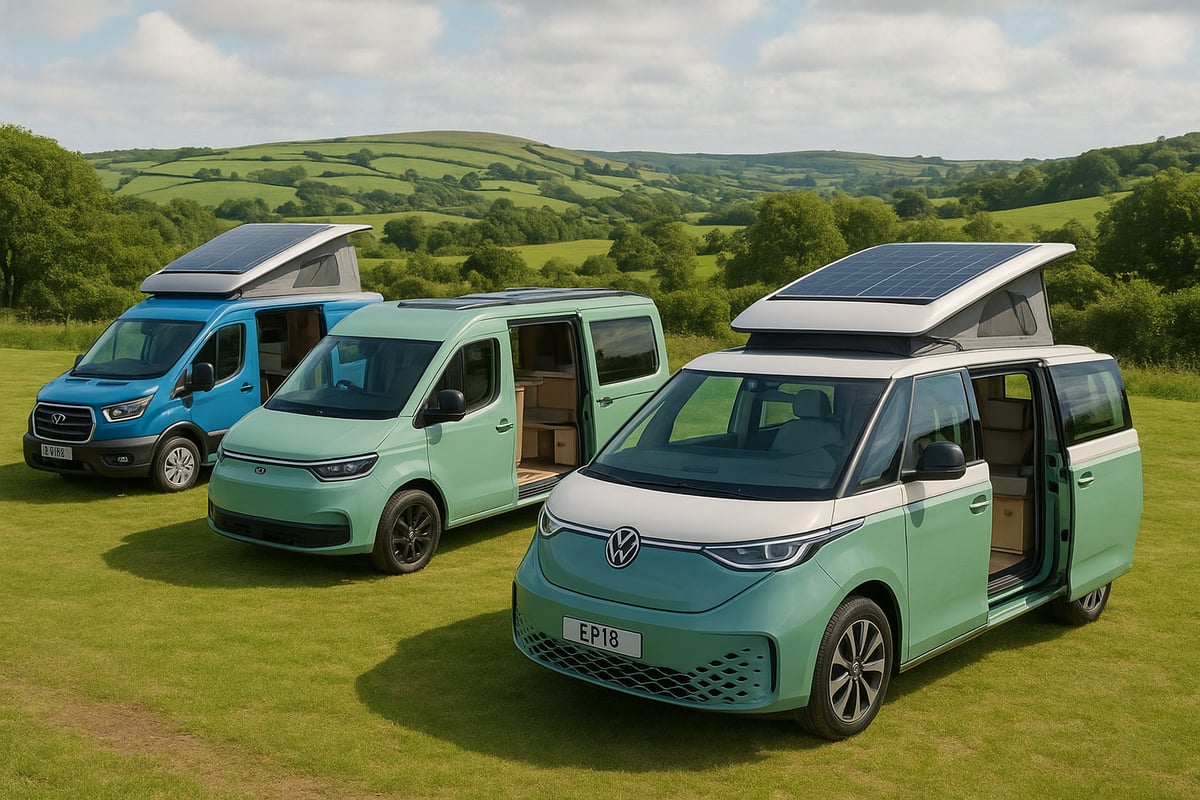
Mainstream manufacturers are leading the charge in the electric campervan market. Brands like Ford and Volkswagen have invested heavily in all-electric platforms that combine reliability with modern comforts.
One of the most anticipated models for 2026 is the Ford E-Transit Camper. With a 68kWh battery, the E-Transit offers a real-world range of up to 180 miles, making it suitable for longer trips across the UK and Europe. The flexible interior can accommodate up to four berths, and the integrated kitchen features all-electric appliances.
Volkswagen’s ID.Buzz is another standout. The 2023 ID.Buzz EV FunkyDubz Work.Play Day Van/Camper set a new standard with its clever use of space, modular seating, and advanced infotainment system. The ID.Buzz’s battery options provide up to 200 miles of range, and rapid DC charging enables 80% top-ups in just over half an hour.
Here is a quick comparison of two leading electric campervan models:
| Model | Berths | Battery Size | Range (miles) | Key Features |
|---|---|---|---|---|
| Ford E-Transit Camper | 4 | 68kWh | 180 | Full kitchen, fast charge |
| VW ID.Buzz FunkyDubz | 4 | 77kWh | 200 | Modular interior, tech |
When considering an electric campervan from a major brand, buyers benefit from established service networks and manufacturer warranties. For those seeking value, the growing market for pre-owned electric campervans also presents an appealing option, offering lower entry costs while retaining many modern features.
Concept vehicles and custom conversions are pushing the boundaries of what is possible with an electric campervan. The Bailey Endeavour EV is a prime example, debuting as a pioneering concept that demonstrates how electric platforms can be tailored for adventure.
Custom converters are increasingly popular, giving travellers the flexibility to choose unique layouts, eco-friendly materials, and advanced technology. Features like recycled kitchen worktops, voice-controlled lighting, and solar panel integration are becoming standard in bespoke builds. These options allow for a highly personalised electric campervan experience.
The Bailey Endeavour EV, for instance, offers smart lounge configurations, recycled fabrics, and an advanced energy management system. Such models set the tone for future production vehicles, showing how comfort and sustainability can go hand in hand.
While custom electric campervans offer the ultimate in personalisation, there are trade-offs. Custom builds may come with longer lead times and higher initial costs, but they often deliver unmatched functionality and individuality. Manufacturer-built models, on the other hand, provide peace of mind with aftersales support and easier access to parts.
Selecting the right electric campervan involves several key considerations. Range and battery capacity are vital, as these determine how far you can travel between charges. It is important to ensure charging compatibility with public networks, especially if you plan to explore remote areas.
Interior layout and comfort features also play a significant role. Consider the number of berths, kitchen equipment, and adaptability of living spaces. Payload capacity affects how much you can bring along, particularly with heavier battery systems.
When evaluating used electric campervans, check the health of the battery, review service records, and ensure all software updates are current. Platforms like eBay often feature electric campervan listings, but it is wise to inspect vehicles in person and request a full history.
Here are some tips for test driving and inspection:
For further inspiration and practical planning advice, see the Ultimate guide to campervan adventures.
By considering these factors, you can confidently choose an electric campervan that meets your needs and ensures a memorable journey.
Dreaming of the perfect 2026 electric campervan adventure? With the right preparation, your journey can be as smooth as it is sustainable. This step-by-step guide covers everything you need to know, from mapping your route to making the most of every charge and campsite. Let’s dive into the essentials for a seamless electric campervan road trip.
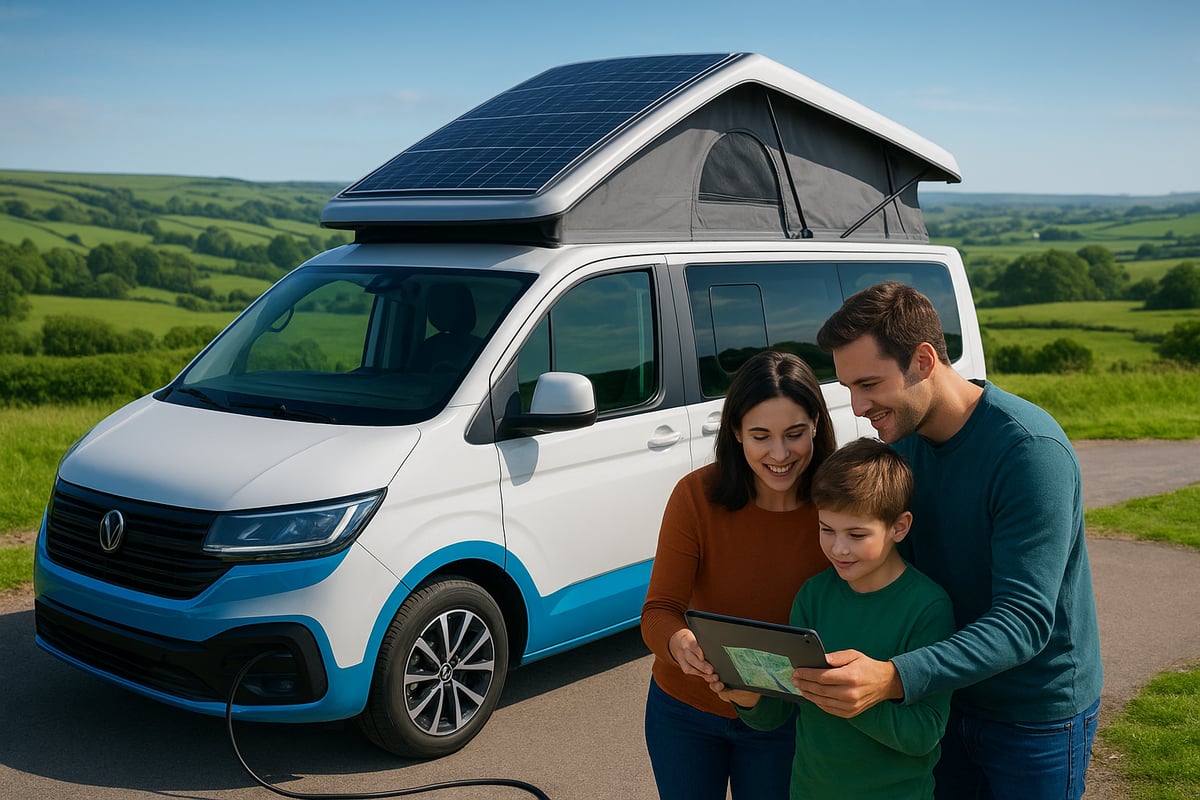
Effective route planning is the cornerstone of any successful electric campervan journey. Start by researching charging stations along your intended route. Use real-time apps like Zap-Map or PlugShare to locate chargers, check availability, and filter by connector type. These tools help you plan stops and avoid detours.
Charging stations come in two main types: AC (slower, suitable for overnight) and DC fast chargers (rapid, ideal for daytime top-ups). For example, the Ford E-Transit can reach 80 percent charge in just 35 minutes at a DC station. Plan your daily driving distance to match your campervan’s real-world range, factoring in detours and sightseeing.
Here’s a quick comparison of charging speeds:
| Charger Type | Typical Speed | Best Use Case |
|---|---|---|
| AC (7kW) | 20-30 miles/hr | Overnight/campsite |
| DC (50kW+) | 80% in 35 min | Fast roadside charging |
In rural or remote areas, portable chargers and backup options become vital. Keep an eye on weather, as cold conditions can reduce range. For a comprehensive list of planning tips, visit Motorhome and campervan tips, which covers both general and electric campervan advice.
Packing for an electric campervan trip requires a focus on both comfort and efficiency. Essentials include charging cables, UK and continental adapters, and portable power banks for devices. A toolkit for emergency repairs is also recommended.
Efficient power management is key. Balance the use of appliances like induction hobs, heating, and water systems to conserve battery life. Many electric campervan models now feature solar panels, such as Truma panels on the Endeavour EV, allowing you to extend your off-grid capability.
Monitor your battery status regularly using built-in energy management systems. Prioritise charging during daylight hours if using solar, and always keep one eye on your available range before heading off on the next leg of your adventure.
Choosing the right campsite can make or break your electric campervan experience. Look for sites that offer electric hook-up points or dedicated EV charging facilities. Booking ahead, especially in peak seasons, ensures you have access to charging when you need it most.
Understand the difference between standard electric hook-ups (which typically provide slower AC charging) and rapid chargers, which are less common at campsites but invaluable for a quick top-up. Always follow campsite etiquette: never block others’ access to chargers and unplug as soon as you are finished.
For safe overnight charging, inspect the cable and connector for damage before use. Position your campervan so the cable does not create a trip hazard, and avoid using extension leads, which can pose a fire risk. A little planning ensures you wake up ready for another day on the road.
Every electric campervan journey comes with its challenges, but with the right approach, you can turn them into opportunities for adventure. Range anxiety is a common concern, yet thorough planning and flexible itineraries help you stay in control. Have a backup plan and know the locations of alternative charging stations.
Downtime during charging is a chance to explore local attractions, try regional cuisine, or simply relax and enjoy the scenery. Weather can impact your range, so adapt your plans accordingly and keep an eye on forecasts.
Online communities and forums are invaluable for up-to-date route tips and troubleshooting advice. Many electric campervan owners share real-world stories that inspire and inform. By embracing the unique rhythm of electric travel, you can transform every stop into a memorable part of your journey.
The electric campervan is redefining what it means to explore the great outdoors responsibly. Travellers are increasingly aware of their environmental footprint, and the shift to electric vehicles is playing a crucial role in reducing emissions across the UK and Europe. By choosing an electric campervan, holidaymakers can significantly cut their carbon output compared to diesel or petrol alternatives, supporting cleaner air and healthier destinations for everyone.
Manufacturers are embracing sustainability beyond just powertrains. Many 2026 electric campervan models now feature interiors crafted from recycled fabrics, low-carbon materials, and even repurposed ocean plastics. For example, Bailey’s latest designs prioritise both comfort and environmental responsibility, showing how eco-friendly choices can enhance the camping experience. These thoughtful touches make a real difference, especially for those committed to green travel.
The industry’s commitment to net zero is becoming more visible each year. Bailey’s ambitious roadmap to 2050 sets a benchmark for sustainable manufacturing and material sourcing in the sector. Meanwhile, government incentives and stricter emissions targets are accelerating the adoption of electric vehicles. Recent years have seen a sharp increase in registrations, as highlighted by the electric vehicle sales surge in UK, signalling a bright future for the electric campervan market.
Eco-conscious travellers are also making a positive impact through their choices. Many are seeking out nature-based destinations, supporting responsible tourism and local economies. The reduced noise and emissions of an electric campervan help protect wildlife and preserve scenic landscapes. As more campsites and parks install charging facilities, it becomes even easier to travel sustainably without sacrificing comfort or convenience.
Looking ahead, the future of electric campervan travel is full of promise. Solid-state batteries, wider charging networks, and smarter energy management systems are on the horizon, set to further extend range and reliability. As manufacturers continue to innovate and collaborate with policymakers, the electric campervan is poised to become the standard for sustainable, enjoyable road trips across the UK and beyond.
Before setting off on your 2026 electric campervan journey, it is essential to have clear answers to the most common questions. Here, we cover everything from range and charging to running costs and legal requirements, helping you travel with confidence.
Most 2026 electric campervan models offer a real-world range between 100 and 200 miles per charge. For example, the Bailey Endeavour EV achieves about 108 miles, while the Ford E-Transit and Volkswagen ID.Buzz can reach higher distances, depending on load and driving style.
Range depends on several factors, such as payload, weather, terrain, and use of onboard appliances. Cold weather or mountainous routes may reduce range, while careful driving and solar panel integration can help extend it. Always plan your route with realistic range expectations in mind.
Charging times depend on the charger type and the electric campervan model. DC fast chargers can recharge up to 80% in as little as 35 minutes for vehicles like the E-Transit. Standard AC chargers may take several hours for a full charge.
Most UK campsites offer AC hook-ups, suitable for overnight charging. Rapid DC chargers are found on major roads and in urban areas. Always check your campervan’s connector type and charging compatibility before setting out. Portable chargers and adapters are recommended for rural travel.
Yes, most electric campervan models under 3,500kg can be driven with a standard UK car licence. Heavier vehicles or those with larger battery packs may require a different licence category, so always check the vehicle’s weight and your own licence allowances.
Payload is affected by the weight of the battery system. For example, the Ford E-Transit’s 68kWh battery platform provides competitive payload but may reduce available storage compared to traditional models. Most modern electric campervans feature fully electric appliances, such as induction hobs, microwaves, and water systems. These are reliable and designed for efficient energy use.
Running costs for an electric campervan are generally lower than for diesel or petrol models. Electricity is less expensive than fuel, and maintenance is simplified due to fewer moving parts. Here is a quick comparison:
| Aspect | Electric Campervan | Diesel/Petrol Campervan |
|---|---|---|
| Fuel/Energy Cost | Lower | Higher |
| Maintenance | Less frequent, simpler | More frequent |
| Emissions | Zero tailpipe | Significant |
| Range | 100–200+ miles | 300+ miles |
Travel limitations are mainly related to charging infrastructure and range. Most of the UK and Western Europe is now well-served by public chargers, but remote areas may require extra planning. Appliances and onboard systems are all-electric and highly reliable, provided you monitor your energy use.
Check the battery health before buying or hiring an electric campervan, especially if it is used. Ask about software updates, service history, and warranty coverage. Keep batteries charged above 20% and avoid deep discharges to extend lifespan.
For first-time travellers, pack charging cables, adapters, and a portable power bank. Use route-planning apps to locate charging points and book campsites with electric hook-up in advance. For a comprehensive list of common queries, see Campervan and motorhome FAQs.
If you’re feeling inspired by the possibilities of electric campervan travel and ready to experience Yorkshire and beyond in a new, sustainable way, now’s the time to start planning. With the latest advancements in comfort, range, and eco-friendly technology, there’s never been a better moment to embrace electric road trips. Whether you’re travelling solo or setting out with family, you’ll find a campervan that fits your adventure with The Camper Co. Begin your journey towards a greener, more flexible holiday—you can explore your options and Book Now for your 2026 trip.


