Finding the perfect motorhome for your next adventure requires careful consideration of space, comfort, and practicality. A 4 berth motorhome hire offers an ideal middle ground for small families, couples seeking extra space, or groups of friends exploring the UK countryside. These versatile vehicles provide comfortable sleeping arrangements for up to four people while maintaining manageable dimensions that make them easier to drive and park compared to larger motorhomes. Whether you're planning a weekend escape to the Yorkshire Dales or an extended tour of the Scottish Highlands, understanding what a 4 berth motorhome offers will help you make an informed decision for your next journey.
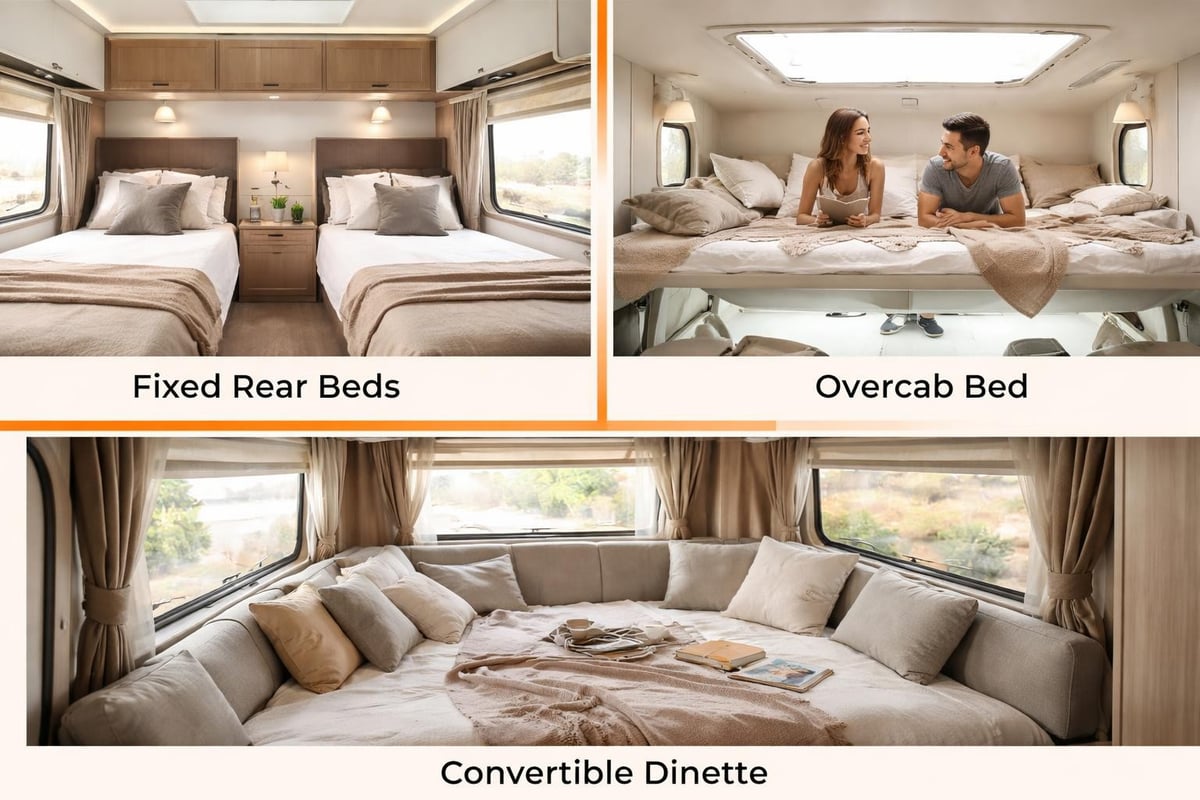
The term "4 berth" refers to sleeping capacity, but the actual layouts and sleeping arrangements can vary significantly between different models. Most 4 berth motorhomes feature a combination of fixed beds and convertible sleeping areas that transform from daytime seating into comfortable night-time accommodation.
Fixed rear bed configurations typically include a permanent double bed at the back of the motorhome, with additional sleeping space created by converting the dinette area. This arrangement provides excellent comfort for couples whilst maintaining flexibility for children or additional guests.
The overcab bed layout makes clever use of the space above the driver's cabin, creating a permanent double bed that doesn't need daily conversion. This design leaves the main living area free for a second double bed, usually formed from the dinette seating.
Twin single beds at the rear represent another popular option, particularly for families with older children or friends travelling together. These can often be pushed together to create a double bed when needed, offering remarkable versatility.
Selecting the right berth size significantly impacts your travel experience, and a 4 berth motorhome hire strikes an excellent balance between space and manoeuvrability. Understanding how to choose the right hire motorhome involves considering both your group size and your comfort requirements.
A 4 berth provides generous living space without the bulk of a 6 berth vehicle. You'll benefit from:
For couples travelling alone, the extra berths translate into additional storage space, a more spacious living area, or the flexibility to accommodate visiting family members during your travels.
Compared to larger motorhomes, 4 berth vehicles typically measure between 6 and 7 metres in length, making them considerably easier to handle on narrow country lanes and in car parks. This manageable size means less stress when navigating unfamiliar roads or reversing into campsites.
| Vehicle Aspect | 4 Berth Advantage | Comparison to Larger Models |
|---|---|---|
| Length | 6-7 metres | 1-2 metres shorter |
| Fuel Efficiency | Moderate consumption | Better than 6 berth |
| Parking | Fits standard bays | Easier than larger vehicles |
| Manoeuvrability | Comfortable handling | Significantly easier |
| Ferry Costs | Lower length bracket | Reduced travel expenses |
Modern 4 berth motorhome hire vehicles come equipped with comprehensive facilities that transform them into genuine homes on wheels. Understanding these features helps set realistic expectations and ensures you choose a vehicle that meets your specific needs.
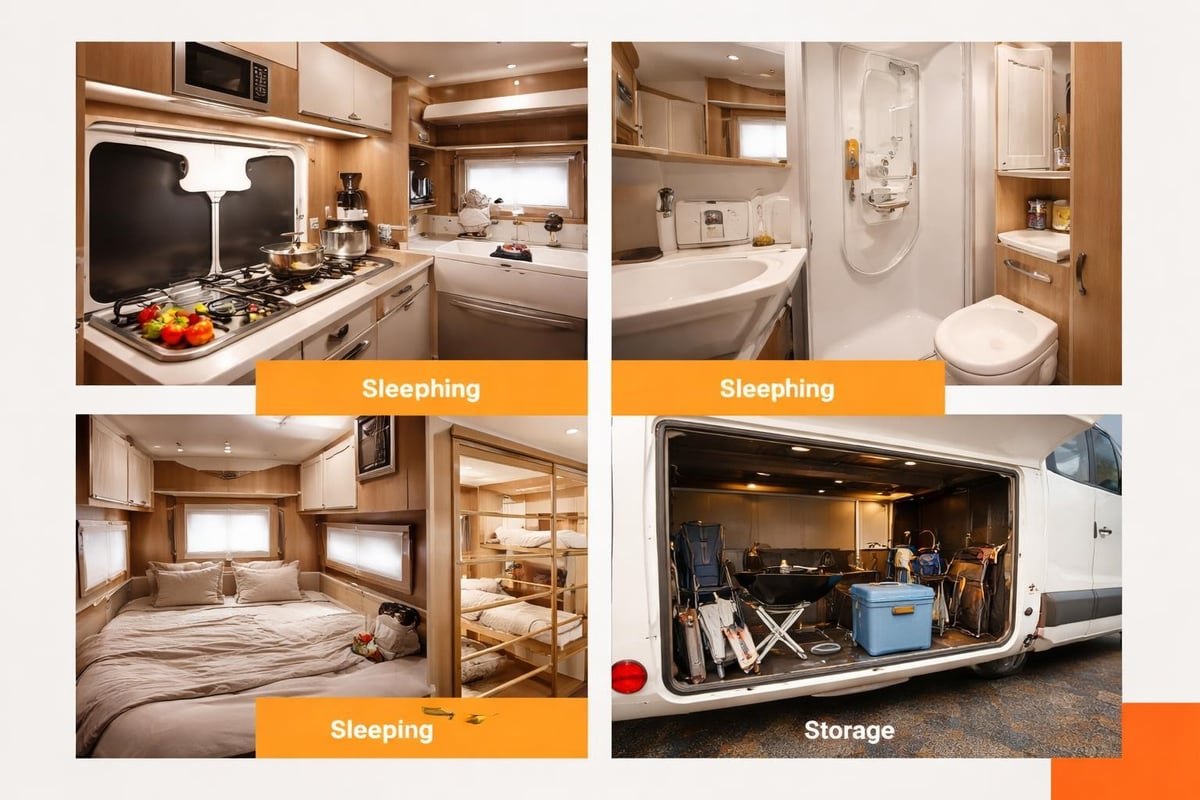
The kitchen area typically includes a two or three-burner gas hob, providing sufficient cooking capability for family meals. Most vehicles feature a combination fridge-freezer with three-way operation (gas, electric hook-up, or 12V whilst driving), ensuring your food stays fresh throughout your journey.
Sink facilities include hot and cold running water drawn from an onboard freshwater tank, usually holding between 90 and 120 litres. The dinette area converts between dining space and sleeping quarters, with comfortable seating for four people during mealtimes.
A dedicated washroom compartment houses the cassette toilet, shower, and washbasin. Whilst compact, these facilities provide complete independence from campsite amenities, offering tremendous flexibility when wild camping or staying at basic stopovers. The shower typically operates from the same water system as the kitchen, with hot water provided by a gas-powered boiler.
These storage options accommodate everything from clothing and toiletries to outdoor gear and sports equipment, making extended tours entirely practical.
Taking your first motorhome holiday requires some preparation, but the process needn't be daunting. First-time motorhome renters should focus on understanding vehicle systems, planning realistic daily distances, and familiarising themselves with motorhome etiquette.
Peak season demand for 4 berth motorhome hire runs from late May through August, with school holidays representing the busiest periods. Booking several months in advance ensures better vehicle availability and often secures preferential rates. Off-peak travel during spring or autumn offers excellent value whilst avoiding crowds at popular destinations.
When reviewing hire agreements, pay attention to mileage allowances, insurance coverage, and what's included in your package. Some hire companies provide comprehensive starter packs including bedding, kitchen equipment, and camping furniture, whilst others charge separately for these items.
Most hire companies offer thorough vehicle handovers lasting 45 minutes to an hour. This briefing covers:
Don't hesitate to ask questions during this process. Understanding these systems before departure prevents confusion at your first campsite and ensures you maximise comfort throughout your holiday.
The UK offers extraordinary diversity for motorhome travel, from rugged coastlines to tranquil countryside. A 4 berth motorhome hire provides the perfect combination of comfort and manoeuvrability for exploring these varied landscapes.
Starting from West Yorkshire, you're ideally positioned to explore the Yorkshire Dales National Park, with its limestone scenery, traditional villages, and excellent campsites. The market towns of Grassington, Settle, and Hawes provide charming stopover points with local amenities and attractions.
The North York Moors offer contrasting landscapes of heather moorland and ancient forests, whilst the Yorkshire coast delivers Victorian seaside towns and dramatic cliff scenery. These regions feature numerous Caravan Club sites and smaller independent campsites that welcome motorhomes.
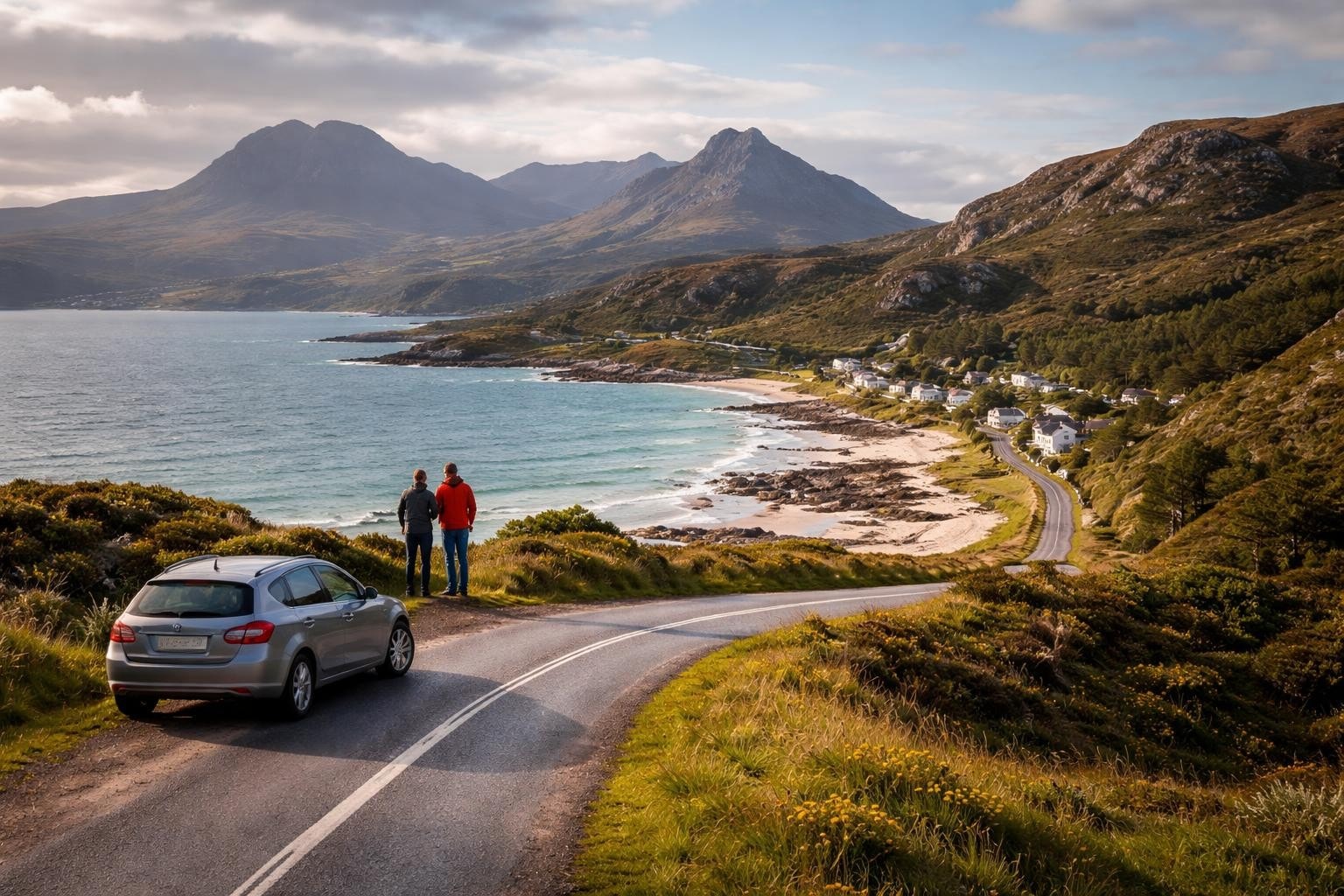
The North Coast 500 has gained tremendous popularity amongst motorhome enthusiasts, offering 516 miles of spectacular coastal and mountain scenery. A 4 berth motorhome handles this route comfortably, with its moderate size proving advantageous on single-track roads.
The Scottish Highlands provide incredible wild camping opportunities, though you'll need to follow the Scottish Outdoor Access Code and practice leave-no-trace principles. Official stopovers and campsites dot the route, offering facilities when needed.
The Lake District's winding roads and limited parking make a 4 berth's manageable dimensions particularly valuable. Numerous campsites cater specifically to motorhomes, providing excellent bases for walking and water sports.
Wales presents diverse attractions from Snowdonia's mountains to Pembrokeshire's coastal paths. The compact nature of Wales means you can experience remarkable variety within relatively short distances, perfect for maximising your holiday time.
| Region | Key Attractions | Motorhome Suitability | Typical Journey Time from Leeds |
|---|---|---|---|
| Yorkshire Dales | Walking, caves, villages | Excellent | 1-2 hours |
| Lake District | Lakes, mountains, hiking | Very good | 2 hours |
| Scottish Highlands | Scenery, wildlife, history | Excellent | 4-6 hours |
| North Wales | Snowdonia, castles, coast | Very good | 3 hours |
| Pembrokeshire | Coastal path, beaches | Good | 5 hours |
Living in a motorhome requires some adjustment to confined spaces, but thoughtful organisation and good habits ensure everyone remains comfortable throughout the journey.
Morning preparations flow more smoothly when you establish a system. One person might prepare breakfast whilst another handles washing and dressing in the bathroom. Converting the dinette from sleeping to dining configuration takes just minutes and becomes second nature after the first few nights.
Keeping the living area tidy significantly impacts comfort levels. Return items to their designated storage spaces after use, and complete a quick tidy each evening before bed. This five-minute routine prevents clutter accumulation and maintains a pleasant living environment.
Your 4 berth motorhome operates as a self-contained unit with finite resources. The freshwater tank typically provides two to three days of normal use, whilst the waste water capacity runs similar durations. Understanding why hiring a 4 berth motorhome offers practical advantages helps you appreciate these systems.
Water conservation tips include:
The leisure battery powers lights, water pump, and some appliances when you're not connected to mains electricity. Modern systems typically provide adequate power for overnight stops, recharging whilst driving or when connected to hook-up.
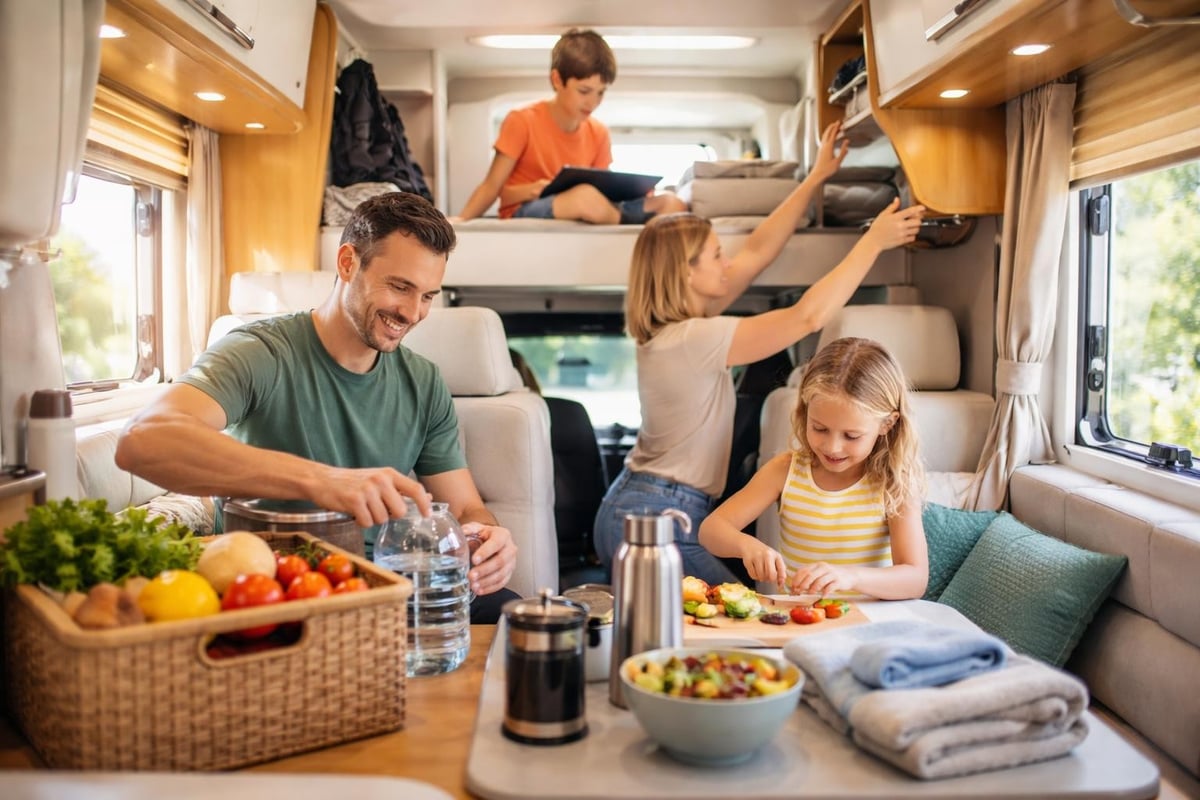
Each season brings distinct advantages and challenges for motorhome travel. Understanding these variations helps you pack appropriately and plan activities suited to the conditions.
March through May offers excellent value for 4 berth motorhome hire, with lower rates and quieter campsites. Wildlife watching reaches its peak as birds nest and wildflowers bloom across the countryside. Pack layers for changeable weather and waterproofs for occasional showers.
Spring's milder temperatures mean the motorhome's heating system won't work as hard, conserving gas supplies. However, you'll still appreciate the warmth on cooler evenings, particularly in northern regions or at elevation.
Peak season delivers long daylight hours perfect for extended exploration, but requires advance booking for both vehicle hire and popular campsites. Coastal destinations become particularly busy, so consider arriving at campsites earlier in the day to secure pitches.
Temperature management becomes important during hot weather. Park with consideration for shade, use window screens to reduce heat gain, and maximise ventilation through skylights and windows. The 4 berth's air volume means it stays cooler than larger motorhomes during summer conditions.
September and October provide outstanding motorhome touring conditions. Autumn colours transform landscapes, harvest festivals celebrate local produce, and campsites return to peaceful atmospheres. Rates typically reduce after school holidays, offering excellent value.
Winter motorhoming remains viable in a well-equipped 4 berth, though you'll need to check that your hire vehicle includes adequate heating and insulation. Some hire companies winterise their fleets, limiting availability between November and February, whilst others cater specifically to winter sports enthusiasts and festive travellers.
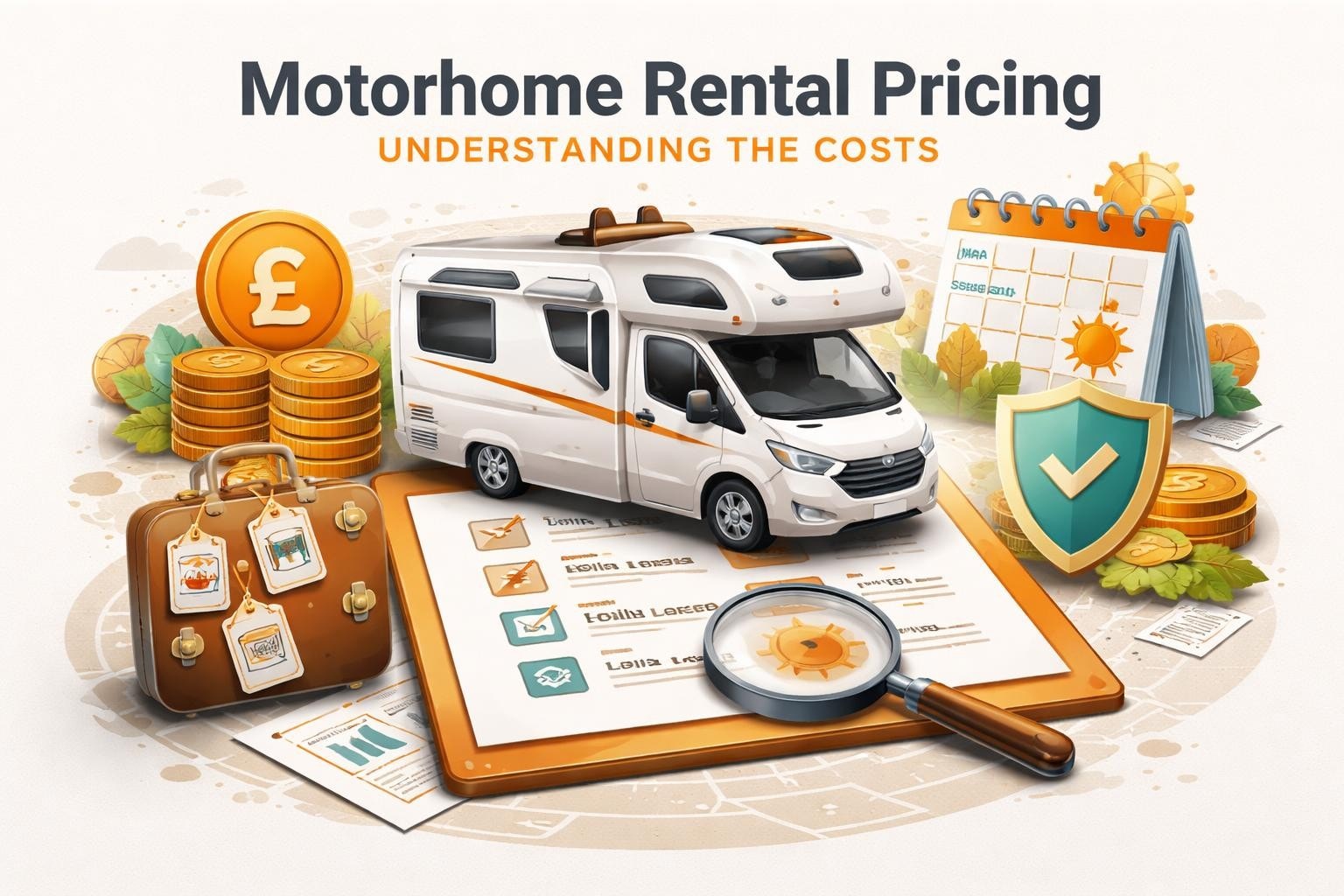
Understanding the complete cost picture helps you budget accurately for your 4 berth motorhome hire adventure. Beyond the daily hire rate, several additional expenses contribute to the total investment.
Daily rates vary significantly based on season, vehicle age, and hire duration. Expect peak season rates (July-August) to exceed shoulder season prices by 30-50%. However, weekly hire typically costs less per day than shorter rentals, making extended trips more economical.
Additional charges might include:
Fuel consumption for a 4 berth motorhome typically ranges between 20-25 miles per gallon, depending on engine size and driving conditions. Budget approximately £15-20 per 100 miles for fuel costs at 2026 prices.
| Expense Category | Typical Daily Cost | Notes |
|---|---|---|
| Campsite Fees | £20-40 | Varies by season and facilities |
| Fuel | £20-30 | Based on 100-150 miles daily |
| Gas (LPG) | £3-5 | Heating, cooking, hot water |
| Food | £30-50 | Family of four, self-catering |
| Attractions | £20-40 | Entries, activities, parking |
Total daily running costs typically range from £90-165 beyond the hire fee, though careful planning and off-peak travel can reduce these expenses substantially.
Familiarising yourself with key technical aspects ensures you hire a suitable vehicle and operate it correctly throughout your journey. Different manufacturers and models vary, but certain specifications remain standard across most 4 berth motorhomes.
Most 4 berth motorhomes fall within the 3,500kg maximum authorised mass (MAM), meaning they're drivable on a standard UK car licence issued after 1997. This weight limit includes the vehicle, passengers, fuel, water, and all cargo, so understanding payload capacity prevents overloading.
Payload allowance typically ranges from 400-600kg in a 4 berth motorhome. This capacity accommodates passengers, luggage, food, and water, but requires mindful packing. Weigh luggage if attempting extended tours with maximum occupancy.
Understanding your motorhome's dimensions proves essential when navigating height restrictions, width limitations, and parking spaces:
These measurements determine which roads you can safely navigate and where you can overnight. Always verify height before entering car parks, tunnels, or driving under bridges, as collision with overhead structures represents one of the most common motorhome accidents.
Motorhoming offers opportunities to connect with nature whilst maintaining a relatively modest environmental footprint compared to traditional holidays involving flights and hotel stays. Making conscious choices further reduces your impact.
Grey water disposal should always occur at designated dump points, never into storm drains or natural water sources. Most campsites provide chemical disposal points for toilet cassettes and grey water drainage facilities. Wild camping requires absolute discretion, using official dump points when returning to civilisation.
Choosing local produce at farmers' markets and farm shops reduces food miles whilst supporting regional economies. These shopping trips often become holiday highlights, connecting you with local food culture and seasonal specialities.
Solar panels, fitted to some modern 4 berth motorhomes, reduce reliance on hook-up electricity and improve off-grid capability. If your hire vehicle includes solar charging, you'll enjoy extended freedom from electric hookup points.
Maximising enjoyment from your 4 berth motorhome hire involves balancing planning with spontaneity, allowing for both structured activities and serendipitous discoveries.
Over-scheduling represents a common mistake amongst first-time motorhomers. Driving a motorhome takes longer than car travel, and you'll want time to simply enjoy campsite surroundings. Plan for shorter daily distances than you might in a car, perhaps 50-100 miles maximum to allow for leisurely exploration.
Build flexibility into your route by booking only your first and last nights in advance, leaving mid-trip nights open for spontaneous decisions. This approach lets you extend stays at favourite locations or adjust plans based on weather conditions.
The motorhoming community offers tremendous support and knowledge sharing. Fellow travellers at campsites often provide valuable local recommendations and practical advice. Don't hesitate to ask experienced motorhomers for tips, particularly regarding your specific vehicle's features.
Online resources including motorhome forums and Facebook groups connect you with a wealth of collective experience. The Caravan Club and Camping and Caravanning Club provide extensive campsite networks, overnight parking locations, and member support services throughout the UK.
Exploring available motorhomes at The Camper Co gives you a clear picture of the specific 4 berth options available in West Yorkshire, helping you visualise your upcoming adventure with accurate vehicle details.
Protecting both yourself and your hire vehicle requires attention to several important aspects throughout your journey.
Modern motorhomes include various security features, but additional precautions prove worthwhile. Always lock the habitation door when leaving the vehicle unattended, even briefly. Some hire companies provide steering wheel locks for overnight stops, particularly in urban areas.
Valuable items should remain out of sight when you leave the motorhome. Consider using the vehicle's safe if provided, or carry important documents and electronics with you during day trips from campsites.
Remember that motorhomes handle differently from cars, requiring earlier braking, wider turning circles, and greater attention to height clearances. Allow extra distance when overtaking or being overtaken, as the high-sided profile catches crosswinds.
Reversing procedures benefit from a second person guiding you, particularly in tight campsite situations. Many hire vehicles include reversing cameras, but these supplement rather than replace careful observation and assistant guidance.
Choosing a 4 berth motorhome hire opens up incredible possibilities for UK exploration, offering the perfect balance of space, comfort, and manoeuvrability for small families or couples seeking extra room. From understanding layouts and features to planning routes and managing daily living, this guide equips you with the knowledge needed for a successful motorhome adventure. Whether you're dreaming of Yorkshire's rolling dales, Scotland's dramatic highlands, or Wales's coastal paths, The Camper Co provides quality 4 berth motorhomes from their West Yorkshire base, perfectly positioned for your next great British adventure.