Planning a campervan adventure around Scotland's most spectacular coastal route requires more than just enthusiasm and a sense of adventure. The North Coast 500, often called Scotland's answer to Route 66, offers 516 miles of breathtaking scenery, historic castles, pristine beaches, and charming villages. Whether you're setting off from Leeds in a cosy 2-berth campervan or taking the whole family in a spacious motorhome, understanding how to navigate this iconic route is essential for an unforgettable journey.
The North Coast 500 begins and ends in Inverness, making a complete loop around the northern Highlands of Scotland. This circular route takes you through some of the most dramatic landscapes in Britain, from rugged coastlines to ancient forests and mountain passes.
A proper north coast 500 map reveals the route's strategic layout through six distinct regions: Wester Ross, Sutherland, Caithness, the Black Isle, Easter Ross, and Inverness-shire. Each region offers its own character and attractions, making route planning crucial for maximizing your time.
Starting from Inverness, the traditional clockwise direction takes you first along the Black Isle, offering gentle introduction to Highland scenery. From there, you head north through Easter Ross before reaching the wild beauty of Sutherland's west coast.
The route then curves around through Caithness, the northeastern corner where the landscape opens into dramatic clifftops and sweeping moorland. Wester Ross on the western coast delivers the route's most dramatic scenery, with mountains plunging straight into the sea.
| Region | Key Characteristics | Recommended Time |
|---|---|---|
| Black Isle | Rolling farmland, dolphin watching | Half day |
| Easter Ross | Coastal villages, history | 1 day |
| Sutherland | Remote beaches, wildlife | 2-3 days |
| Caithness | Clifftops, John O'Groats | 1-2 days |
| Wester Ross | Mountain scenery, lochs | 2-3 days |
| Inverness-shire | Gateway region | Half day |
Different map formats serve different purposes when navigating Scotland's premier road trip route. Understanding which type works best for your travel style helps ensure smooth navigation through sometimes challenging Highland terrain.
The official North Coast 500 map provides comprehensive detail in a convenient A1 format that folds down to pocket size. This full-color resource includes tourist attractions, driving information, and crucially for motorhome drivers, alternative routes for larger vehicles.
Paper maps offer reliability when mobile signals drop, which happens frequently in the remote Highland regions. They also allow you to mark your own notes, campsite locations, and points of interest discovered along the way.
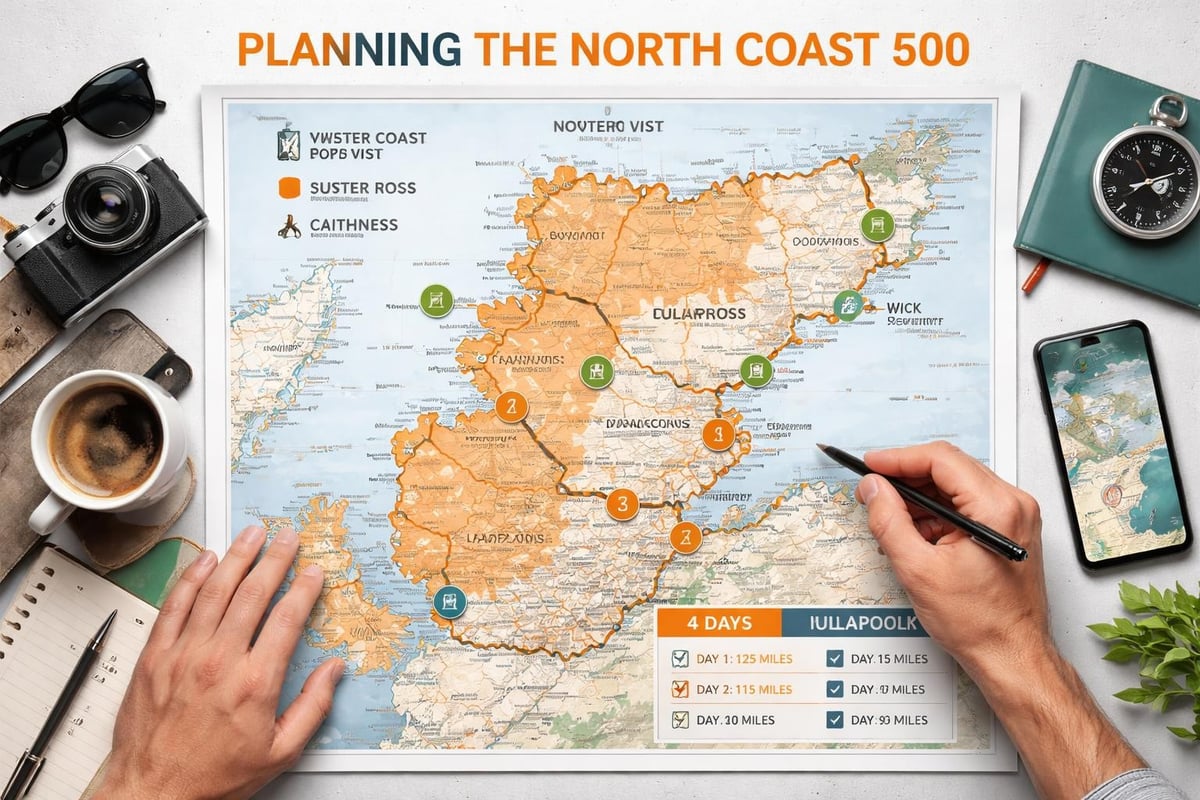
Modern GPS systems and smartphone apps provide real-time navigation, but they come with limitations in the Highlands. Mobile signal can be intermittent or non-existent for long stretches, particularly along the western coast through Wester Ross and northwestern Sutherland.
Advantages of digital maps:
Limitations to consider:
Before departing Leeds, spend time exploring the interactive route map available on the official North Coast 500 website. This digital tool lets you preview each section, research attractions, and plan overnight stops from the comfort of home.
These resources typically include photo galleries, attraction descriptions, and user reviews that help you prioritize which locations deserve more time. Building a preliminary itinerary using these tools means you arrive prepared, even if you maintain flexibility once on the road.
Effective route planning makes the difference between a stressed dash around Scotland and a relaxed exploration of its finest landscapes. Your north coast 500 map becomes the foundation for decisions about timing, overnight stops, and daily distances.
Most travelers choose the clockwise direction from Inverness, heading north up the east coast before sweeping around through Caithness and down the dramatic western seaboard. This approach saves the most spectacular coastal scenery for the second half of your journey.
The anticlockwise route tackles the challenging western mountain passes earlier in your trip. This option works well if you want dramatic scenery immediately, though it means ending your journey with the gentler eastern landscapes.
Clockwise advantages:
Anticlockwise considerations:
The total 516-mile distance seems manageable until you factor in the reality of Highland driving. Single-track roads, passing places, wandering sheep, and jaw-dropping scenery that demands photo stops mean average speeds rarely exceed 30-40 mph on many sections.
A good north coast 500 map helps you divide the route into realistic daily sections. Most motorhome travelers find 60-80 miles per day allows time for sightseeing, photography, and simply soaking in the atmosphere without feeling rushed.
| Journey Section | Distance | Typical Drive Time | Recommended Stops |
|---|---|---|---|
| Inverness to Ullapool | 58 miles | 2-3 hours | Corrieshalloch Gorge, Falls of Measach |
| Ullapool to Lochinver | 35 miles | 2 hours | Ardmair Beach, Knockan Crag |
| Lochinver to Durness | 70 miles | 3-4 hours | Achmelvich Beach, Drumbeg viewpoint |
| Durness to Thurso | 72 miles | 3-4 hours | Smoo Cave, Castle of Mey |
Driving a motorhome around the North Coast 500 presents unique challenges that require specific preparation beyond basic map reading. Understanding your vehicle dimensions and how they interact with Highland road conditions keeps you safe and confident.
Much of the route, particularly through Wester Ross and Sutherland, consists of single-track roads with passing places. Your north coast 500 map should indicate these sections, allowing you to mentally prepare for different driving conditions.
Key single-track principles:
Standard motorhomes fit through most routes, but some alternative roads have low bridges or narrow gates. Always check your vehicle height before departure and note any restrictions marked on detailed maps.
The comprehensive guide available from the official North Coast 500 organization includes specific advice for larger vehicles, helping you identify which alternative routes exist where the main coastal road becomes too challenging.
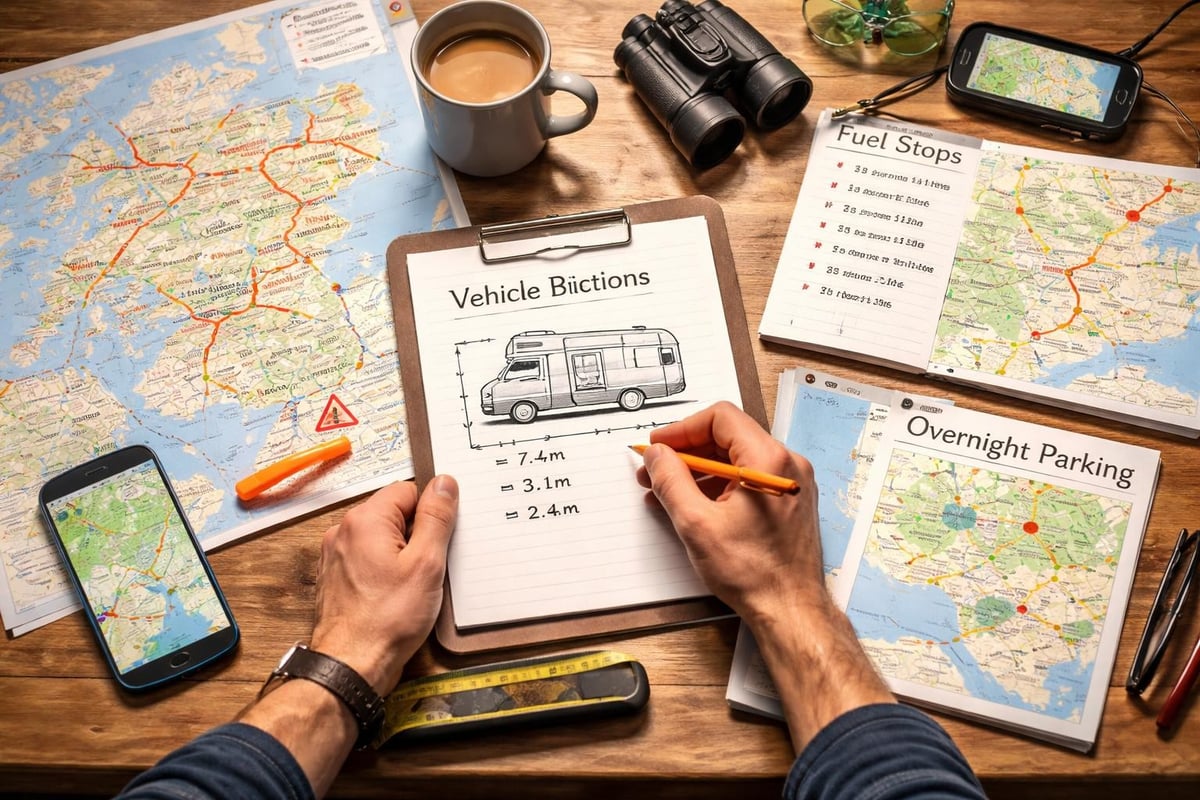
Your north coast 500 map helps identify potential overnight locations, but understanding the different options available helps you make informed choices about where to rest each evening.
The NC500 route passes numerous established campsites ranging from basic facilities to fully-serviced motorhome parks. Booking ahead during peak season (May through September) is essential, as spaces fill quickly.
Wild camping and overnight parking carry specific responsibilities in the Highlands. The Scottish Outdoor Access Code permits responsible wild camping, but this means leaving no trace and respecting local communities.
Always use designated motorhome parking areas where available. These locations typically offer waste disposal facilities and are situated where overnight parking doesn't impact local residents or businesses.
The time of year dramatically affects your North Coast 500 experience, influencing not just weather conditions but road accessibility, daylight hours, and facility availability. Consulting your north coast 500 map alongside seasonal guides helps set realistic expectations.
Spring offers longer daylight hours and fewer tourists, though weather remains unpredictable. Snow can still affect higher passes in March and early April, so check road conditions before tackling mountain routes.
Wildlife watching improves significantly in spring, with seal pups, nesting seabirds, and newborn Highland cattle calves appearing along the route. Your map can help you identify prime wildlife spotting locations.
Summer brings extended daylight, with the northern location meaning twilight lasts until nearly midnight in June. This allows flexible scheduling and the ability to drive later when roads are quieter.
However, summer also brings midges, particularly in sheltered areas during calm, humid conditions. Coastal locations with steady breezes offer relief, so plan your overnight stops strategically using your map to identify exposed sites.
Early autumn combines relatively stable weather with spectacular fall colors and significantly fewer tourists. The travel guide advice suggests September offers one of the best windows for motorhome exploration.
Facilities begin closing from mid-October onwards, so verify campsite opening dates before finalizing your itinerary. Your map becomes crucial for identifying which services remain available in shoulder season.
Remote Highland sections can stretch 40-50 miles between fuel stations, making fuel planning essential. A detailed north coast 500 map marked with service stations prevents range anxiety, particularly important when driving larger motorhomes with significant fuel consumption.
Western coast considerations:
The stretch from Ullapool to Durness includes limited fuel options, with Lochinver offering the main service station. Missing this means a potentially worrying drive to the next available fuel.
Northern section tips:
Fuel prices increase the further north you travel, with remote stations charging premium rates. Fill up when you see reasonable prices, particularly in larger towns like Ullapool or Thurso.
| Location | Last Fuel Before | Next Station | Distance |
|---|---|---|---|
| Ullapool | Heading north | Lochinver | 35 miles |
| Lochinver | Continuing north | Durness | 70 miles |
| Durness | Heading east | Tongue | 28 miles |
| John O'Groats | Heading south | Wick | 17 miles |
A north coast 500 map reveals dozens of attractions worth adding to your itinerary. Prioritizing based on your interests helps create a personalized journey rather than simply following the standard route.
Coastal attractions:
Mountain landscapes:
Scotland's turbulent history left impressive monuments scattered around the route. Mark these on your map to ensure you don't miss significant sites that align with your interests.
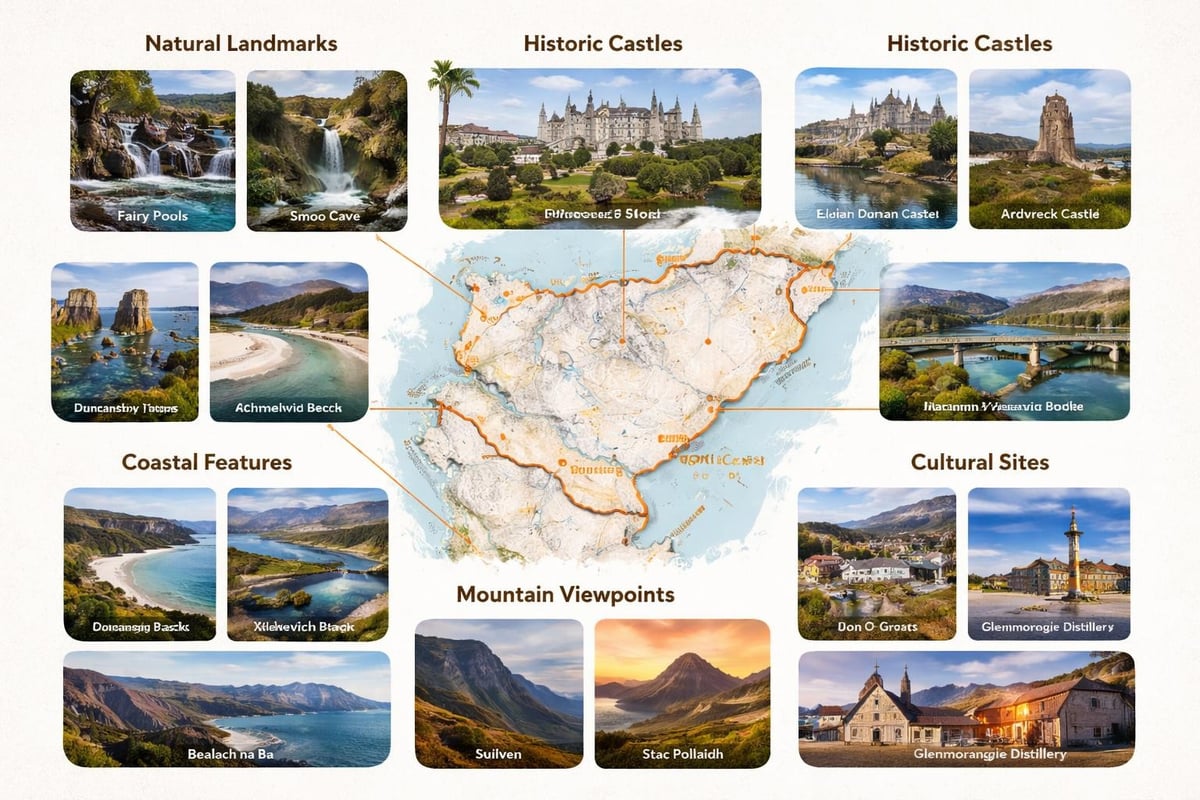
Notable castles and historic buildings:
Highland weather changes rapidly, with conditions varying dramatically between east and west coasts. Understanding how to read weather patterns in conjunction with your north coast 500 map helps you adapt plans for safety and comfort.
The western coast receives significantly more rainfall than eastern sections, with Wester Ross being particularly wet. Your map helps you plan activities accordingly, scheduling outdoor walks for drier eastern days while saving rainy periods for driving spectacular western coastal roads.
Wind exposure varies considerably too. Coastal sections experience stronger winds than inland glens, affecting both driving comfort and campsite selection. Choose your overnight stops based on forecast conditions rather than just map location.
Before departing from Leeds, ensure your motorhome is properly equipped for Highland conditions. While your north coast 500 map guides where you're going, vehicle preparation ensures you arrive safely and comfortably.
Navigation backup:
Safety equipment:
Comfort additions:
The comprehensive planning resources available through the official route website complement your physical map, offering downloadable guides and current condition updates that inform your preparation.
The North Coast 500 rewards flexible planning over rigid schedules. While your north coast 500 map provides the framework, allowing time for spontaneous detours and unexpected discoveries creates the most memorable experiences.
Plan shorter daily distances than you think necessary. Highland roads invite slower travel, with viewpoints, wildlife encounters, and friendly locals all providing reasons to pause. Motorhome travel offers the luxury of stopping wherever captures your imagination.
Consider planning loop walks from roadside parking areas, exploring coastal paths, or simply sitting by a loch watching the light change across the mountains. These unplanned moments often become journey highlights.
The Highlands rely on tourism but value respectful visitors who engage thoughtfully with local communities. Support local businesses, follow the Scottish Outdoor Access Code, and take time to chat with residents who often share valuable local knowledge.
Small cafes, craft shops, and local museums scattered along the route provide authentic Highland experiences beyond the major attractions marked on tourist maps. These encounters add depth to your journey, transforming it from a simple road trip into genuine cultural exploration.
Modern technology enhances rather than replaces traditional map reading. The most successful North Coast 500 journeys combine both approaches, using each method's strengths while acknowledging their limitations.
Download offline maps before departure, ensuring navigation continues through signal-free zones. However, keep your paper north coast 500 map accessible for quick overview reference and marking locations that exceed your expectations.
Apps like Park4Night help identify motorhome-friendly overnight spots, while dedicated NC500 apps provide curated attraction information. These digital tools work best when used alongside your physical map, creating comprehensive awareness of both your current location and upcoming opportunities.
Exploring the detailed route sections and understanding vehicle options helps you match motorhome size to route challenges, ensuring comfortable navigation throughout your Highland adventure.
Planning your North Coast 500 adventure with a comprehensive map transforms this spectacular route from a simple drive into a carefully crafted exploration of Scotland's finest landscapes. Whether you're ready to set off immediately or still in the dreaming stage, having the right vehicle makes all the difference to your Highland experience. The Camper Co offers a range of motorhomes and campervans perfectly suited for tackling Scotland's most famous road trip, from compact 2-berth options ideal for couples to spacious family motorhomes that bring everyone along for the adventure.
York stands as one of England's most captivating cities, with its medieval streets, stunning architecture, and rich Roman heritage drawing visitors from across the globe. While staying in the city offers its own charm, hiring a motorhome transforms your York visit into the starting point of an unforgettable Yorkshire adventure. With the freedom to explore beyond the city walls, you'll discover moorland vistas, coastal villages, and countryside gems that make this region truly special. Understanding your options for york motorhome hire helps you plan the perfect journey through this remarkable corner of England.
York's strategic location makes it an exceptional starting point for motorhome exploration across Yorkshire and northern England. The city sits at the heart of the region, providing easy access to the Yorkshire Dales, North York Moors, and the stunning coastline.
From York, you can reach the dramatic landscapes of the Yorkshire Dales National Park within an hour's drive. The North York Moors stretch to the northeast, offering purple heather moorlands and quaint market towns. Head east and you'll find yourself at the seaside resorts of Scarborough and Whitby within ninety minutes.
Key destinations from York:
The city's excellent road connections via the A64, A19, and A1(M) mean you can plan routes in any direction without navigating complicated urban areas immediately after collecting your vehicle.

Selecting the right motorhome size and type significantly impacts your travel experience. Different vehicles suit different group sizes, travel styles, and comfort requirements.
| Vehicle Type | Sleeping Capacity | Best For | Typical Features |
|---|---|---|---|
| Compact Campervan | 2 berths | Couples, solo travelers | Easy parking, fuel efficient, nimble handling |
| Mid-size Motorhome | 3-4 berths | Small families, friends | Good balance of space and maneuverability |
| Large Motorhome | 5-6 berths | Larger families, groups | Maximum comfort, full facilities, generous storage |
Compact campervans excel when you plan to explore York's city centre frequently or navigate narrow country lanes in the Dales. Their smaller footprint means easier parking at York’s designated parking areas and better fuel economy across longer journeys.
Mid-size motorhomes provide comfortable living space without becoming cumbersome on Yorkshire's varied road network. These vehicles typically include proper cooking facilities, dining areas, and separate sleeping quarters, making them ideal for families with younger children.
Larger motorhomes deliver home-like comfort with fixed beds, spacious lounges, and comprehensive bathroom facilities. While they require more careful route planning around narrow village streets, they're perfect for extended trips where comfort takes priority.
Yorkshire's diversity means you can craft entirely different experiences depending on your interests. Whether you're drawn to coastal scenery, moorland hiking, or historic market towns, york motorhome hire gives you the flexibility to follow your preferences.
The Yorkshire coast delivers dramatic clifftop scenery, traditional fishing villages, and bustling seaside resorts. Starting from York, head northeast towards Malton before joining the A64 to Scarborough.
Must-visit coastal locations:
Many coastal campsites offer stunning sea views and easy beach access. The Camping and Caravanning Club provides comprehensive information about facilities and booking options across the region.
The North York Moors and Yorkshire Dales present contrasting landscapes, each with distinctive character. The Moors offer expansive heather-covered uplands, while the Dales feature limestone valleys, waterfalls, and traditional stone villages.

North York Moors highlights include Rievaulx Abbey, the market town of Helmsley, and the scenic Hole of Horcum. The moorland roads provide spectacular driving routes, though some require confidence with narrower passages and steeper gradients.
In the Dales, don't miss Malham Cove's limestone amphitheatre, Bolton Abbey's riverside walks, and the charming villages of Grassington and Hawes. These locations offer excellent walking opportunities directly from campsites, allowing you to leave your motorhome settled while exploring on foot.
Understanding the practical aspects of motorhome travel ensures a smooth, enjoyable experience. From licensing requirements to campsite etiquette, preparation makes all the difference.
Most standard UK driving licences cover motorhomes up to 3,500kg (3.5 tonnes), which includes the majority of hire vehicles. If you passed your driving test after January 1997, check your licence category entitlements, as restrictions may apply to larger vehicles.
Insurance typically comes included in hire packages, but verify exactly what's covered. Consider whether you need additional breakdown cover, especially for remote moorland areas where mobile signals can be limited.
Yorkshire offers hundreds of campsites ranging from basic farm sites to fully-serviced touring parks. Booking ahead proves essential during peak summer months (June through August) and school holidays.
Campsite facility checklist:
Many visitors exploring options through platforms like Yescapa’s York listings or Camplify appreciate researching campsite locations before finalizing their vehicle choice. This helps match your accommodation preferences with your intended route.
Before venturing into the countryside, spend time discovering York itself. The city's compact historic centre rewards exploration, though motorhome access requires careful planning.
York's medieval street layout isn't designed for large vehicles. Park your motorhome at designated facilities outside the city walls and walk or use public transport into the centre. Several park-and-ride sites operate around York's periphery, offering secure parking and frequent bus services.
The city's pedestrianized zones, including the famous Shambles, are best explored on foot. Allow a full day to visit York Minster, walk the medieval city walls, and discover the National Railway Museum.
Yorkshire's weather varies dramatically throughout the year, influencing both driving conditions and available activities. Planning according to seasons enhances your experience significantly.
Spring brings wildflowers to the Dales and lambs to the moorland farms, though April showers remain common. Pack waterproof clothing regardless of forecasts.
| Season | Advantages | Considerations |
|---|---|---|
| Spring (Mar-May) | Fewer crowds, spring flowers, mild temperatures | Variable weather, some facilities still closed |
| Summer (Jun-Aug) | Warmest weather, longest days, all attractions open | Peak prices, busier campsites, advance booking essential |
| Autumn (Sep-Nov) | Autumn colors, fewer visitors, harvest festivals | Shorter days, unpredictable weather, some sites close |
| Winter (Dec-Feb) | Peaceful countryside, festive markets, clear visibility | Cold temperatures, limited campsite availability, some roads challenging |
Summer offers the most reliable weather but brings peak season crowds to popular spots like Whitby and Malham. Early booking for york motorhome hire and campsite reservations becomes crucial during this period.
Autumn transforms the Dales and Moors with spectacular colour displays. September and October deliver beautiful light for photography and comfortable walking temperatures, though rainfall increases.
Winter motorhome travel presents unique rewards for experienced travelers. Christmas markets in York and Harrogate create festive atmosphere, while moorland landscapes gain stark beauty under frost and occasional snow. However, limited campsite openings and challenging road conditions require careful planning and appropriate vehicle preparation.

Efficient packing maximizes your motorhome's storage while ensuring you have everything needed for comfortable travel. Yorkshire's changeable weather demands versatile clothing and equipment.
Layer clothing to adapt quickly to changing conditions. Even summer days can turn cool when exploring exposed moorland areas, while valley villages may feel warm and sheltered.
Essential clothing items:
Most hire motorhomes include basic kitchen equipment, but confirm exactly what's provided. Supplementing with a few personal items enhances meal preparation convenience.
Bring reusable containers for storing leftovers, quality coffee if you're particular about your morning brew, and favourite seasonings that may not be included in basic kits. A good torch or headlamp proves invaluable for evening tasks around the campsite.
Confidence with driving and parking a larger vehicle develops quickly, but understanding key techniques from the start prevents stress and mishaps.
Take time familiarizing yourself with your vehicle's dimensions before tackling busy roads or tight spaces. Walk around the motorhome noting the width, height, and rear overhang. Many Yorkshire country lanes include low bridges and narrow sections where height and width awareness proves crucial.
Key driving considerations:
Modern sat-nav systems help enormously, but having a physical road atlas provides useful backup, especially in areas with limited mobile signals. The North York Moors and remoter Dales valleys sometimes challenge GPS reception.
Plan routes avoiding narrow lanes where possible until you've built confidence. Major A-roads connecting Yorkshire's towns generally accommodate motorhomes comfortably, while some B-roads require more careful navigation.
Respecting campsite communities and Yorkshire's natural environment ensures enjoyable experiences for everyone while preserving these special places for future visitors.
Arrive during designated hours, typically between 1pm and 8pm. Early or late arrivals may disturb other campers and campsite owners. Most sites require departure by noon, allowing time for cleaning and preparing pitches for incoming guests.
Keep noise levels considerate, particularly between 10pm and 8am. Sound carries easily in open camping fields, so conversations and entertainment should respect neighbors' desire for peaceful evenings.
Yorkshire's landscapes face increasing visitor pressure, making responsible travel practices essential. Use designated waste disposal points for all rubbish, recycling where facilities exist. Never empty waste water except at proper disposal points, as grey water damages vegetation and ecosystems.
Stick to established paths when walking, preventing erosion and protecting ground-nesting birds on moorland areas. The Countryside Code provides comprehensive guidance for responsible outdoor recreation across the region.
Understanding the complete cost picture helps you plan an adventure that suits your budget while maximizing value and enjoyment.
| Expense Category | Typical Cost Range | Money-Saving Tips |
|---|---|---|
| Motorhome hire | £500-£1,500/week | Book early, consider mid-week collection, travel off-peak |
| Fuel | £150-£300/week | Plan efficient routes, avoid unnecessary driving |
| Campsites | £20-£45/night | Use Camping Club membership discounts, book directly |
| Food and groceries | £40-£80/day | Cook meals in motorhome, shop at supermarkets |
| Attractions | £10-£30/person | Many Yorkshire attractions free, National Trust membership valuable |
York motorhome hire costs vary seasonally, with summer commanding premium rates while spring and autumn offer better value without sacrificing weather reliability. Mid-week travel sometimes provides lower rates than weekend breaks.
Motorhomes consume more fuel than cars, typically achieving 20-30 miles per gallon depending on size and engine type. Steady driving speeds, minimizing rapid acceleration, and reducing unnecessary weight all improve efficiency.
Plan routes grouping attractions geographically rather than crisscrossing the region repeatedly. Yorkshire's compact geography means you can often settle at a campsite for several nights, using it as a base for day trips rather than moving daily.
Yorkshire's food scene combines traditional favorites with contemporary culinary excellence. Balancing motorhome cooking with sampling local specialties creates memorable dining experiences.
Motorhome kitchens enable significant savings compared to restaurant dining for every meal. Stock up at larger supermarkets in York, Leeds, or Harrogate before heading into more rural areas where shop choices become limited.
Efficient motorhome meal planning:
Don't miss opportunities to sample regional specialties. Yorkshire pudding, of course, but also Wensleydale cheese from the Dales, fresh fish and chips in coastal towns, and traditional afternoon tea in historic tearooms.
Farmers' markets operate in many Yorkshire towns, offering excellent produce directly from local growers. Helmsley, Skipton, and Malton host regular markets worth timing your visit around. These provide fresh ingredients for motorhome cooking while supporting local food producers.
Yorkshire's attractions range from free natural wonders to historic houses and museums. Strategic planning maximizes what you experience without overstretching your budget.
Many of Yorkshire's finest experiences cost nothing. Walking the Yorkshire Three Peaks, exploring Brimham Rocks, or watching sunset over Malham Cove delivers memorable moments without admission fees.
Historic towns like Richmond, Knaresborough, and Beverley reward wandering with architectural heritage and riverside settings. The National Trust and English Heritage operate numerous properties across the region, so membership often pays for itself within a week's visiting.
Families find Yorkshire exceptionally welcoming with diverse activities suitable for all ages. Beach days at Filey or Scarborough, steam train rides on the North Yorkshire Moors Railway, and exploring castle ruins combine education with entertainment.
Many farms across the Dales welcome visitors, offering children chances to meet animals and learn about rural life. These experiences complement the freedom and adventure that makes york motorhome hire so appealing for family holidays.
Understanding what support comes with your motorhome hire and knowing how to access help if needed provides important peace of mind during your adventure.
Reputable hire providers offer comprehensive handovers explaining all vehicle systems and features. Take time during this process asking questions about anything unclear, from operating the heating system to connecting to campsite electricity supplies.
Request a demonstration of key functions:
Quality motorhome hire includes breakdown coverage, but confirm exactly what's included and how to access help. Store emergency contact numbers in your phone before departing, and keep physical copies in the motorhome's documents folder.
Most mechanical issues rarely occur with well-maintained hire fleets, but knowing the procedure for reporting problems and accessing roadside assistance ensures quick resolution if needed. Many hire companies work with specialist motorhome service providers who understand these vehicles specifically.
While Yorkshire provides weeks of exploration potential, your motorhome hire enables venturing further if time allows. Northern England's other regions lie within comfortable driving distance.
The Lake District National Park sits approximately two hours west of York, offering England's most dramatic mountain scenery. Northumberland's coastline and historic sites extend northward, while the Peak District provides moorland and valleys to the south.
Scotland's borders region becomes accessible for longer hire periods, opening possibilities for Edinburgh visits or exploring the Southern Uplands. Each of these destinations complements Yorkshire's character while adding variety to extended motorhome adventures.
Several organizations provide valuable resources for planning motorhome routes. The Caravan and Motorhome Club offers route suggestions and campsite directories, while general tourism boards supply information about regional attractions and events.
Ordnance Survey maps remain invaluable for detailed route planning, particularly when exploring walking routes from your campsite base. The Explorer series (1:25,000 scale) shows field boundaries, footpaths, and terrain features essential for serious hiking.
Learning from others' experiences helps you avoid common pitfalls while discovering insider knowledge that enhances your Yorkshire adventure.
New motorhome travelers often pack too much, filling storage spaces with items never used. Start with essentials and purchase additional items only as needs become apparent. Remember you'll pass shops regularly where forgotten items can be bought.
Another frequent error involves overly ambitious itineraries. Motorhome travel rewards relaxed pacing, allowing time to enjoy each location rather than rushing between destinations. Plan fewer stops with longer stays rather than moving daily.
Visit popular attractions early morning or late afternoon to avoid peak crowds. Malham Cove at sunrise or Whitby Abbey near closing time offer far more atmospheric experiences than midday visits.
For the best fish and chips, ask locals rather than following tourist queues. Smaller coastal villages often have outstanding chippies frequented by residents who know quality. Similarly, village pubs frequently serve excellent food at better value than obvious tourist restaurants.
Planning a motorhome adventure from York opens up Yorkshire's incredible diversity, from historic cities to wild moorland landscapes and charming coastal towns. With the right vehicle choice, thoughtful itinerary planning, and preparation for Yorkshire's changeable weather, you'll create unforgettable memories exploring one of England's finest regions. Whether you're looking to discover Yorkshire's natural beauty or use it as a gateway to northern England's treasures, The Camper Co provides quality motorhomes and expert guidance to help you start your journey with confidence from their convenient West Yorkshire base.
Planning a family holiday or group adventure often means you need more space than a standard campervan can offer. Large RV hire opens up a world of possibilities, providing the room and comfort necessary for multi-generational trips, extended holidays, or simply travelling with all the gear you need. Whether you're envisioning a tour through the Yorkshire Dales or a coastal exploration of Scotland, understanding what makes large RV hire different from smaller options will help you make the best choice for your journey.
When we talk about large RV hire, we're typically referring to motorhomes that sleep five or six people comfortably. These vehicles represent a significant step up from compact campervans, offering dedicated living spaces, separate sleeping areas, and proper kitchen facilities.
The beauty of larger motorhomes lies in their ability to accommodate entire families without sacrificing comfort. Unlike cramped hotel rooms or multiple tents, a spacious RV becomes your mobile home, complete with dining areas, storage solutions, and amenities that make extended travel genuinely enjoyable.
Large motorhomes come equipped with features designed for comfortable group travel:
These features transform your travel experience from basic camping to comfortable touring. Understanding different RV classes helps you appreciate what separates a large motorhome from smaller alternatives.

Success with large RV hire starts long before you collect the keys. Proper planning ensures you maximize your investment whilst avoiding common pitfalls that can derail your holiday.
Route Selection Considerations
Larger vehicles require more thoughtful route planning than you might expect. Whilst modern motorhomes handle beautifully on major roads, narrow country lanes and tight village streets can present challenges.
| Route Type | Suitability | Considerations |
|---|---|---|
| Motorways & A-Roads | Excellent | Easy navigation, ample width |
| B-Roads | Good | Check height restrictions |
| Country Lanes | Variable | Research width and passing places |
| City Centres | Challenging | Plan parking in advance |
Your itinerary should balance the destinations you want to visit with realistic driving times. A larger vehicle naturally takes longer to manoeuvre and requires more frequent breaks, especially when travelling with children.
Not all campsites accommodate large motorhomes equally well. When booking your pitches, verify several crucial details:
Yorkshire offers numerous excellent sites designed with larger motorhomes in mind, from the coast to the moors. Planning your travel carefully makes the difference between a stressed journey and a relaxing adventure.
Many people feel apprehensive about driving a large motorhome for the first time. This concern is entirely natural, but with proper preparation, most drivers adapt quickly.
Modern large RVs benefit from power steering, rear-view cameras, and thoughtful design that makes them far more manageable than you might imagine. That said, respecting the size difference between a motorhome and your everyday car is essential.
Before embarking on your main journey, spend time familiarizing yourself with your vehicle's dimensions and handling characteristics. Most large RV hire companies provide orientation sessions, but personal practice builds genuine confidence.
Start with these steps:
Speed and Safety
Large motorhomes require different driving habits than cars. Acceleration takes longer, braking distances increase, and wind resistance affects fuel consumption and handling.
Maintaining appropriate speeds isn't just about legal limits. On motorways, many experienced motorhome travellers find that cruising at 55-60 mph offers the sweet spot between progress and economy whilst remaining well within safe handling parameters.
Large RV hire represents a significant investment, but understanding the cost structure helps you budget effectively and identify genuine value.
Primary Cost Components
Getting the most from your large RV hire involves strategic planning. Booking during shoulder seasons often yields better rates whilst still offering pleasant weather for UK travel. Similarly, longer hire periods typically reduce the daily rate, making week-long or fortnight adventures more economical than short breaks.
Consider the hidden savings too. A large motorhome eliminates restaurant costs for most meals, removes accommodation expenses, and gives you flexibility to adapt your itinerary without rebooking hotels. For families or groups, these savings quickly accumulate.
Comprehensive tips for RV rental cover budgeting strategies that apply equally well to UK motorhome adventures.

The transition from viewing a motorhome as a vehicle to experiencing it as your temporary home happens surprisingly quickly. Understanding how to maximize the living space makes this transition smoother.
Space Management Strategies
Even with generous square footage, organization matters. Large motorhomes provide extensive storage, but thoughtful packing prevents clutter from overwhelming your living areas.
Soft bags work better than rigid suitcases, fitting more efficiently into overhead lockers and under-bed storage. Assigning specific storage zones for different categories-outdoor gear, clothing, food supplies, entertainment-keeps everything accessible without daily searching.
Successful large RV hire depends on establishing routines that work for your group. Morning and evening bathroom schedules, meal preparation responsibilities, and vehicle maintenance checks all benefit from clear expectations set early in your trip.
Water and waste management becomes second nature after a few days. Fresh water tanks in large motorhomes provide several days of independence, whilst waste tanks require regular emptying at designated facilities. Most UK campsites offer excellent service points designed for motorhome users.
Large RV hire particularly suits family holidays and multi-generational trips. The space allows everyone their own area whilst keeping the group connected in ways separate hotel rooms cannot match.
Children benefit enormously from motorhome travel. The journey itself becomes part of the adventure rather than something to endure between destinations. Having familiar surroundings throughout your trip provides security for younger children whilst giving teenagers the independence of their own sleeping space.
| Zone | Purpose | Tips |
|---|---|---|
| Sleeping Areas | Rest and privacy | Blackout blinds, personal storage |
| Living Space | Relaxation and meals | Flexible seating arrangements |
| Kitchen | Meal preparation | Organized storage, cleaning routine |
| Outdoor Area | Extension living | Awnings, camping furniture |
Grandparents travelling with grandchildren find large motorhomes particularly appealing. The vehicle provides all the amenities needed for comfortable travel whilst allowing flexibility around nap times, meal preferences, and activity levels.
Large RV hire works throughout the year, though each season brings distinct advantages and considerations for UK travel.
Spring and Summer
Peak season offers the longest days and typically the most reliable weather. Booking well in advance secures your preferred dates, and campsite availability expands dramatically during warmer months. Your large motorhome's heating and insulation might see limited use, but air circulation and awning space become valuable.
Autumn and Winter
Shoulder and off-season travel reveals a different side of UK destinations. Fewer crowds, reduced campsite fees, and often spectacular scenery make autumn particularly rewarding. Your large motorhome's heating system transforms potentially chilly evenings into cosy family time.
First-time RV renters often discover that spring and autumn offer the best balance of pleasant conditions and manageable campsite occupancy.
Understanding the technical aspects of large RV hire helps you make informed decisions and manage your vehicle confidently.
Weight and Licensing
Most large motorhomes suitable for family hire fall within the 3,500kg maximum weight limit for standard UK driving licences. This weight includes the vehicle, fuel, water, passengers, and luggage. Staying within legal limits requires awareness of your loading.
Modern large motorhomes incorporate sophisticated systems that require basic understanding:
Don't let technical specifications intimidate you. Practical RV rental tips demonstrate that most systems operate intuitively after brief familiarization.

When your large RV hire begins, arrive prepared to maximize your orientation time. Bringing a checklist of questions ensures you don't forget important details in the excitement of collection.
Pre-Departure Checklist
The handover process for a large motorhome typically takes longer than for a simple car hire. This time investment pays dividends throughout your trip. Request demonstrations of any systems you're unfamiliar with, from waste emptying to awning deployment.
Your first drive deserves special consideration. Rather than immediately tackling challenging roads, plan a straightforward route to your first destination. This approach builds confidence whilst allowing you to familiarize yourself with your vehicle's handling characteristics in real conditions.
Large RV hire transforms holidays from a series of destinations into a continuous adventure. The journey becomes as valuable as the arrival, with unexpected discoveries often providing the most cherished memories.
Your motorhome offers unique advantages for spontaneous exploration. Spotted an interesting historical site or beautiful viewpoint? Simply pull over safely and explore. The flexibility to adapt your itinerary based on weather, interest, or whim represents true freedom in travel.
Creating Family Traditions
Many families who start with large RV hire discover it becomes their preferred holiday style. The combination of togetherness and independence, comfort and adventure, structure and spontaneity appeals across generations.
Evening routines around your motorhome-perhaps board games at the dinette or sunset watching from camping chairs-create traditions that children remember long into adulthood. These simple moments, impossible in traditional holidays, justify the large RV hire investment beyond mere practicality.
Starting your large RV hire adventure from Leeds positions you perfectly for exploring Yorkshire's diverse landscapes. The Yorkshire Dales, North York Moors, and stunning coastline all lie within easy reach, offering everything from challenging hikes to gentle village exploration.
Your large motorhome provides the perfect base for discovering the region's character. Market towns, historic sites, and natural wonders become accessible without the constraints of fixed accommodation or rigid schedules. Yorkshire's welcoming campsites cater excellently to motorhome travellers, with facilities designed for comfortable extended stays.
Venturing further afield opens even more possibilities. The Lake District, Scottish Highlands, Welsh coastline, and Cornwall's beaches all become feasible destinations when your accommodation travels with you. Large RV hire removes the logistical complexity of multi-destination holidays whilst maintaining comfort throughout your journey.
While your large RV hire includes everything necessary for comfortable travel, certain accessories significantly enhance your experience.
Worthwhile Additions
Many of these items come included with your hire, but confirming what's provided prevents last-minute shopping trips. Key considerations before renting include understanding what equipment you'll need to supply yourself.
Long evenings in your motorhome benefit from entertainment options. While devices and streaming services offer endless content, traditional alternatives like board games, books, and cards encourage family interaction. Your large RV provides ample space for these activities without feeling cramped.
Responsible large RV hire includes awareness of your environmental impact and steps to minimize it. Modern motorhomes operate far more efficiently than older models, but conscious choices further reduce your footprint.
Campsite selection affects your impact. Sites with recycling facilities, renewable energy sources, and environmental policies help you travel responsibly. Your large motorhome's self-contained systems mean you can also spend time in less developed areas, reducing pressure on popular tourist infrastructure.
Sustainable Practices
Water conservation, even with generous tank capacity, demonstrates environmental awareness. Simple habits like turning off taps promptly and taking efficient showers preserve resources whilst extending your independence between service points.
Waste reduction becomes easier when you control your provisioning. Shopping at local markets, preparing meals from scratch, and avoiding single-use packaging all align with sustainable travel principles whilst often improving your holiday experience through fresher, tastier food.
Large RV hire offers unmatched freedom and flexibility for exploring the UK with family or friends, combining the comfort of home with the adventure of the open road. Whether you're drawn to Yorkshire's dramatic landscapes or planning to venture further afield, a spacious motorhome creates the perfect foundation for unforgettable memories. The Camper Co provides everything you need to start your large motorhome adventure, with a carefully maintained fleet and expert guidance to ensure your journey exceeds expectations from the moment you collect your keys.
The northeastern United States offers some of the most spectacular motorhome travel opportunities in North America, from the rugged coastlines of Maine to the mountain ranges of Vermont and New Hampshire. For UK travellers planning a transatlantic adventure or Americans exploring their own backyard, northeast RV rentals provide the perfect way to experience this diverse region's natural beauty, historic towns, and seasonal splendour. Whether you're drawn to autumn's famous fall foliage, summer coastal escapes, or winter mountain retreats, understanding how to navigate the northeast RV rentals market will help you plan an unforgettable journey through New England and beyond.
The northeast RV rentals industry has evolved significantly, offering travellers an impressive range of vehicles and services designed to make motorhome holidays accessible and enjoyable. This region's rental market caters to everyone from first-time motorhome users to experienced road trippers seeking specific vehicle features.
Northeast RV rentals differ from other regional markets due to the area's distinctive seasonal patterns and varied terrain. Rental providers in this region typically maintain fleets equipped to handle everything from coastal humidity to mountain conditions, ensuring vehicles can tackle New England's diverse landscapes comfortably.
Key features of northeast rentals include:
The rental season peaks during summer months and throughout autumn when visitors flock to witness the region's legendary fall colours. However, motorhome rental services increasingly cater to winter travellers seeking ski resort access and festive holiday experiences.

Understanding the different motorhome categories helps you choose the right vehicle for your northeastern adventure. The variety available through northeast RV rentals ensures there's something suitable for every travel style and group size.
| Vehicle Type | Sleeping Capacity | Best For | Typical Features |
|---|---|---|---|
| Class A Motorhome | 6-8 people | Extended trips, larger groups | Full kitchen, bathroom, multiple slide-outs |
| Class C Motorhome | 4-6 people | Family holidays, first-timers | Over-cab sleeping, easy driving, good storage |
| Class B Campervan | 2-3 people | Couples, city exploration | Compact size, excellent fuel economy, easier parking |
| Travel Trailer | 4-8 people | Budget-conscious travellers | Requires towing vehicle, detachable for day trips |
Your vehicle choice should align with your itinerary and travel companions. Class C motorhomes remain the most popular option for northeast RV rentals because they balance comfort, drivability, and amenities. These vehicles suit families perfectly and provide enough space for extended journeys without being overwhelming to drive.
For couples or small groups prioritising flexibility, Class B campervans offer manoeuvrability through historic town centres and easier parking at popular attractions. Meanwhile, Class A motorhomes provide luxury and space for those planning longer stays or travelling with extended family.
Consider these factors when selecting from available northeast RV rentals:
Successful motorhome holidays require thoughtful preparation, especially when exploring a region as geographically diverse as the northeast. Your planning approach will significantly impact your overall experience with northeast RV rentals.
Spring (March-May) brings mild temperatures and blooming landscapes, though weather can be unpredictable. Campgrounds begin opening, and you'll find fewer crowds than summer months.
Summer (June-August) represents peak season for northeast RV rentals. Expect warm weather, fully operational facilities, and busy campgrounds. Book well in advance and prepare for higher rental rates.
Autumn (September-November) showcases New England's famous fall foliage. This incredibly popular period rivals summer for northeast RV rentals demand. The spectacular colour displays attract visitors worldwide, making early booking essential.
Winter (December-February) offers unique opportunities for those seeking ski resort access or festive experiences. Ensure your rental includes winterisation features and heating systems capable of handling freezing temperatures.
New England's compact geography makes it perfect for motorhome exploration. You can traverse multiple states within days, experiencing dramatically different landscapes and cultural attractions.
Popular northeast RV rental routes include:
Many travellers exploring New England destinations find that shorter, more focused trips provide richer experiences than rushing through all six states. Consider dedicating a week to exploring one or two states thoroughly rather than attempting to cover everything.

Beyond vehicle selection and route planning, several practical matters deserve attention when arranging northeast RV rentals.
Northeast RV rentals pricing varies considerably based on season, vehicle type, and rental duration. Understanding the complete cost structure helps avoid surprises.
| Cost Component | Typical Range (USD) | Notes |
|---|---|---|
| Daily rental rate | $150-$400 | Higher during peak season |
| Mileage charges | $0.30-$0.50/mile | Some packages include free miles |
| Insurance | $25-$75/day | Coverage levels vary |
| Generator usage | $3-$5/hour | Often capped at daily maximum |
| Preparation fees | $75-$150 | One-time charge |
| Campground fees | $30-$80/night | Depends on location and amenities |
Budgeting tips for northeast RV rentals:
Operating a motorhome in the northeastern United States requires proper documentation. Most northeast RV rentals require drivers to be at least 25 years old with a valid driving licence, though some providers accept younger drivers with additional fees or restrictions.
International travellers should obtain an International Driving Permit alongside their home licence. Additionally, comprehensive insurance coverage is essential, whether through the rental provider or your own policy.
Your accommodation choices significantly influence your motorhome holiday experience. The northeast offers everything from rustic state park campgrounds to luxury RV resorts with full hookups and recreational facilities.
State and National Parks provide authentic outdoor experiences with basic amenities. These popular locations often book months ahead, particularly coastal Maine sites and White Mountain campgrounds.
Private RV Parks offer more amenities, including swimming pools, laundry facilities, and recreational activities. They're ideal for families and those wanting more creature comforts.
Harvest Hosts and Boondocking locations provide free or low-cost parking at farms, wineries, and businesses. These options suit self-sufficient travellers with appropriate vehicle equipment.
When securing northeast RV rentals, simultaneously book your campgrounds, especially for autumn travel. Popular destinations like Acadia National Park's Blackwoods Campground or Vermont's state parks fill completely during peak foliage weeks.
Thoroughly reviewing your rental agreement prevents misunderstandings and ensures you're properly prepared for your journey. Northeast RV rentals agreements typically address several key areas worth careful attention.
Most providers require a security deposit, typically $500-$1,500, held on a credit card throughout your rental period. This covers potential damage beyond normal wear and ensures compliance with return conditions.
Mileage policies vary significantly among providers. Some northeast RV rentals include unlimited mileage, whilst others provide daily allowances with per-mile charges for overages. Calculate your planned route's total distance to determine which arrangement offers better value.
Generator hours often incur separate charges. If you're planning to camp without electrical hookups frequently, negotiate generator usage terms or consider packages including free hours.
Understanding insurance options is crucial when arranging northeast RV rentals. Basic liability coverage is typically mandatory, protecting against damage to other vehicles and property.
Comprehensive damage coverage protects the rental vehicle itself. Whilst this increases daily costs, it provides peace of mind and prevents potentially significant expenses if accidents occur.
Roadside assistance programs offer valuable protection, especially when travelling through remote areas of Maine or the White Mountains. Verify what's included and whether additional coverage is worthwhile.

Proper preparation transforms good trips into exceptional ones. Beyond booking your northeast RV rentals and campgrounds, several preparation steps ensure smooth travels.
The region's variable weather demands versatile packing, regardless of season. Layer-appropriate clothing handles temperature fluctuations, whilst waterproof gear proves essential given New England's unpredictable rainfall patterns.
Must-pack items include:
Reputable northeast RV rentals providers offer comprehensive vehicle orientations before departure. Take full advantage of this time, even if you've driven motorhomes previously. Each vehicle has unique features and systems.
During orientation, ensure you understand:
The northeastern United States presents varied driving conditions from Interstate highways to narrow coastal roads and mountain passes. Understanding regional driving challenges helps you navigate confidently.
Interstate highways like I-95 and I-91 provide straightforward motorhome travel between major cities. However, these routes often bypass the region's most scenic areas and charming towns.
State routes and scenic byways offer far more interesting journeys but require careful navigation. Many historic town centres feature tight turns, low-hanging branches, and narrow streets unsuitable for larger motorhomes. Research routes beforehand and have alternative parking identified outside congested areas.
Mountain roads through New Hampshire's White Mountains and Vermont's Green Mountains can be steep and winding. Monitor your vehicle's transmission temperature on long descents and use lower gears rather than relying solely on brakes.
Finding suitable parking represents one of the biggest challenges with northeast RV rentals, particularly in historic towns with streets designed for horse-drawn carriages. Many popular attractions lack motorhome-friendly parking.
Consider these strategies:
With your northeast RV rentals secured and logistics planned, focus on creating memorable experiences throughout your journey.
Acadia National Park, Maine tops most travellers' lists, offering stunning coastal scenery, hiking trails, and the iconic Cadillac Mountain sunrise. The park's campgrounds book months ahead, so reserve early or plan to stay in nearby private campgrounds.
White Mountains, New Hampshire provide spectacular mountain scenery accessible via scenic drives like the Kancamagus Highway. The region offers excellent hiking, wildlife viewing, and autumn foliage displays.
Vermont's Green Mountains feature rolling hills, covered bridges, and quintessential New England charm. The state's small towns offer farmers' markets, artisan producers, and welcoming hospitality.
Cape Cod, Massachusetts delivers classic beach holidays with lighthouses, seafood shacks, and charming villages. The Cape's narrow roads require extra caution with larger motorhomes, but the experience rewards the effort.
The Berkshires, Massachusetts combine cultural attractions with natural beauty. This region offers summer theatre festivals, museums, and picturesque mountain scenery.
Beyond headline attractions, the northeast rewards curious travellers who seek local experiences. Farm stands selling seasonal produce, local breweries and cideries, and small-town festivals provide authentic connections to regional culture.
Outdoor activities abound regardless of season. Summer brings swimming, kayaking, and hiking opportunities. Autumn invites scenic drives and photography expeditions. Winter opens skiing and snowshoeing possibilities.
Many visitors exploring the region discover that spontaneous discoveries often provide the most memorable experiences. Allow flexibility in your itinerary for unexpected detours and extended stays in places that capture your imagination.
For UK travellers familiar with motorhome holidays closer to home, northeast RV rentals offer both familiar comforts and intriguing differences. The fundamental appeal remains constant: freedom to explore at your own pace, comfort of your own accommodation, and ability to access remote areas inaccessible to traditional tourists.
Like motorhome hire in Yorkshire, northeast RV rentals provide access to stunning natural landscapes, historic sites, and charming communities. Both regions reward slow travel and offer seasonal attractions drawing visitors throughout the year.
However, significant differences exist. American motorhomes typically run larger than UK campervans, with Class A and Class C vehicles dwarfing most European motorhomes. Road infrastructure differs too, with American highways built to accommodate larger vehicles more readily than many British roads.
Campground culture varies as well. American RV parks often emphasise social aspects with organised activities and community gatherings, whilst UK sites frequently prioritise quiet enjoyment of natural surroundings.
Travellers who enjoy northeast RV rentals often discover renewed appreciation for motorhome holidays generally. The experience might inspire future adventures, whether returning to New England, exploring other American regions, or discovering new destinations closer to home.
Skills developed navigating New England's varied conditions transfer readily to motorhome travel anywhere. Understanding vehicle systems, managing resources, and adapting to different campground types become second nature, enhancing all future motorhome journeys.
For autumn foliage season (late September through mid-October), book northeast RV rentals at least six months ahead. Summer holidays warrant three to four months' advance booking. Spring and winter travel offers more flexibility, though popular ski weekends and spring break periods still benefit from early reservation.
A standard car driving licence suffices for most northeast RV rentals. Vehicles over 26,000 pounds gross weight might require commercial licences in some states, but rental companies typically stock vehicles under this threshold. International visitors should carry both their home licence and an International Driving Permit.
Fuel represents a substantial expense for motorhome travel. Most rental vehicles average 8-12 miles per gallon depending on size and terrain. With 2026 fuel prices averaging $3.50-$4.50 per gallon across the northeast, budget approximately $350-$600 for fuel on a 1,000-mile journey.
Some providers allow Canadian travel with advance notice and additional documentation, whilst others restrict rentals to the United States. If you're planning to visit Quebec or the Maritime provinces, clarify this when booking your northeast RV rentals and ensure your insurance coverage extends across borders.
Winter camping requires properly winterised vehicles with functioning heating systems and insulated water lines. Not all northeast RV rentals offer winter-ready vehicles, so specify your plans when booking. Winter camping also demands different campground facilities, as many seasonal sites close from November through April.
Numerous resources help you plan successful northeast motorhome adventures. Beyond your rental provider's guidance, several organisations offer valuable information.
State tourism offices provide free travel guides, campground directories, and seasonal information. Visit official tourism websites for comprehensive planning resources specific to each state.
Motorhome-specific navigation apps identify suitable routes, parking areas, and campgrounds. These tools prove invaluable when exploring unfamiliar territory.
Online communities and forums connect you with experienced northeast travellers willing to share advice, recommend destinations, and offer practical tips. Learning from others' experiences helps you avoid common mistakes and discover hidden gems.
Responsible travel preserves the northeast's natural beauty for future generations. Modern motorhomes incorporate increasingly efficient systems, but travellers still bear responsibility for minimising environmental impact.
Practice Leave No Trace principles:
Supporting local businesses, choosing eco-conscious campgrounds, and offsetting carbon emissions through reputable programs demonstrate commitment to sustainable travel.
Understanding basic motorhome maintenance prevents minor issues from disrupting your holiday. While comprehensive repairs require professional assistance, several simple tasks keep systems running smoothly.
Regular checks include:
Most northeast RV rentals include 24-hour roadside assistance. Keep contact information readily accessible and don't hesitate to call if problems arise. Attempting repairs beyond your expertise can void insurance coverage or create safety hazards.
Many travellers find that northeast RV rentals inspire extended adventures beyond New England. The region's proximity to other attractions makes combination trips appealing.
Consider extending your journey to include:
Each extension adds unique experiences whilst maximising the value of your motorhome rental and transatlantic travel investment for international visitors.
Whether you're planning your first motorhome adventure or you're an experienced traveller seeking new destinations, the northeastern United States offers incredible opportunities for memorable journeys. From coastal Maine to the Green Mountains of Vermont, this region rewards those who explore by motorhome with spectacular scenery, welcoming communities, and authentic experiences. If you're looking to experience the freedom and flexibility of motorhome travel closer to home, The Camper Co provides quality campervan and motorhome hire throughout West Yorkshire, offering the perfect starting point for discovering the beauty of Northern England with the same spirit of adventure that makes northeast RV rentals so appealing.
Scotland's North Coast 500 has rapidly become one of the most celebrated driving routes in the world, offering motorhome travellers an unforgettable journey through some of Britain's most dramatic and unspoiled landscapes. This circular route, stretching over 500 miles around the northern Highlands, combines rugged coastlines, ancient castles, pristine beaches, and mountain passes into a single spectacular adventure. Whether you're setting off from Yorkshire or planning your Scottish escape, understanding what makes this route special will help you prepare for the journey of a lifetime.
The North Coast 500 was officially launched in 2015, designed to showcase the stunning scenery and rich heritage of the Scottish Highlands. Often dubbed Scotland's answer to Route 66, this route has transformed tourism in the region and earned recognition as one of the world's most scenic coastal drives.
Starting and finishing in Inverness, the nc500 route takes you through some of Scotland's most diverse landscapes. You'll traverse the west coast's wild Atlantic shores, navigate the dramatic northern coastline, and return along the gentler eastern seaboard. Each section offers completely different scenery, from the mountains of Torridon to the white-sand beaches of the northwest.
Travelling the nc500 route in a motorhome provides unparalleled freedom and flexibility. Unlike fixed accommodation, you can adjust your pace, linger at viewpoints that capture your imagination, and wake up to new vistas each morning.
Key advantages of motorhome travel on the NC500:
The route's infrastructure has developed significantly to accommodate motorhome travellers, with dedicated facilities and stopping points throughout. However, planning remains essential, particularly during peak season when popular spots can fill quickly.
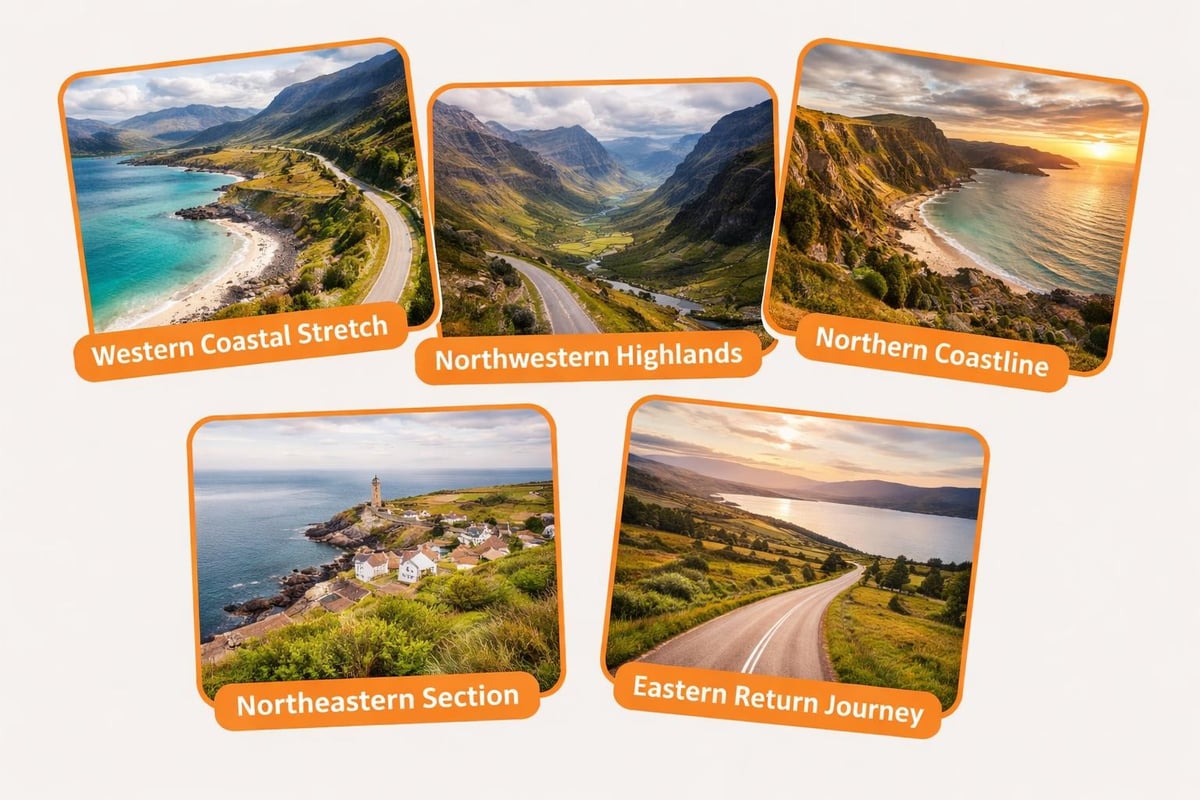
Understanding the distinct character of each section helps you plan your journey and allocate appropriate time for the experiences that matter most to you.
| Route Section | Distance | Key Features | Recommended Time |
|---|---|---|---|
| Inverness to Torridon | 85 miles | Mountain scenery, Loch Carron | 1-2 days |
| Torridon to Durness | 115 miles | Dramatic coastal views, Smoo Cave | 2-3 days |
| Durness to John o'Groats | 80 miles | White beaches, Cape Wrath | 1-2 days |
| John o'Groats to Dornoch | 65 miles | Historic castles, coastal villages | 1-2 days |
| Dornoch to Inverness | 55 miles | Gentler scenery, distilleries | 1 day |
Departing Inverness, the nc500 route initially heads west towards the dramatic landscapes of Wester Ross. This section introduces you to the Highlands' raw beauty, with towering peaks and deep sea lochs creating endless photographic opportunities.
The single-track roads with passing places become common here. These require patience and courtesy, but they're part of the route's charm, slowing your pace and helping you appreciate the surroundings. Take time to explore Applecross via the Bealach na Bà pass, one of Britain's highest roads, offering breathtaking views across to Skye.
As you continue north from Torridon, the landscape becomes increasingly dramatic and remote. This is where the nc500 route truly showcases Scotland's wild side, with mountains rising directly from the sea and scattered crofting communities dotting the coastline.
Ullapool serves as an excellent base, offering facilities, shops, and a chance to restock supplies. The fishing village atmosphere and harbour setting make it a highlight, whilst nearby Stac Pollaidh provides accessible mountain walking for those wanting to stretch their legs.
Success on the nc500 route depends heavily on proper planning, particularly when travelling by motorhome. The route's popularity has grown exponentially, making advance preparation more important than ever.
Spring (April-May) brings wildflowers and fewer crowds, though weather remains unpredictable. Days lengthen significantly, giving you more driving hours in comfortable daylight. Some facilities may still operate on reduced winter hours.
Summer (June-August) offers the longest days and warmest weather, but this is peak season. Expect busier roads, fuller campsites, and higher prices. The famous Scottish midges also emerge during calm, damp conditions, particularly near water.
Autumn (September-October) provides stunning colours across the hillsides and clearer air for photography. Crowds thin considerably after the school holidays end, though some facilities begin closing for winter.
Most travellers tackle the nc500 route anticlockwise, heading west from Inverness. This approach presents the most dramatic scenery earlier in your journey and keeps you on the inside lane for easier stopping at viewpoints along the coast.
However, travelling clockwise offers distinct advantages:
Neither direction is definitively better. Your choice might depend on your starting point, time of year, or personal preference for experiencing landscapes.
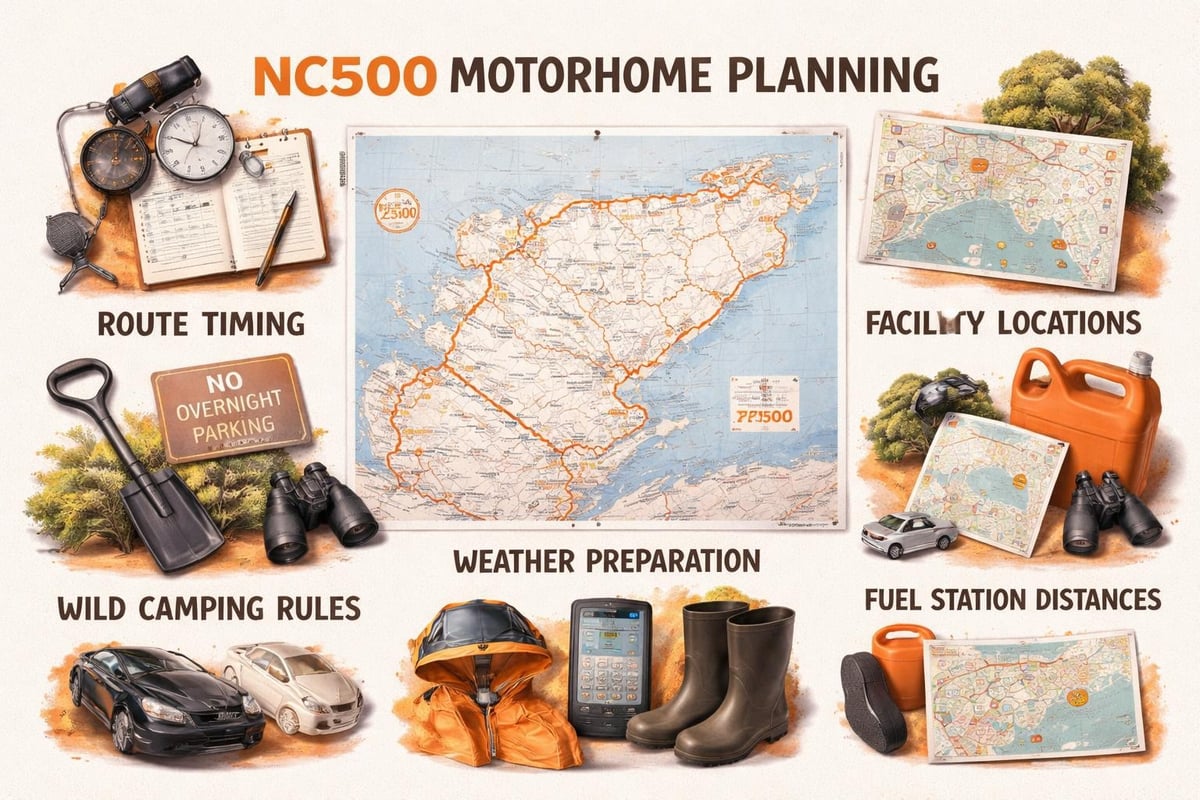
While the journey itself matters as much as any destination, certain stops along the nc500 route deserve special attention. These locations combine natural beauty, historical significance, or practical convenience.
Smoo Cave near Durness offers an impressive sea cave system accessible without specialist equipment. The main chamber is vast and atmospheric, whilst the waterfall within creates a dramatic spectacle after rainfall.
Duncansby Stacks beyond John o'Groats provide a fitting climax to the northern section. These towering sea stacks rise from the churning North Sea, with puffins nesting on the cliffs during summer months.
Achmelvich Beach showcases Caribbean-like white sands and turquoise waters, though with distinctly Scottish water temperatures. The beach is sheltered and perfect for a break, with basic facilities nearby.
The development of the NC500 has helped preserve and promote these attractions, bringing much-needed tourism revenue to remote communities whilst raising awareness of conservation needs.
Finding suitable overnight accommodation represents perhaps the biggest planning challenge when tackling the nc500 route in a motorhome. The route's popularity has strained existing facilities, making advance booking essential during peak season.
Established campsites range from basic facilities in village halls to well-equipped sites with electric hookups, showers, and waste disposal. Booking ahead is crucial, particularly at popular locations like Ullapool, Durness, and Dornoch.
Popular campsite locations:
Scotland's access laws differ from England's, but wild camping in motorhomes faces increasing restrictions along the nc500 route due to past irresponsible behaviour. Many areas now have overnight parking restrictions to protect the environment and local communities.
When stopping overnight:
The Scottish Outdoor Access Code provides guidance, but remember that motorhomes aren't covered by the same rights as tent camping. Supporting local facilities benefits the communities hosting your journey.
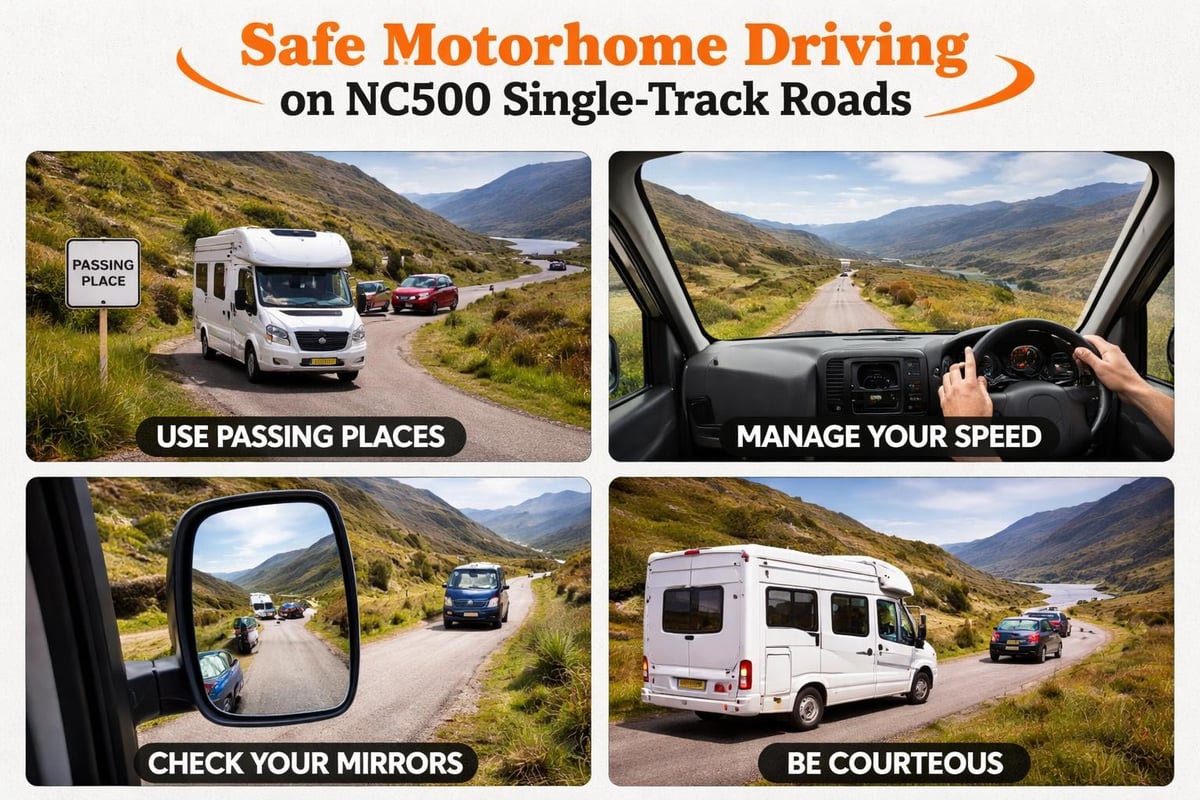
The nc500 route includes significant sections of single-track road, requiring different skills and awareness than motorway driving. Understanding these challenges beforehand prevents stress and ensures safety.
Passing places are marked with white diamonds or poles. They're positioned regularly but not uniformly, sometimes requiring one vehicle to reverse. Pull in on your left if the passing place is on your side, or wait opposite if it's on the right to let oncoming traffic use it.
Traffic should flow smoothly if everyone follows basic courtesy. Faster vehicles should be allowed to pass when safe. If several cars accumulate behind you, use the next suitable passing place to let them through.
Modern motorhomes measure significantly wider than average cars. The nc500 route's narrower sections require careful navigation, particularly around blind corners where meeting oncoming traffic demands precise positioning.
Road surfaces vary considerably. Main routes maintain good tarmac, but some sections feature potholes, gravel patches, or rougher surfaces after winter weather. Drive according to conditions rather than assuming standards match lowland roads.
Remote sections of the nc500 route mean planning for basics becomes essential. Running low on fuel or supplies in sparsely populated areas can disrupt your journey significantly.
| Location | Services | Notes |
|---|---|---|
| Inverness | Multiple stations | Fill up before departing |
| Ullapool | Several options | Last major town on west coast |
| Durness | Single station | Can close early or on Sundays |
| Bettyhill | Limited hours | Check opening times |
| Wick/Thurso | Good provision | Reliable options in both towns |
| Dornoch | Available | Regular hours |
Fill your tank whenever it drops below half in remote areas. Some stations keep limited hours or close Sundays. Diesel is universally available, but unleaded can occasionally run short at smaller stations during peak season.
Don't expect consistent mobile signal throughout the nc500 route. Large sections, particularly in the northwest, have no coverage from any network. Download maps, guides, and any essential information before losing signal.
Some villages offer WiFi in cafes or visitor centres, but speeds can be limited. View this disconnection as part of the experience, allowing you to engage more fully with the landscapes and communities you're visiting.
Scottish Highland weather changes rapidly and dramatically. Conditions can shift from sunshine to rain within minutes, with wind, mist, and even snow possible outside summer months.
Pack layers regardless of season. Waterproof and windproof outer garments are essential, along with warm clothing for cool evenings. The RAC’s driving advice emphasises preparing for all conditions, even in summer.
Highland midges deserve special mention. These tiny insects swarm in calm, damp conditions from May through September, particularly at dawn and dusk. Midge nets and repellent make outdoor activities far more pleasant during peak season.
Ensure your motorhome hire includes comprehensive breakdown coverage extending to the Scottish Highlands. Recovery from remote locations is expensive without proper insurance. Check your coverage specifically mentions single-track roads and the NC500.
Carry basic emergency supplies including water, food, warm clothing, and a first aid kit. Mobile signal can't be guaranteed for calling help, so self-sufficiency matters more than on conventional routes.
The National Geographic recognition of the nc500 route as Britain's best driving route has brought unprecedented attention to these remote areas. Supporting local businesses helps sustain the communities that make this journey possible.
Choose local shops, cafes, and restaurants over bringing all provisions from home. These businesses often struggle during winter and depend on summer visitors for annual viability. Fresh local produce, from seafood to baked goods, enhances your culinary experience whilst supporting the region.
Many communities offer locally made crafts, artwork, and food products. These make meaningful souvenirs whilst providing income to rural artisans and producers.
Remember that people live and work in the areas you're visiting. Treat facilities respectfully, keep noise down at overnight stops, and follow local guidance about access and parking. The nc500 route's success depends on maintaining positive relationships between visitors and residents.
Consider visiting outside peak season if your schedule allows. This reduces pressure on infrastructure whilst still supporting local businesses, many of which extend their operating seasons to accommodate NC500 traffic.
Whilst the nc500 route provides a complete circular journey, several detours and extensions deserve consideration if time permits.
Isle of Skye connects via bridge near Kyle of Lochalsh, adding dramatic mountain scenery and additional coastal exploration. Plan at least two extra days to do Skye justice.
Orkney Islands are accessible by ferry from John o'Groats or Scrabster near Thurso. These islands offer Neolithic sites, seabird colonies, and distinct culture. Allow a minimum of two days, preferably more.
Great Glen Way from Inverness to Fort William provides an alternative return route, passing through stunning mountain scenery and alongside Loch Ness. This extension suits those wanting more inland experiences.
Setting off from Yorkshire to tackle the nc500 route requires additional planning for the journey to and from Inverness. The drive from Leeds to Inverness covers approximately 360 miles, taking around seven hours without stops.
The most direct route follows the A1(M) and M6 north before joining the A9 at Perth for the final stretch to Inverness. Alternatively, the scenic route through the Lake District and along the west coast adds time but increases enjoyment.
Consider whether to break the journey with an overnight stop. Stirling, Perth, or Pitlochry make convenient waypoints, allowing you to arrive in Inverness refreshed and ready to begin the nc500 route properly.
Plan your total trip duration carefully. A week allows completion of the nc500 route itself, but ten days to two weeks provides more comfortable pacing with time for detours and weather delays. The Camper Co offers flexible hire periods to match your schedule, ensuring you're not rushed through this spectacular journey.
Before departing Leeds, ensure your motorhome is properly equipped for Highland conditions:
The route's popularity has brought environmental challenges, from litter to erosion at popular viewpoints. Travelling responsibly ensures this remarkable route remains pristine for future visitors.
Apply these fundamental principles throughout your nc500 route journey:
The official NC500 guide emphasises responsible travel, recognising that visitor behaviour determines the route's long-term sustainability.
Never discharge waste water or toilet cassettes except at designated facilities. Many locations now provide motorhome service points with fresh water, waste disposal, and chemical toilet emptying. Using these facilities, even if it means driving slightly out of your way, protects the environment and local water sources.
Pack out all rubbish. Recycling facilities exist in larger towns, but smaller villages may lack capacity. Carrying rubbish until you reach appropriate disposal points demonstrates respect for the communities hosting your visit.
The nc500 route offers motorhome travellers an unmatched opportunity to experience Scotland's dramatic beauty, from isolated beaches to towering mountains, all whilst enjoying the freedom and comfort of your own accommodation on wheels. Starting your adventure with a well-equipped motorhome from The Camper Co ensures you have the reliable, comfortable vehicle needed to tackle this legendary route with confidence, allowing you to focus on creating memories that will last a lifetime across one of the world's most spectacular coastal drives.
Two berth campervans represent the perfect blend of intimacy, efficiency, and freedom for couples and solo travellers seeking adventure on the open road. Whether you're planning a romantic weekend getaway to the Yorkshire Dales or an extended exploration of Scotland's dramatic coastlines, these compact yet well-equipped vehicles offer everything you need without the bulk of larger motorhomes. Understanding what makes two berth campervans such an appealing choice can help you make the most of your next UK adventure.
Two berth campervans are specifically designed with couples in mind, offering a cozy and manageable travel experience that larger motorhomes simply can't match. The intimate scale creates a romantic atmosphere while maintaining all the essential comforts of home.
Space efficiency stands as the defining characteristic of these vehicles. Every inch is thoughtfully designed to maximize functionality without feeling cramped. You'll find clever storage solutions, multi-purpose furniture, and carefully positioned amenities that make daily living surprisingly comfortable.
One of the most significant advantages is how easy these vehicles are to drive and park. Unlike their larger counterparts, two berth campervans typically fit into standard parking spaces, navigate narrow country lanes with confidence, and prove far less intimidating for first-time motorhome drivers.
The driving experience feels remarkably similar to handling a large van, making the transition from car to campervan straightforward for most drivers.

Understanding the various campervan berth configurations available helps you choose the right setup for your comfort preferences and travel style. Two berth campervans come in several distinct layout options, each offering unique advantages.
Fixed bed configurations provide permanent sleeping arrangements that don't require conversion each evening. This setup proves particularly popular with couples who value convenience and prefer keeping their bed made throughout the trip.
| Layout Type | Advantages | Considerations |
|---|---|---|
| Rear Fixed Bed | Easy access, comfortable mattress, spacious feel | Reduces rear storage space |
| Island Bed | Walk-around access, hotel-like comfort | Requires larger vehicle footprint |
| Drop-Down Bed | Maximizes daytime space, overhead storage | May feel enclosed for some |
Many two berth campervans feature dinette areas that transform into sleeping quarters. This design maximizes daytime living space while providing comfortable sleeping arrangements at night.
The conversion process typically takes just minutes, involving simple cushion rearrangement and table adjustment. These layouts work brilliantly for travelers who prioritize daytime comfort and social space over permanent bed configurations.
Popular in VW-style conversions, rock and roll beds combine seating and sleeping in one clever piece of furniture. The rear bench seat folds flat to create a double bed, offering excellent versatility in compact spaces.
This configuration particularly suits adventurous couples who appreciate the classic campervan aesthetic and don't mind the nightly conversion routine.
When considering two berth campervans for hire, certain features significantly enhance your travel experience. Knowing what to prioritize helps ensure your chosen vehicle meets your specific needs.
A well-equipped kitchen area transforms your camping experience from basic to comfortable. Most two berth campervans include:
The compact kitchen design in these vehicles proves surprisingly functional, allowing you to prepare restaurant-quality meals while enjoying stunning Yorkshire countryside views.
When exploring choosing the right campervan layout, bathroom facilities represent a crucial consideration. Two berth campervans offer varying levels of bathroom amenities.
Wet rooms combine shower and toilet in one compact space, perfect for maintaining independence from campsite facilities. Some models feature portable toilets and external shower connections, reducing interior space requirements while maintaining functionality.
UK weather demands reliable heating systems, particularly for shoulder-season and winter travel. Quality two berth campervans typically include:
These features extend your camping season well beyond summer months, allowing you to explore the Lake District in autumn or the Scottish Highlands in spring.

Understanding how two berth campervans stack up against larger alternatives helps clarify whether this size suits your travel plans. The comparison extends beyond simple passenger capacity to encompass driving experience, running costs, and practical considerations.
Two berth campervans generally offer the most economical entry point into motorhome travel. Hire rates typically run lower than four or six-berth alternatives, while fuel consumption remains notably more economical.
Insurance costs also tend to favor smaller vehicles, and toll charges on routes requiring motorway travel prove less expensive. For couples planning regular weekend escapes or extended tours, these savings accumulate significantly over time.
The compact nature of two berth campervans opens travel possibilities that larger motorhomes can't access. Narrow coastal roads along the Northumberland coastline, historic village centers throughout the Cotswolds, and remote Highland tracks become genuinely accessible.
You'll discover wild camping spots that accommodate smaller vehicles, enjoy stress-free parking at National Trust properties, and navigate bustling market towns without anxiety. This flexibility fundamentally changes how spontaneously you can travel.
First-time hirers often wonder how to maximize their two berth campervan experience. These practical insights help ensure your adventure runs smoothly from collection to return.
Limited storage space demands thoughtful packing approaches. Soft luggage works far better than rigid suitcases, conforming to available storage areas and fitting into awkward spaces more effectively.
Create a packing list that prioritizes versatile clothing items and multipurpose equipment. Remember that most UK campsites offer laundry facilities, allowing you to pack lighter for extended trips.
Every vehicle has a maximum weight capacity, and two berth campervans prove no exception. Overloading affects handling, fuel efficiency, and potentially invalidates insurance coverage.
Living in a compact space requires different habits than larger motorhomes. Keep surfaces clear during travel, use the outdoor space at campsites as an extension of your living area, and establish daily tidying routines that prevent clutter accumulation.
Collapsible items prove invaluable-washing-up bowls, laundry bags, and storage containers that fold flat when not in use help maintain the sense of spaciousness that makes two berth campervans comfortable.
Your inaugural trip in a two berth campervan sets the tone for future adventures. Starting with realistic expectations and thorough preparation ensures a positive introduction to motorhome travel.
Yorkshire and the surrounding regions offer spectacular touring opportunities perfectly suited to two berth campervans. The compact size allows you to explore areas that challenge larger vehicles while maintaining the comfort and independence that motorhome travel provides.
Consider starting with a shorter trip-perhaps a long weekend exploring the Yorkshire Dales or North York Moors. This allows you to familiarize yourself with the vehicle's systems, understand your daily routines, and build confidence before attempting longer journeys.
Different campsites cater to varying needs and preferences. Some offer full facilities with electric hookups, heated shower blocks, and on-site amenities. Others provide basic pitches in stunning natural locations, perfect for those seeking tranquility.
When browsing options on The Camper Co website, consider what facilities matter most to you. First-timers often appreciate well-equipped sites with helpful staff, while experienced campers might prioritize location over amenities.
Successful campervan travel establishes comfortable daily patterns. Morning routines might include opening roof vents for air circulation, checking fluid levels, and planning the day's route over breakfast. Evening rituals could involve leveling the vehicle, connecting to electric hookup, and enjoying sunset views from your camping chairs.

Understanding the technical aspects of two berth campervans helps you make informed hire decisions and ensures you choose a vehicle matching your requirements.
Most two berth campervans feature engines between 2.0 and 2.5 liters, providing adequate power for motorway cruising while maintaining reasonable fuel economy. Modern diesel engines typically deliver between 35 and 45 miles per gallon under normal touring conditions.
Transmission options include manual and automatic gearboxes, with automatics becoming increasingly popular for their ease of use, particularly when navigating challenging terrain or busy urban areas.
Contemporary two berth campervans feature sophisticated electrical setups that support comfortable off-grid living. Most include:
Understanding your power consumption helps you plan whether you need nightly hookups or can enjoy several days of wild camping between charges.
Two berth campervans typically carry between 40 and 80 liters of fresh water, sufficient for several days of conservative use. Grey water tanks (waste water from sinks and showers) require regular emptying at designated disposal points.
Learning to manage water consumption efficiently extends your independence between campsite visits, allowing more spontaneous travel and wild camping opportunities.
The British climate presents unique challenges and opportunities throughout the year, and two berth campervans adapt remarkably well to seasonal variations when properly equipped and utilized.
These shoulder seasons offer some of the finest camping experiences. Fewer crowds, lower prices, and spectacular seasonal scenery make spring and autumn ideal for two berth campervan exploration.
Heating becomes essential during these periods, making vehicles with efficient heating systems particularly desirable. Insulation quality also matters significantly, separating comfortable nights from chilly ones.
Peak season brings warm weather, extended daylight hours, and vibrant campsite atmospheres. Two berth campervans excel during summer, when the compact size allows access to popular destinations that larger motorhomes struggle to reach.
Ventilation proves crucial during warm weather. Roof vents, opening windows, and good air circulation prevent the interior becoming uncomfortably warm during sunny days.
Winter campervan travel requires proper preparation but rewards adventurous travelers with extraordinary experiences. Snow-dusted Yorkshire landscapes, cozy evenings with the heating running, and quiet campsites create magical memories.
Ensure your hired vehicle includes winter essentials like strong heating, good insulation, and winter tyres if planning mountain or remote area travel during colder months.
Maximizing value from your two berth campervan hire involves more than simply collecting the keys and driving away. Thoughtful preparation and informed decision-making significantly enhance your overall experience.
Before collecting your vehicle, familiarize yourself with basic motorhome systems and terminology. Understanding concepts like fresh water capacity, grey water disposal, and leisure battery management saves time during your handover briefing.
Review the hire company's vehicle guides if available online, watch tutorial videos about campervan living, and prepare questions about specific features or concerns you might have.
The collection appointment provides crucial learning time. Don't rush this process-ask questions, take notes, and ensure you understand all systems before departing.
| System | Key Questions to Ask |
|---|---|
| Water | How to fill fresh water? Where are taps located? |
| Waste | How to empty grey water? Toilet cassette operation? |
| Gas | How to check levels? Safety procedures? |
| Electrical | Battery monitoring? Hookup connection process? |
| Heating | Operating controls? Fuel type and consumption? |
Take photos of control panels, connection points, and storage areas to reference during your trip.
Establish regular vehicle checks to ensure everything functions correctly. Morning inspections might include checking tire pressures, fluid levels, and ensuring all external compartments closed securely before driving.
Keep communication open with your hire company if questions or concerns arise during your trip. Reputable providers want your experience to succeed and typically offer support throughout your hire period.
Modern two berth campervan travel increasingly focuses on minimizing environmental impact while maximizing enjoyment. Responsible practices ensure the countryside remains beautiful for future visitors while supporting local communities.
Following Leave No Trace principles protects the environments we enjoy exploring. This includes using designated waste disposal points, respecting wildlife and livestock, and leaving sites exactly as you found them.
Chemical toilet additives now include environmentally friendly options that break down naturally without harming ecosystems. Many campers choose these alternatives to traditional chemical treatments.
Your travel spending supports regional economies, particularly when you shop at local markets, eat at independent restaurants, and use local campsites rather than exclusively wild camping.
Two berth campervans make exploring small towns and villages straightforward, allowing you to discover authentic local experiences while contributing to rural economies throughout Yorkshire and beyond.
Contemporary two berth campervans incorporate technology and design innovations that significantly enhance comfort and usability compared to older models.
Modern vehicles increasingly feature USB charging points, Bluetooth stereo systems, and smartphone integration for navigation and entertainment. Some include solar panel monitoring apps and digital control panels for managing vehicle systems.
Reversing cameras and parking sensors prove particularly valuable, making maneuvering in tight spaces significantly easier and reducing the stress associated with parking larger vehicles.
Advancements in materials and construction techniques mean contemporary two berth campervans offer better insulation, more durable fixtures, and improved weather resistance compared to previous generations.
LED lighting throughout reduces power consumption while providing excellent illumination. Modern fabrics resist staining and wear better than traditional materials, maintaining that new-vehicle feel longer.
Current models benefit from advanced safety features including stability control, multiple airbags, and improved braking systems. These technologies make motorhome travel safer and more confidence-inspiring for drivers of all experience levels.
When comparing 4WD versus 2WD options, consider where you plan to travel and whether additional traction proves necessary for your intended routes.
Two berth campervans offer the perfect combination of comfort, efficiency, and freedom for couples exploring the UK's diverse landscapes. Whether you're planning your first motorhome adventure or you're an experienced traveler seeking the ideal vehicle for your next journey, choosing the right two berth campervan sets the foundation for unforgettable memories. The Camper Co provides expertly maintained vehicles and comprehensive support to help you experience the best of Yorkshire and beyond, ensuring your campervan adventure exceeds expectations from the moment you collect your keys.
Planning a motorhome adventure around Scotland's legendary North Coast 500 requires proper preparation, and having the right nc500 map is your foundation for success. This iconic 516-mile circular route through the Scottish Highlands takes you past dramatic coastal scenery, ancient castles, white-sand beaches, and remote villages that capture the true spirit of Scotland. Whether you're embarking from Leeds in your hired campervan or starting from elsewhere in the UK, understanding how to use mapping resources effectively will transform your journey from good to unforgettable.
The North Coast 500 begins and ends in Inverness, creating a complete loop around the northernmost reaches of mainland Scotland. The route takes its name from the approximate mileage, though the actual distance varies depending on detours and exploration stops you choose to make along the way.
When examining an nc500 map, you'll notice the route divides naturally into distinct coastal experiences:
Each section presents unique driving conditions,景观 characteristics, and practical considerations for motorhome travelers. The east coast offers gentler terrain and more services, while the west coast challenges you with single-track roads and spectacular isolation.
Understanding these divisions helps when planning your daily stages. Most travelers complete the circuit in five to seven days, though many extend their adventure to two weeks for a more relaxed pace.
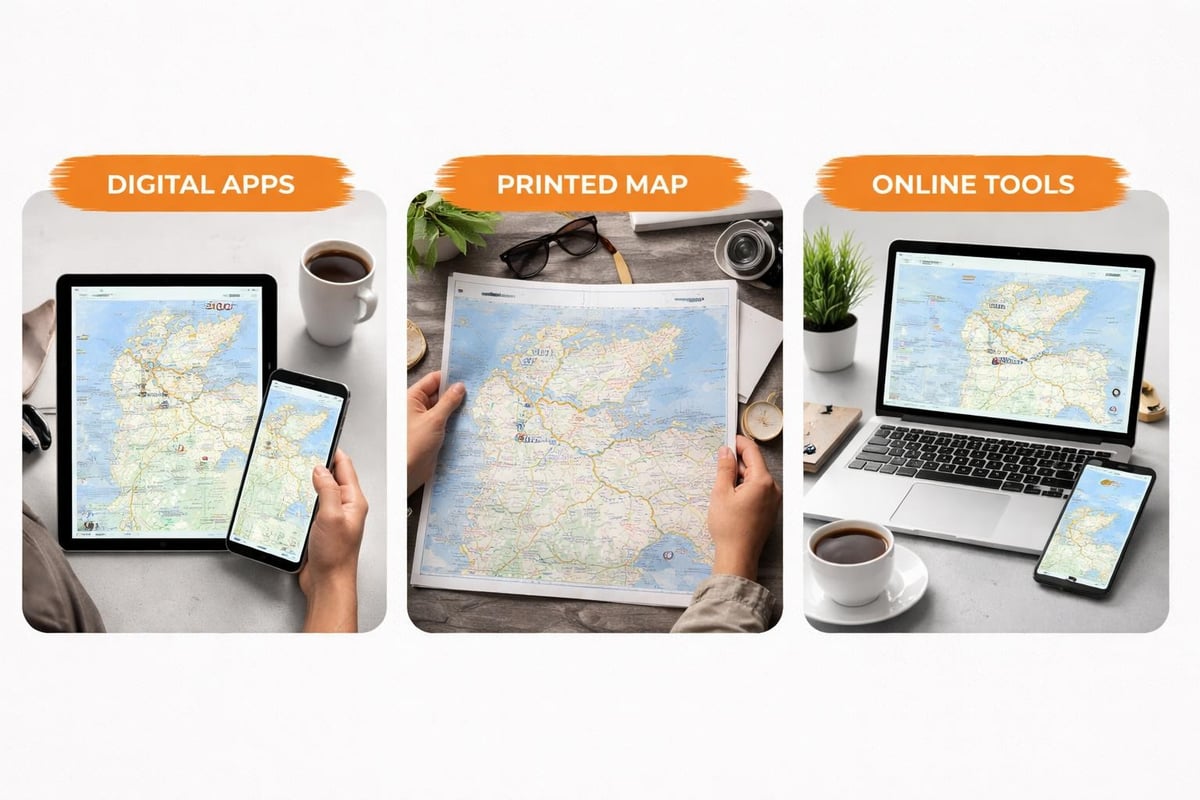
Multiple mapping options exist for planning and navigating the North Coast 500, each offering distinct advantages depending on your travel style and requirements.
The official North Coast 500 road map provides a comprehensive foldable guide specifically designed for this route. This physical map includes tourist attractions, driving information, and alternative routes that digital tools sometimes overlook. Having a physical backup proves invaluable in areas where mobile signal becomes unreliable.
For those who prefer digital previewing before purchasing, the NC500 official PDF map offers a detailed visual representation you can view on tablets or print at home.
Modern travelers benefit from several interactive mapping platforms that allow route customization and real-time adjustments:
| Map Type | Best For | Key Features | Signal Required |
|---|---|---|---|
| Official Printed | Backup navigation | Detailed annotations, waterproof options | None |
| GPS Apps | Turn-by-turn guidance | Real-time traffic, offline downloads | Minimal |
| Interactive Web Maps | Planning phase | Customizable routes, sharing capability | Yes |
| PDF Downloads | Tablet reference | Detailed viewing, printable | None |
Interactive platforms like Scribble Maps NC500 enable you to explore the route digitally, marking your intended stops and calculating distances between locations. These tools prove particularly valuable during the planning phase when you're deciding how to pace your journey.
One crucial decision when consulting your nc500 map involves which direction to tackle the circuit. This choice significantly impacts your experience, particularly in a motorhome where passing opportunities and road width matter greatly.
Anticlockwise Route (Recommended for Motorhomes)
Clockwise Route
Most motorhome travelers find the anticlockwise direction more comfortable, heading north through the east coast before tackling the west's narrower sections after building experience with Highland driving conditions.
Your nc500 map takes on different significance depending on when you travel:
Spring (April-May 2026)
Summer (June-August 2026)
Autumn (September-October 2026)
When reviewing your nc500 map, certain locations deserve special attention for overnight stops, essential services, or unmissable experiences.
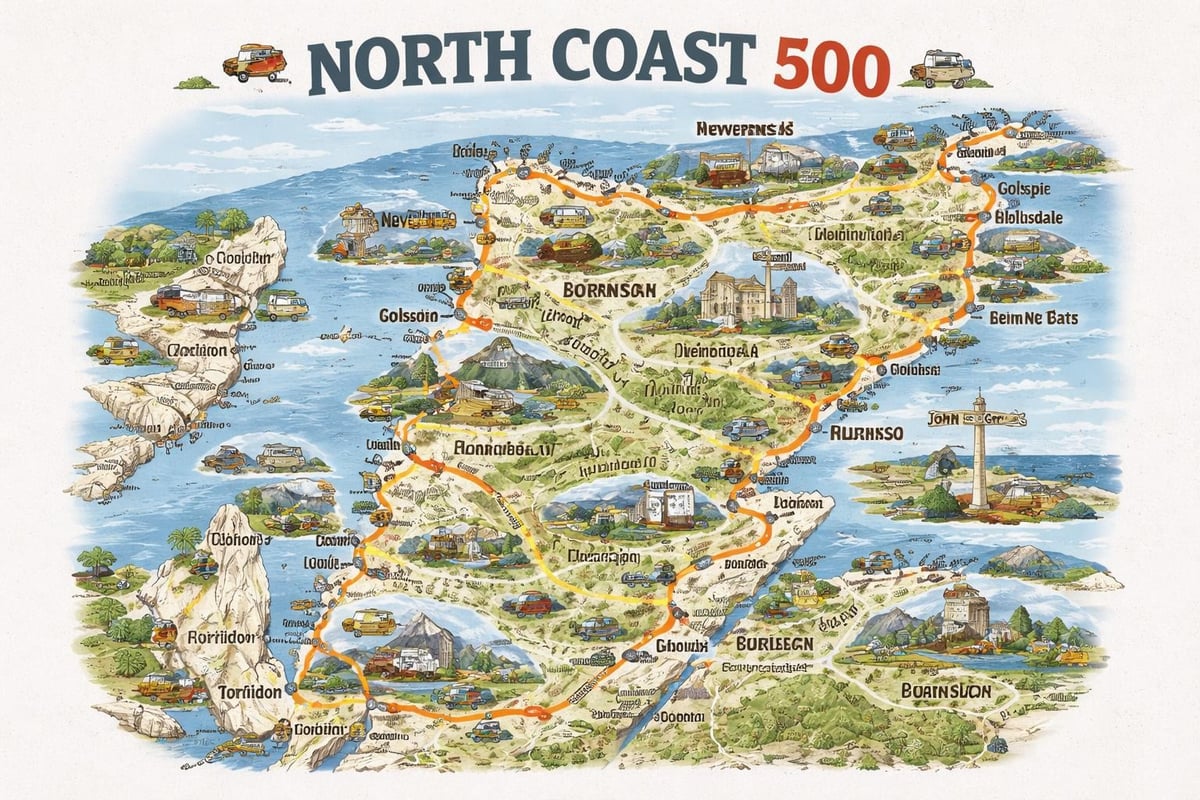
Your map should highlight these strategic stopping points:
The Torridon and Kinlochewe local place plan provides detailed insights into this particularly scenic area, helping you identify local amenities and points of interest.
Mark these essential experiences on your planning map:
Perhaps the most important skill your nc500 map helps you develop is understanding single-track road navigation. These characteristically Scottish routes require different driving approaches than standard two-lane roads.
Quality nc500 map resources indicate where single-track sections occur, though they rarely mark individual passing places. Understanding the system proves essential:
Passing Place Protocol
Motorhomes require more space than cars, so identify passing places early and position thoughtfully. Your larger vehicle should generally give way to smaller ones, particularly if they can more easily reverse to a previous passing place.
Your nc500 map may classify roads by type, but width varies considerably even within categories:
| Road Type | Width Expectation | Motorhome Suitability | Average Speed |
|---|---|---|---|
| A-roads | Generally two-lane | Excellent | 40-60 mph |
| B-roads | Mixed lane width | Good with care | 30-40 mph |
| Single-track | One vehicle width | Requires confidence | 20-30 mph |
| Unclassified | Often very narrow | Check vehicle specs | 15-25 mph |
The Bealach na Bà pass to Applecross, while spectacular, challenges even experienced motorhome drivers with its gradient, hairpins, and width. Your nc500 map should highlight this optional detour so you can make an informed decision based on your vehicle size and confidence level.
An often-overlooked aspect of nc500 map reading involves identifying essential service points for motorhome maintenance throughout your journey.
The western section between Durness and Ullapool contains the longest stretches without fuel stations, with distances exceeding 60 miles between some points. Plan fuel stops carefully:
Mark these locations on your nc500 map for essential motorhome services:
Wild camping remains possible in many areas under Scottish access rights, but responsible practices require planning for waste disposal. Your map should highlight the nearest facilities to your intended overnight spots.
Scotland's weather demands respect, and your nc500 map becomes a safety tool when combined with weather forecasting.
The NC500 traverses multiple weather zones, sometimes experiencing dramatically different conditions within hours of driving. The west coast receives significantly more rainfall than the east, while coastal areas often fare better than inland glens.
Weather-Responsive Route Adjustments
Having both detailed maps and real-time weather information allows you to adjust daily plans, perhaps swapping a mountain drive for a coastal alternative when conditions warrant.
When examining your nc500 map, note the distances between population centers. Mobile phone coverage proves patchy throughout the Highlands, and emergency services require longer response times in remote areas.
Build contingency time into your itinerary. What appears as a three-hour drive on paper often expands to five or six hours when accounting for:
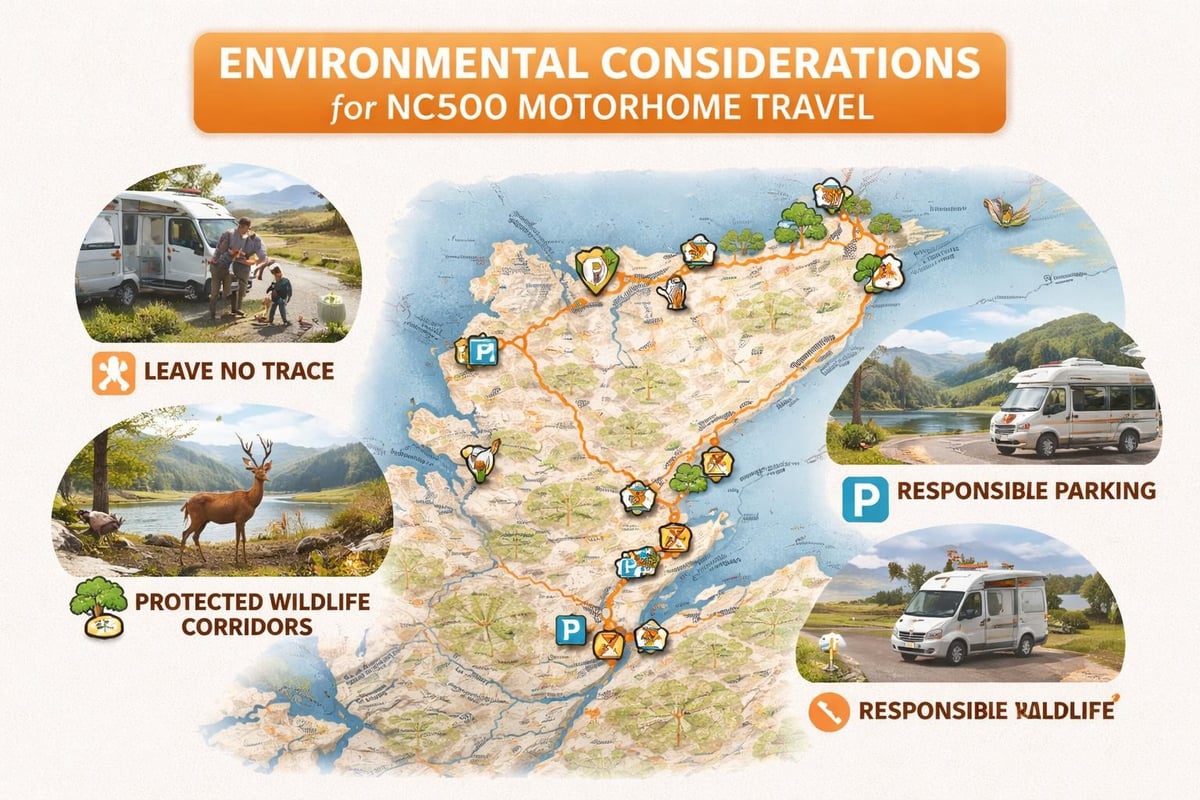
Modern nc500 map usage extends beyond simple navigation to include environmental responsibility, an increasingly important aspect of Highland travel.
The Buglife NC500 B-Line Report illustrates how the route intersects with important pollinator corridors and conservation areas. Understanding these connections helps you travel responsibly, respecting sensitive habitats while still enjoying Scotland's natural beauty.
Your journey planning should incorporate:
The increasing popularity of the NC500 has brought both economic benefits and environmental pressures to the Highlands. Responsible motorhome travelers help preserve this spectacular landscape for future generations.
Maps become outdated quickly as Highland infrastructure develops, making it valuable to cross-reference multiple sources during planning.
The Kyle of Sutherland tourism infrastructure project represents ongoing efforts to enhance visitor experiences while managing tourism impacts. These developments often include improved parking, information points, and facilities specifically designed for motorhome travelers.
Stay informed about:
While traditional paper maps offer reliability, integrating digital tools maximizes your nc500 map effectiveness throughout your journey.
Resources like MapHub’s NC500 collection provide collaborative maps where travelers share current conditions, recommendations, and updates. These platforms complement official maps with real-world insights from recent visitors.
Download comprehensive offline maps before departing, ensuring navigation capability during signal blackouts. Most GPS apps allow you to save specific regions, with the Scottish Highlands available as a single download covering the entire NC500 route.
For travelers hiring motorhomes in Leeds and West Yorkshire, the journey to reach the NC500 starting point in Inverness forms an important preliminary adventure requiring its own planning.
From Leeds to Inverness spans approximately 400 miles, typically requiring seven to eight hours of driving without extended stops. Most travelers break this journey into manageable segments:
Recommended Overnight Stops En Route
Your nc500 map planning should account for these travel days, ensuring you arrive fresh and ready to begin the circuit rather than exhausted from marathon driving.
After completing the NC500, factor in recovery time before the return drive south. Many travelers spend an extra day in Inverness or the Cairngorms, processing their Highland adventure and resting before heading home.
Whether using digital or printed resources, extracting maximum value from your nc500 map requires active engagement throughout the planning and travel phases.
Study your map thoroughly before departure:
The best NC500 experiences often come from spontaneous discoveries, but flexibility requires a solid foundation of map knowledge. Understanding where you have options and where you're committed to a route allows confident improvisation.
Keep your map accessible in the motorhome cab, annotating it with discoveries and recommendations as you travel. These personal notes transform a standard map into a valuable keepsake and reference for future trips.
Successful NC500 navigation combines the reliability of traditional mapping with the convenience of modern technology, creating a robust system that works across all conditions.
Electronics fail, batteries die, and signals disappear. Maintain these backup approaches:
This redundancy ensures you're never truly lost, even when technology fails in the Highlands' more remote corners.
Planning your North Coast 500 adventure with the right mapping resources transforms this iconic route from daunting to achievable, ensuring you experience the Scottish Highlands safely and memorably. Whether you're examining detailed printed guides or interactive digital tools, thorough preparation makes all the difference. Ready to turn your NC500 dreams into reality? The Camper Co offers perfectly equipped motorhomes and campervans from their Leeds base, providing everything you need for an unforgettable Scottish Highlands adventure with the freedom to explore at your own pace.
Imagine waking up to sweeping countryside views, sunlight pouring through panoramic windows, and the comforts of home surrounding you, all while parked in a picturesque UK location. The freedom to roam wherever your heart desires has never been more appealing.
This guide will show you how luxury campervan hire can transform your 2026 adventures. Experience the perfect blend of style, comfort, and flexibility as you explore the open road with everything you need at your fingertips.
Ready to plan your dream escape? We will walk you through every step, from choosing the right vehicle and must-have features to planning routes and picking up expert travel tips. Discover how to make your next journey unforgettable with the help of Camper Co.

Luxury campervan hire in 2026 is all about elevating the travel experience far beyond the basics. While standard campervans offer function, luxury models focus on design, comfort, and technology. Expect interiors with leather seating, premium bedding, and elegant lighting. Kitchens come with induction hobs, full-size fridges, and top-tier appliances, making it easy to enjoy gourmet meals on the road. Privacy is also key, with ensuite bathrooms, separate sleeping areas, and generous storage allowing you to feel truly at home. An industry survey in 2024 found that 70% of UK travellers now seek “home comfort” amenities in their vehicle hire, setting a new standard for what defines luxury campervan hire.
The real magic of luxury campervan hire lies in the seamless blend of comfort and adventure. On-board Wi-Fi, smart entertainment systems, and climate control ensure relaxation and convenience, whether you are parked up in the Lake District or exploring the Yorkshire Dales. Self-sufficiency is a hallmark, with solar panels, large water tanks, and off-grid capabilities letting you roam without limits. Imagine couples indulging in spa-like showers or preparing breakfast in a gourmet kitchen with panoramic countryside views. For more inspiration on what these experiences look like in practice, see the Ultimate guide to campervan adventures.
Sustainability is now central to luxury campervan hire, with electric and hybrid vehicles increasingly standard in high-end fleets. Interiors feature sustainable materials, from recycled fabrics to responsibly sourced woods, blending style with eco-consciousness. Eco-friendly travel practices, such as efficient power management and waste reduction systems, are integrated into every model. Recent figures show that 45% of luxury campervan hires in 2025 were hybrid or electric vehicles, highlighting the growing demand for greener adventures. Travellers can now enjoy high levels of comfort while reducing their environmental footprint.
Personalisation is a defining feature of luxury campervan hire in 2026. Providers tailor experiences with bespoke route planning, concierge services, and custom interiors. Families might opt for child-friendly layouts or pet-friendly options, ensuring everyone is comfortable and happy. Travellers increasingly seek flexible itineraries and unique add-ons, from private chef services to outdoor gear packages. This demand for tailored journeys means every holiday can be as unique as the people taking it. With these options, luxury campervan hire delivers not just a vehicle, but a personalised adventure that fits your lifestyle.
Embarking on a 2026 adventure in the UK starts with careful planning and the right partner. This step-by-step guide will help you navigate the process of luxury campervan hire, ensuring a seamless experience from start to finish.

Step 1: Define Your Travel Needs and Preferences
Before you begin your luxury campervan hire journey, consider your group size, desired destinations, and how long you’ll be on the road. Are you a solo explorer seeking solitude or a family looking for adventure together? Think about accessibility requirements, whether you’ll be bringing pets, and any must-have comforts that will make your holiday special.
Knowing these details will help you make choices that align with your expectations for comfort and flexibility.
Step 2: Research and Shortlist Luxury Campervan Providers
Next, take time to compare luxury campervan hire options. Read reviews, check customer ratings, and verify industry accreditations. Pay close attention to what’s included, as unclear inclusions or exclusions account for many negative experiences. Comparing fleets and amenities is vital, as is understanding what sets each provider apart.
If you’re interested in location-specific advice and insider tips, the Campervan hire in Leeds guide is a valuable resource for planning your Yorkshire adventure.
Step 3: Choose the Right Campervan Model
With your shortlist in hand, evaluate the different campervan models available. Consider berth sizes, layout options, and special features that match your travel style. Couples often select 2-berth models for intimacy, while families may prefer 6-berth layouts with separate sleeping areas.
The right model will enhance your luxury campervan hire experience, providing comfort and convenience throughout your journey.
Step 4: Secure Your Booking Early
Demand for luxury campervan hire peaks during summer and school holidays, so booking early is wise. Review deposit requirements, cancellation policies, and insurance cover to avoid surprises. Early reservations are particularly important for 2026, as recent years have seen a significant increase in advance bookings.
Being proactive not only secures your preferred vehicle but also gives you peace of mind as your holiday approaches.
Step 5: Plan Your Route and Itinerary
Now for the exciting part—mapping out your adventure. Research the best UK destinations and scenic routes, factoring in campsite availability and must-see attractions. Popular luxury campervan hire routes include the Yorkshire Dales, Lake District, and Scottish Highlands, offering breathtaking scenery and unique experiences.
Use travel apps or guides to help with route planning, and always check for vehicle restrictions on rural roads. A well-planned itinerary will ensure you make the most of every mile and moment.
Selecting the right luxury campervan hire can make all the difference to your adventure. The best vehicles blend comfort, convenience, and innovation, ensuring every journey feels like a five-star escape on wheels. Let’s explore the features that set a true luxury campervan apart.

A restful night is essential on the road. Luxury campervan hire guarantees high-quality mattresses, often memory foam or pocket sprung, for ultimate comfort. Look for blackout blinds and spacious sleeping areas, which help you wake refreshed and ready for new adventures.
King-size beds and convertible lounge spaces add flexibility, letting you tailor your sleeping arrangements to your group’s needs. Many models also offer separate sleeping zones for added privacy.
Cooking in a luxury campervan hire feels just like home. Expect induction hobs, full-size fridges, and premium cookware included as standard. These kitchens are designed for effortless meal prep, whether you fancy a quick breakfast or a three-course dinner.
Dining options are equally versatile. Enjoy fold-out tables for indoor meals or set up outdoors with a BBQ for alfresco dining. Well-organised storage keeps ingredients and utensils tidy, making mealtimes a pleasure.
Ensuite bathrooms are a hallmark of luxury campervan hire, offering privacy and convenience wherever you park. Features like rainfall showers, heated towel rails, and stylish sinks transform your daily routine into a spa-like experience.
Families especially value private, hotel-style facilities, which are perfect for longer journeys or remote camping spots. Ample water storage ensures you can enjoy hot showers on demand.
Modern technology is at the heart of every luxury campervan hire. Smart TVs, Bluetooth speakers, and integrated navigation systems keep you entertained and on track. On-board Wi-Fi is often available, ideal for streaming or working remotely.
Recent luxury motorhome trends for 2025 highlight renewable energy integration, with many vehicles now offering solar charging and advanced control panels for seamless living.
A comfortable interior is crucial, whatever the UK weather brings. Look for advanced heating and cooling systems in your luxury campervan hire. Double-glazed windows and high-grade insulation keep the space cosy in winter and cool in summer.
These features mean you can travel year-round, enjoying the UK’s changing landscapes from a snug, well-protected base.
Peace of mind comes as standard with luxury campervan hire. Essential safety features include GPS tracking, reversing cameras, and secure entry systems. These technologies help solo travellers and families feel safe, whether parked up or on the road.
Knowing that your vehicle is equipped with the latest security measures lets you focus on making memories, not worrying about logistics.
Picture yourself waking up with misty mountains outside your window or coastal breezes greeting you at sunrise. Planning your route is where the magic of luxury campervan hire truly begins. From iconic drives to hidden gems, the UK offers an abundance of unforgettable destinations for your 2026 adventure.

The UK is home to some of Europe’s most breathtaking road trips, perfect for those seeking luxury campervan hire. Popular choices include the North Coast 500 in Scotland, offering dramatic coastal cliffs and ancient castles, and the Atlantic Highway, winding from Cornwall to Devon with endless sea views. For inspiration on the perfect starting point, explore the best road trips from Leeds, ideal for planning routes with Camper Co. These classic journeys promise a blend of adventure, comfort, and ever-changing scenery.
Luxury campervan hire lets you access boutique campsites and secluded spots not found on every map. Imagine private pitches with spa facilities, woodland glamping pods, and lakeside views reserved just for you. Many exclusive sites offer extras such as hot tubs, fire pits, and gourmet food trucks, elevating your stay beyond the ordinary. According to recent trends, 40% of luxury travellers now seek unique overnight experiences, making these hidden gems a top priority for 2026.
Travelling with loved ones, including pets, is easy with luxury campervan hire. The Yorkshire Dales, Lake District, and Snowdonia are favourites for families and pet owners alike, offering child-safe play areas and scenic dog-walking trails. Many campsites cater to both children and animals, ensuring everyone is comfortable and entertained. With spacious interiors and flexible layouts, luxury campervans provide the perfect base for unforgettable shared moments in the UK’s great outdoors.
Eco-conscious travellers are increasingly choosing luxury campervan hire for sustainable adventures. National parks like the Cairngorms and Pembrokeshire offer eco-certified campsites and low-impact travel options. Many luxury fleets now include electric or hybrid campervans, reducing your carbon footprint while exploring stunning landscapes. The demand for eco-friendly campervan rental is rising, making it easier than ever to enjoy a greener journey without sacrificing comfort.
A successful luxury campervan hire holiday starts with smart planning. Book popular campsites well in advance, especially during school holidays and summer months. Use travel apps to map your route and check for any vehicle restrictions, such as low bridges or narrow lanes. Keep a flexible itinerary to allow for spontaneous detours and local discoveries. With the right preparation, your luxury campervan adventure across the UK will be as smooth as it is memorable.
Planning the perfect luxury campervan hire holiday is all about preparation, smart choices, and making the most of your time on the road. With a few expert tips, you can enjoy a seamless journey and focus on what matters most: adventure, relaxation, and memorable moments.
Efficient packing is key for any luxury campervan hire holiday. Choose compact, space-saving luggage and keep items organised with packing cubes or baskets.
A little planning goes a long way, helping you avoid clutter and making daily routines smooth and stress-free.
Driving a luxury campervan hire vehicle can feel different from a regular car, so take your time to get comfortable.
If you are unsure about handling a larger vehicle, consider a quick refresher lesson. Always allow extra time for parking and manoeuvring in tight spots.
Staying connected and safe is vital for peace of mind. Invest in a strong mobile data plan and keep emergency contacts handy.
For more in-depth advice, check out these Essential motorhome and campervan tips to prepare for any situation.
Enjoy all the comforts your luxury campervan hire provides by using every feature to its fullest.
Take time to explore what your campervan offers so every day feels like a mini holiday at home.
Maintaining cleanliness and comfort is crucial for a luxury campervan hire experience. Stock up on essentials such as cleaning supplies, hand sanitiser, and waste bags.
A clean and well-organised space helps everyone feel happy and healthy throughout the journey.
Embrace a balance between planned routes and spontaneous detours. Some of the best memories come from unplanned discoveries.
With a little preparation and an open mind, your luxury campervan hire holiday will be truly unforgettable.
Now that you’ve got a taste of what luxury campervan hire can offer—think spacious interiors, smart tech, and tailored comfort for every type of traveller—why not start planning your own adventure? With The Camper Co’s premium fleet right here in Leeds and West Yorkshire, you can be sure of a smooth, memorable journey whether you’re exploring the Yorkshire Dales or venturing further afield. If you’re dreaming of waking up to new views and enjoying the freedom of the open road in 2026, now’s the perfect time to secure your ideal campervan.
Book Now
Imagine setting off across the UK in a 5 person campervan, with every road leading to new adventures. There is something magical about travelling together, sharing laughs, and facing challenges as a group or family. A 5 person campervan offers freedom, flexibility, and the chance to create lasting memories.
With the right advice, your journey can go from ordinary to extraordinary. Whether you are a first-time explorer or a seasoned road tripper, mastering the essentials makes all the difference. Discover the seven must-know tips to guarantee comfort, safety, and fun for everyone on board.
Choosing a 5 person campervan is a smart move for families and small groups looking for the perfect balance between comfort and adventure. Travelling together in one vehicle brings everyone closer, making it easier to share special moments while exploring the UK’s most stunning destinations. This set-up is ideal for those who want to enjoy the open road with enough room for everyone to relax, sleep, and play.
One of the biggest advantages of a 5 person campervan is the generous space compared to smaller models. You get more beds, seating, and storage, meaning there’s less chance of feeling cramped during your trip. Unlike larger motorhomes, a 5 person campervan still offers great manoeuvrability, making it practical for winding rural roads and compact campsites. Most layouts include clever sleeping arrangements such as bunk beds, convertible dinettes, and overhead bunks, so every traveller can have a comfortable spot to rest.
A 5 person campervan is also incredibly versatile for UK adventures. Whether you’re heading to the coast, exploring the Lake District, or discovering a national park, you’ll find it easy to park, set up, and settle in. The added space makes it simple to store bikes, outdoor gear, and family essentials without feeling cluttered. When travelling as a group, it’s important to pick a campervan that matches your group’s needs and personalities, ensuring everyone feels at home on the move.
Demand for group campervan holidays is on the rise, with recent UK campervan travel statistics 2025 showing more families and friends choosing shared road trips over traditional breaks. The shared experience of life on the road encourages teamwork, laughter, and bonding, turning every journey into a memorable adventure. By choosing a 5 person campervan, you’re setting the stage for unforgettable moments and plenty of stories to tell.

Embarking on a 5 person campervan adventure across the UK is a dream come true for many families and groups. The open road, breathtaking landscapes, and the promise of shared memories set the stage for a unique journey filled with excitement and discovery.
To help you make the most of your 5 person campervan experience, we have gathered seven essential tips. These practical insights will ensure your trip is comfortable, safe, and, above all, unforgettable.

Planning your 5 person campervan route is the first step towards a smooth journey. Early decisions about where to go and where to stay can make all the difference, especially during peak travel times in the UK. Popular destinations like the Lake District or Cornwall often see campsites booked months ahead, so it is vital to secure your spots early.
Look for campsites that cater specifically to families or groups. Check for amenities such as electric hook-ups, modern showers, and play areas for children. These features can elevate your 5 person campervan holiday, ensuring everyone stays comfortable and entertained.
Consider driving distances and build in regular rest stops. The UK offers many scenic routes, so take the opportunity to enjoy the journey, not just the destination. Useful route planning apps can help map out your stops, estimate travel times, and even suggest hidden gems along the way.
When choosing campsites, prioritise those with group-friendly facilities. Some sites offer designated pitches for larger vehicles, making it easier to park and set up your 5 person campervan. Researching ahead means less stress and more time for adventure.
For more inspiration on where your journey could take you, check out the best campervan road trips from Leeds, which highlights routes perfect for families and groups.
Space is precious in a 5 person campervan, so packing efficiently is crucial. Start by making a checklist of essentials for each traveller, focusing on multi-purpose items and clothing suitable for the unpredictable British weather.
Use storage solutions like collapsible crates, vacuum bags, and labelled organisers to keep everything tidy. Under-seat storage is ideal for shoes, outdoor gear, or toys. The less clutter, the more relaxing your 5 person campervan feels.
Prioritise easy access to everyday necessities, such as food staples, first aid kits, and rain jackets. Rotate items between day and night storage to keep the living area clear. This system also helps everyone know where things are, reducing time spent searching for lost items.
Here are some packing tips for a 5 person campervan:
Surveys show that reducing clutter leads to higher satisfaction on group trips, making your campervan feel like a true home on wheels.
A good night’s sleep is essential for keeping spirits high during your 5 person campervan trip. Most layouts provide a mix of fixed beds, convertible seating, and bunk-style options. Before you set off, decide who sleeps where and how you will rotate spots for fairness.
Privacy can be challenging, but small adjustments make a big difference. Use blackout blinds or curtains to block out early morning light. Earplugs can help light sleepers rest better, and portable dividers or curtains offer a sense of personal space for everyone.
Bring along favourite pillows or soft toys for children to add comfort and familiarity. If your 5 person campervan has bunk beds, consider a rotation system so everyone gets a turn in the most coveted spots.
Simple touches, like hanging lightweight curtains between bunks or using eye masks, help create a restful environment. Quality sleep ensures your group wakes up refreshed and ready for new adventures every day.
Feeding five hungry travellers is easier with a bit of preparation. In your 5 person campervan, opt for simple, crowd-pleasing meals. One-pot dishes, BBQs, and hearty picnics make cooking fun and stress-free, even in a compact kitchen.
Assign roles for meal prep and washing up to keep things running smoothly. Shopping for local produce along the route adds variety and supports regional businesses. Limited fridge space means planning meals that use fresh ingredients early in the trip and pantry staples later on.
Try prepping breakfast kits the night before for quick, easy mornings. Store snacks and drinks where everyone can reach them. Here are some meal planning ideas for your 5 person campervan trip:
Shared meals are often the highlight of a campervan holiday, creating memories that last long after the trip ends.
Safety comes first on any 5 person campervan journey. Before you hit the road, check that all seatbelts work and child seats are properly fitted. Keep an emergency kit and first aid supplies within easy reach throughout your trip.
To prevent driver fatigue, schedule regular breaks and share driving duties if possible. UK roads can be narrow or winding, especially in rural areas, so adapt your speed and driving style accordingly. Having a co-pilot to navigate and keep spirits up makes the journey more enjoyable.
Long drives can be tough for children, so pack games, audiobooks, and playlists to keep everyone entertained. Rotate who sits where to give each passenger a new view. Safety planning reduces stress and keeps your group happy.
Rotating drivers and navigators ensures everyone shares responsibility and stays alert. For more expert advice, browse these essential motorhome and campervan tips.
Make the most of the great outdoors during your 5 person campervan adventure. Set up an awning and lay out portable chairs or picnic blankets to create a welcoming outdoor space for meals, games, or simply relaxing.
Plan daily activities like hikes, cycling, or water sports, depending on your destination. Store outdoor equipment in easy-access compartments to avoid clutter inside the campervan. Encourage everyone to spend time away from screens, exploring nature together.
A fun idea is to create a group “activity jar” filled with suggestions for spontaneous games or adventures. Many studies show that outdoor activities boost group wellbeing and strengthen connections, making your campervan trip even more rewarding.
Settle into each campsite by balancing relaxation and play. A few minutes spent setting up your outdoor area makes a big difference to comfort and enjoyment.
Keeping your 5 person campervan organised is key to a stress-free journey. Establish routines for tidying up in the morning and before bed. Use labelled storage bins for group gear, so everyone knows where things belong.
Schedule regular “reset” times to clean and reorganise, especially after busy days. Assign daily tidy-up roles to each group member, making it a shared responsibility. Managing waste and recycling is also important, ensuring you leave campsites as you found them.
Encourage everyone to take ownership of their space. A tidy 5 person campervan creates a calm, welcoming environment where everyone feels at home. A little organisation goes a long way, turning your campervan into a base for adventure and relaxation.
Hiring a 5 person campervan is a smart way to unlock adventure across the UK without the long-term commitment of ownership. For families and groups, hiring lets you select the perfect fit for your trip, enjoy the latest models, and avoid the costs of storage, maintenance, and insurance. It also means you can try different layouts or amenities each time, depending on your travel plans.
Before you set off, there are a few key things to check to make sure your 5 person campervan experience is smooth and stress-free. Always confirm your insurance cover, breakdown assistance, and whether there are any mileage restrictions. Don’t forget to review the hire agreement carefully, noting what’s included, such as bedding, kitchen equipment, and outdoor furniture. If you’re unsure about the legal requirements or size limits for your group, consult the official UK motorhome driving regulations for peace of mind.
A smooth handover makes all the difference, especially if you’re new to campervanning. Take time to walk through the vehicle with your provider, ask questions about features like heating, water systems, and electric hook-ups, and practise using the controls. It’s wise to do a pre-trip check of tyres, lights, and fluid levels, even if your 5 person campervan comes fully serviced.
Packing is easier when you know what’s provided and what you need to bring. Most reputable companies include the basics, but it’s worth double-checking if you’ll need extras like outdoor games or child seats. For tips on streamlining your packing and understanding the local hire process, see this helpful Campervan hire in Leeds guide.
Choosing a trusted, local company like Camper Co ensures you’ll get tailored advice on the best UK routes, recommended campsites, and hidden gems suited for a 5 person campervan. Local experts are on hand for support throughout your journey, providing peace of mind and insider tips that make your holiday truly memorable. With the right preparation and expert guidance, your group can focus on making memories and enjoying the freedom of the open road.

With these seven essential tips in hand, you’re well on your way to making the most of your group campervan adventure—whether you’re planning family escapes, exploring Yorkshire’s hidden gems, or setting out with friends for a road trip you’ll never forget. At The Camper Co, we know how much the right vehicle and advice can transform your journey from ordinary to extraordinary. If you’re ready to put these ideas into practice and experience the freedom, comfort, and fun of a 5 person campervan, it’s time to Book Now and let your adventure begin.
Imagine waking up to the gentle sounds of the Yorkshire countryside, sunlight streaming through your campervan window, and adventure waiting just outside your door. This guide will help you rent a campervan york with confidence in 2026, giving you the freedom to explore at your own pace.
Here, you'll find step-by-step advice, insider tips, and everything you need to plan the ultimate road trip. From choosing the right campervan to discovering local highlights and understanding costs, we cover it all. Get ready to unlock a world of flexible, memorable travel in and around York.
Imagine waking up to the peaceful sounds of the Yorkshire countryside, sunlight streaming through your campervan window. Choosing to rent a campervan york gives you more than just a place to sleep — it offers the freedom to shape your own adventure and discover York at your own pace.

When you rent a campervan york, you unlock the ability to explore York’s historic streets, the rolling Yorkshire Dales, and the wild North York Moors all in one trip. There are no hotel check-in times or rigid schedules to follow.
You can decide to stop at a remote village pub for lunch or detour to a hidden coastal cove. With your own wheels, places off the beaten track become easily accessible, giving you a real sense of adventure. In fact, 68% of UK campervan travellers say flexibility is their top reason for hiring.
York is packed with history, culture, and charm. With a campervan, you can stay overnight near iconic spots like York Minster or the atmospheric Shambles. Local festivals and markets become even more enjoyable when your accommodation travels with you.
You can sample fresh produce from farm shops and cook up a feast in your van’s kitchen. Enjoying vibrant city life and peaceful countryside in one journey is easy when you rent a campervan york.
A campervan holiday can be much more affordable than you might think. By combining transport and accommodation, you save on hotel bills and restaurant meals. Travelling with family or friends? Sharing costs makes it even better value.
For example, the average campervan trip costs 20 to 30 percent less than a similar hotel-based family holiday. You can compare local options and find tips for affordable travel in this Motorhome Hire in York Guide.
Many travellers want to explore responsibly. Renting a campervan york helps reduce your carbon footprint compared to flying or staying in multiple hotels. Modern campervans are built with efficient engines and eco-conscious features.
By visiting local farm shops and supporting rural businesses, you help sustain Yorkshire’s communities. Choosing a campervan means you travel greener and support the places you visit.
The campervan lifestyle is welcoming and social. Campsites and motorhome parks around York are friendly places to meet fellow travellers. Whether you’re travelling solo or with a group, you’ll find plenty of opportunities to share stories and tips.
From group barbecues to spontaneous countryside walks, a campervan holiday helps you make lasting memories and new friends. When you rent a campervan york, you join a vibrant, supportive travel community.
Embarking on a road trip adventure starts with knowing how to rent a campervan york. With the right preparation and a clear plan, you can enjoy a seamless experience from booking to drop-off. Here’s a step-by-step guide to help you navigate every stage.

Start your journey to rent a campervan york by considering your group size and travel needs. Choose between 2, 4, or 6 berth vehicles, making sure there’s enough space for everyone. Look for essential amenities such as a comfortable bed, kitchen, bathroom, and heating.
Couples might prefer a compact van, while families benefit from larger motorhomes. Check the campervan’s layout, storage, and accessibility. Make a checklist of must-have features, including USB charging points, blackout blinds, and pet-friendly options if needed.
Timing is everything when you want to rent a campervan york, especially during summer, school holidays, or local festivals. Book early to secure your preferred dates and vehicle type. Use trusted booking platforms that offer transparent pricing and clear terms.
Review deposit and cancellation policies before confirming your reservation. Compare what’s included in the hire, such as mileage limits, insurance, and roadside assistance. Clarify any questions with the rental company to avoid surprises later.
Before you rent a campervan york, plan your pick-up and drop-off points, whether in York city or nearby. Ensure you meet the minimum age requirement, often 21 or 25, and have a valid driving licence.
Arrange insurance and roadside cover for peace of mind. Double-check what documents you need to bring. Pack essentials like bedding, kitchen supplies, and clothing for all weather. Download navigation apps and campsite finders to help plan your journey.
On collection day, inspect the vehicle inside and out as you rent a campervan york. Attend the handover, where staff will show you how to use the features and answer your questions. Learn how to operate the kitchen, heating, and waste disposal systems.
Ask about refuelling, emptying waste tanks, and where to find manuals. Take photos of the campervan’s condition for reference. Make sure you’re comfortable with driving and parking the vehicle before setting off.
Plan your driving routes, overnight stops, and sightseeing with apps or maps. Familiarise yourself with local driving laws, speed limits, and parking regulations. Be prepared for tolls, congestion charges, and Low Emission Zones in York.
For more help with preparation and travel, check out these Essential Campervan and Motorhome Tips. Stay flexible with your plans, and always have a backup campsite in mind for busy periods.
Before returning your campervan, clean the interior and refill the fuel tank. Dispose of waste responsibly and double-check all belongings. Complete the final inspection with staff, noting any changes in condition.
Hand over the keys as agreed, and confirm that your deposit will be returned. Leave feedback about your experience to help future travellers. A smooth return process ensures you finish your adventure on a high note.
Planning to rent a campervan york? With The Camper Co, you benefit from true local expertise and a trusted reputation for quality service. Based in Leeds and serving York travellers, The Camper Co makes it simple to begin your adventure right on your doorstep. Whether you're a first-time explorer or a seasoned road tripper, their friendly team is ready to help you travel with confidence.
The Camper Co offers a diverse fleet of modern campervans and motorhomes, including 2, 4, and 6 berth options. Each vehicle comes equipped with comfortable beds, practical kitchens, heating, and everything you need for a relaxing journey. Families, couples, and solo adventurers will all find a campervan that feels just right for exploring York and the stunning Yorkshire countryside.
Booking with The Camper Co is straightforward and flexible. Enjoy transparent pricing, flexible dates, and simple pick-up and drop-off arrangements tailored for those who want to rent a campervan york locally. Their excellent customer service, reflected in a 4.8/5 rating, ensures you always feel supported, from your first enquiry to the end of your trip.
For route planning, travel tips, and insider advice on the best places to visit, The Camper Co staff are always on hand. If you want inspiration for your journey, take a look at their guide to Exploring Yorkshire in a Campervan. Ready to set off? Visit The Camper Co to book your next adventure today.

Planning your route is one of the most exciting parts when you rent a campervan york. The area offers a blend of historic city sights, wild moorlands, and dramatic coastlines, perfect for every style of adventure.

When you rent a campervan york, you unlock the freedom to explore at your own pace. Start with York’s medieval centre, taking in York Minster, the city walls, and the quirky Shambles.
Venture north to the North York Moors National Park for heather-clad hills, ancient forests, and picturesque villages like Helmsley. The Yorkshire Dales tempt with rolling green valleys, waterfalls, and market towns such as Ripon and Harrogate.
For those craving sea air, the Yorkshire Coast offers Whitby’s gothic charm, Scarborough’s sandy bays, and the winding streets of Robin Hood’s Bay. A sample 7-day itinerary might include two days in York, three in the moors and dales, then two by the coast.
For inspiration on your journey, check out these Top Scenic Campervan Routes Yorkshire, featuring detailed routes and must-see stops for your campervan adventure.
Finding the right place to park up each night is key when you rent a campervan york. There are many excellent campsites close to York and scattered across the countryside, ranging from full-service holiday parks to peaceful farm sites.
Top-rated options include York Caravan Park, Naburn Lock Caravan Park, and sites in the North York Moors. Look for facilities like electric hook-up, showers, waste disposal, and pet-friendly spaces.
Wild camping is generally not permitted in England without landowner permission, so always check local rules. Many sites offer online booking, making it easy to secure your spot in advance.
Planning your trip around local events adds something special when you rent a campervan york. York’s calendar is packed with highlights, from the Viking Festival in February, to vibrant summer fairs, and magical Christmas markets in December.
Spring and early autumn bring mild weather and fewer crowds, ideal for sightseeing and hiking. Summer is perfect for outdoor adventures, but popular sites can be busier, so book campsites early.
Check local listings for pop-up food markets, music events, and seasonal festivals as you plan your journey.
Driving a campervan into York’s historic centre can be tricky, so consider using Park & Ride services for easy city access. Rural roads around Yorkshire are often narrow and winding, so take your time and enjoy the scenery.
Plan your route to include scenic drives through the Howardian Hills or along lesser-known byways. Use navigation apps for up-to-date traffic and campsite info.
With careful planning and a sense of adventure, you’ll discover just how rewarding it is to rent a campervan york for exploring this remarkable region.
Embarking on a road trip to rent a campervan york is about more than just picking up the keys. A little planning goes a long way to ensure your holiday is safe, comfortable, and truly memorable. Here are key tips to help you prepare for your adventure around York and the beautiful Yorkshire countryside.
Before you set off to rent a campervan york, make a checklist of must-haves. Pack clothing for all seasons, as Yorkshire weather can change quickly. Remember bedding, towels, and a basic first aid kit.
Stock up on local groceries and fresh produce from York’s markets before leaving the city. Bring cookware, utensils, and reusable water bottles to make self-catering easy. Download navigation and campsite apps to help you find the best overnight spots and stay organised on the road.
Safety comes first when you rent a campervan york. Secure loose items inside the van to prevent movement while driving. Take time to understand the size of your vehicle, especially when navigating narrow lanes or parking in city centres.
Adjust your mirrors before setting off, and be mindful of height restrictions under bridges or in car parks. Plan regular rest stops to stretch your legs and avoid fatigue. If you are new to driving a campervan, allow extra time to get comfortable behind the wheel.
Budgeting is essential when planning to rent a campervan york. Track your spending on fuel, campsites, and food to avoid surprises. Save by visiting free attractions and cooking meals in your campervan.
Many campsites offer discounts for longer stays or off-peak periods, so plan ahead if you want to extend your adventure. For a detailed look at costs and ways to save, check out this helpful guide on campervan hire costs in the UK.
Respect for others and the environment is key when you rent a campervan york. Follow campsite quiet hours, keep your pitch tidy, and always dispose of waste properly at designated points.
Be mindful of local parking rules and overnight stay regulations, especially in and around York. Many rural spots welcome campervans, but always check signage and ask permission if unsure. Recycling and responsible travel help keep Yorkshire beautiful for everyone.
Even with preparation, unexpected issues can arise when you rent a campervan york. If you experience a breakdown, stay calm and contact your rental provider’s support line for help.
Carry a spare tyre and basic tools for minor repairs. Familiarise yourself with the campervan’s manual so you can handle simple tasks, like resetting electrics or topping up fluids. Knowing what to do in an emergency gives you peace of mind and keeps your journey on track.
Planning to rent a campervan york for your next adventure? Understanding the costs, insurance, and legal details will help you travel with confidence and avoid unwanted surprises. Here’s what you need to know before you hit the open road.
When you rent a campervan york, costs can vary depending on vehicle size, rental duration, and season. In 2026, expect average weekly hire rates for a 4-berth campervan in York to range from £850 to £1,200. Additional fees may include insurance, mileage limits, cleaning, and security deposits.
Here’s a quick table to help you compare:
| Cost Type | Typical Range |
|---|---|
| Weekly Hire | £850–£1,200 |
| Insurance | £90–£150 |
| Mileage Excess | £0.30–£0.50/mile |
| Cleaning Fee | £50–£100 |
| Security Deposit | £500–£1,000 |
The campervan rental market statistics show a steady rise in demand, so booking early is wise for the best deals.
Every time you rent a campervan york, insurance is a must. Basic cover usually includes collision damage waiver, liability, and theft protection. Some policies offer optional extras, such as windscreen or personal accident cover.
Check what’s included in your package and understand any excess you’ll be responsible for if you make a claim. Most companies require a valid UK or EU driving licence, and you may need to provide additional ID. Always read the small print and ask questions if you’re unsure.
To rent a campervan york, you’ll need to meet certain legal criteria. The minimum age is typically 21 or 25, depending on the vehicle. A full, valid driving licence is essential, and international visitors may need an International Driving Permit.
Don’t forget child seat laws if you’re travelling with young ones. Stick to UK speed limits and legal alcohol limits for drivers. Having all your paperwork ready will make pick-up smooth and hassle-free.
York has Low Emission Zones, so check if your campervan meets requirements before driving in city areas. Wild camping is restricted in England, including around York, so always choose approved sites for overnight stays.
If you want to rent a campervan york with eco-friendly features, many modern vehicles offer lower emissions and greener amenities. The growth in eco-friendly campervan rentals highlights the shift towards sustainable travel, making it easier to enjoy your trip with a lighter footprint.
Whether you’re imagining cosy breakfasts overlooking the Yorkshire hills or plotting a spontaneous detour to the coast, hiring a campervan opens up a world of adventure at your own pace. With The Camper Co’s local knowledge and a fleet tailored to every traveller, you’ll have everything you need for a smooth and memorable journey around York and beyond. Ready to set out on your next great escape Choose your perfect campervan and start planning your adventure today—your Yorkshire road trip is just a click away.
Book Now


