Finding the perfect motorhome for your next adventure requires careful consideration of space, comfort, and practicality. A 4 berth motorhome hire offers an ideal middle ground for small families, couples seeking extra space, or groups of friends exploring the UK countryside. These versatile vehicles provide comfortable sleeping arrangements for up to four people while maintaining manageable dimensions that make them easier to drive and park compared to larger motorhomes. Whether you're planning a weekend escape to the Yorkshire Dales or an extended tour of the Scottish Highlands, understanding what a 4 berth motorhome offers will help you make an informed decision for your next journey.
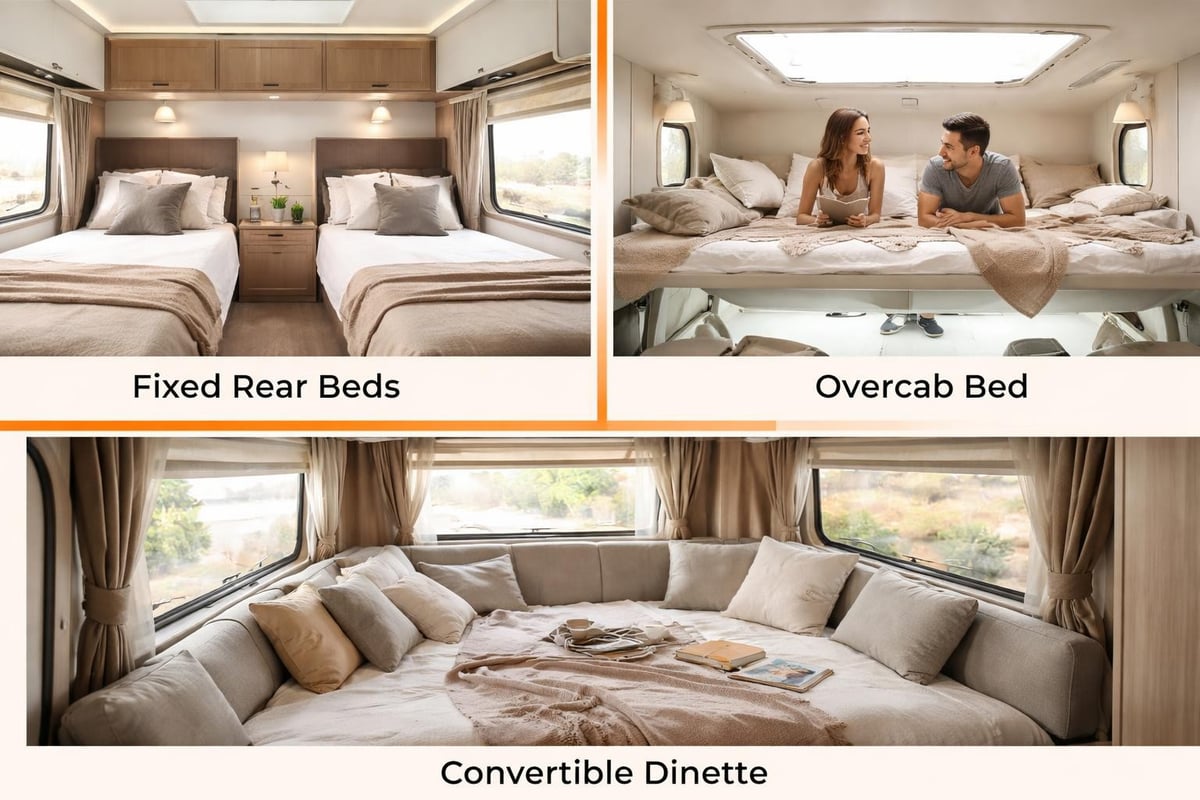
The term "4 berth" refers to sleeping capacity, but the actual layouts and sleeping arrangements can vary significantly between different models. Most 4 berth motorhomes feature a combination of fixed beds and convertible sleeping areas that transform from daytime seating into comfortable night-time accommodation.
Fixed rear bed configurations typically include a permanent double bed at the back of the motorhome, with additional sleeping space created by converting the dinette area. This arrangement provides excellent comfort for couples whilst maintaining flexibility for children or additional guests.
The overcab bed layout makes clever use of the space above the driver's cabin, creating a permanent double bed that doesn't need daily conversion. This design leaves the main living area free for a second double bed, usually formed from the dinette seating.
Twin single beds at the rear represent another popular option, particularly for families with older children or friends travelling together. These can often be pushed together to create a double bed when needed, offering remarkable versatility.
Selecting the right berth size significantly impacts your travel experience, and a 4 berth motorhome hire strikes an excellent balance between space and manoeuvrability. Understanding how to choose the right hire motorhome involves considering both your group size and your comfort requirements.
A 4 berth provides generous living space without the bulk of a 6 berth vehicle. You'll benefit from:
For couples travelling alone, the extra berths translate into additional storage space, a more spacious living area, or the flexibility to accommodate visiting family members during your travels.
Compared to larger motorhomes, 4 berth vehicles typically measure between 6 and 7 metres in length, making them considerably easier to handle on narrow country lanes and in car parks. This manageable size means less stress when navigating unfamiliar roads or reversing into campsites.
| Vehicle Aspect | 4 Berth Advantage | Comparison to Larger Models |
|---|---|---|
| Length | 6-7 metres | 1-2 metres shorter |
| Fuel Efficiency | Moderate consumption | Better than 6 berth |
| Parking | Fits standard bays | Easier than larger vehicles |
| Manoeuvrability | Comfortable handling | Significantly easier |
| Ferry Costs | Lower length bracket | Reduced travel expenses |
Modern 4 berth motorhome hire vehicles come equipped with comprehensive facilities that transform them into genuine homes on wheels. Understanding these features helps set realistic expectations and ensures you choose a vehicle that meets your specific needs.
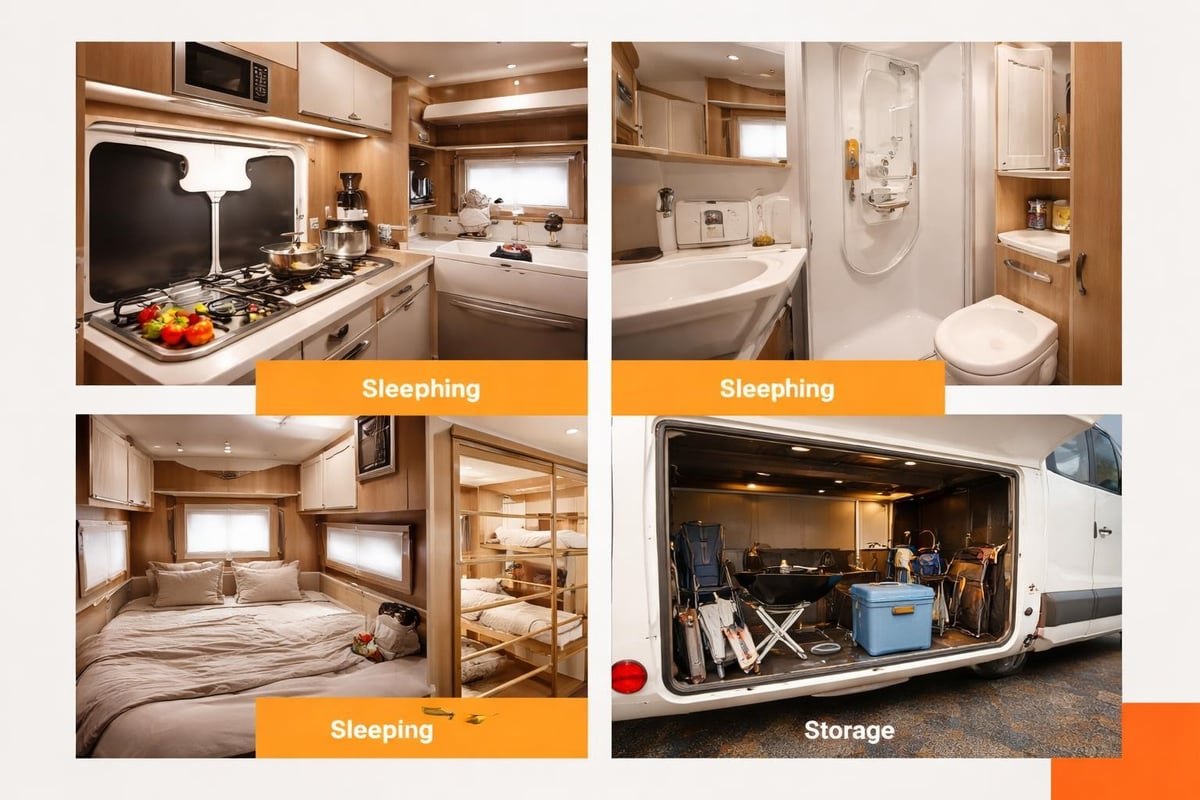
The kitchen area typically includes a two or three-burner gas hob, providing sufficient cooking capability for family meals. Most vehicles feature a combination fridge-freezer with three-way operation (gas, electric hook-up, or 12V whilst driving), ensuring your food stays fresh throughout your journey.
Sink facilities include hot and cold running water drawn from an onboard freshwater tank, usually holding between 90 and 120 litres. The dinette area converts between dining space and sleeping quarters, with comfortable seating for four people during mealtimes.
A dedicated washroom compartment houses the cassette toilet, shower, and washbasin. Whilst compact, these facilities provide complete independence from campsite amenities, offering tremendous flexibility when wild camping or staying at basic stopovers. The shower typically operates from the same water system as the kitchen, with hot water provided by a gas-powered boiler.
These storage options accommodate everything from clothing and toiletries to outdoor gear and sports equipment, making extended tours entirely practical.
Taking your first motorhome holiday requires some preparation, but the process needn't be daunting. First-time motorhome renters should focus on understanding vehicle systems, planning realistic daily distances, and familiarising themselves with motorhome etiquette.
Peak season demand for 4 berth motorhome hire runs from late May through August, with school holidays representing the busiest periods. Booking several months in advance ensures better vehicle availability and often secures preferential rates. Off-peak travel during spring or autumn offers excellent value whilst avoiding crowds at popular destinations.
When reviewing hire agreements, pay attention to mileage allowances, insurance coverage, and what's included in your package. Some hire companies provide comprehensive starter packs including bedding, kitchen equipment, and camping furniture, whilst others charge separately for these items.
Most hire companies offer thorough vehicle handovers lasting 45 minutes to an hour. This briefing covers:
Don't hesitate to ask questions during this process. Understanding these systems before departure prevents confusion at your first campsite and ensures you maximise comfort throughout your holiday.
The UK offers extraordinary diversity for motorhome travel, from rugged coastlines to tranquil countryside. A 4 berth motorhome hire provides the perfect combination of comfort and manoeuvrability for exploring these varied landscapes.
Starting from West Yorkshire, you're ideally positioned to explore the Yorkshire Dales National Park, with its limestone scenery, traditional villages, and excellent campsites. The market towns of Grassington, Settle, and Hawes provide charming stopover points with local amenities and attractions.
The North York Moors offer contrasting landscapes of heather moorland and ancient forests, whilst the Yorkshire coast delivers Victorian seaside towns and dramatic cliff scenery. These regions feature numerous Caravan Club sites and smaller independent campsites that welcome motorhomes.
The North Coast 500 has gained tremendous popularity amongst motorhome enthusiasts, offering 516 miles of spectacular coastal and mountain scenery. A 4 berth motorhome handles this route comfortably, with its moderate size proving advantageous on single-track roads.
The Scottish Highlands provide incredible wild camping opportunities, though you'll need to follow the Scottish Outdoor Access Code and practice leave-no-trace principles. Official stopovers and campsites dot the route, offering facilities when needed.
The Lake District's winding roads and limited parking make a 4 berth's manageable dimensions particularly valuable. Numerous campsites cater specifically to motorhomes, providing excellent bases for walking and water sports.
Wales presents diverse attractions from Snowdonia's mountains to Pembrokeshire's coastal paths. The compact nature of Wales means you can experience remarkable variety within relatively short distances, perfect for maximising your holiday time.
| Region | Key Attractions | Motorhome Suitability | Typical Journey Time from Leeds |
|---|---|---|---|
| Yorkshire Dales | Walking, caves, villages | Excellent | 1-2 hours |
| Lake District | Lakes, mountains, hiking | Very good | 2 hours |
| Scottish Highlands | Scenery, wildlife, history | Excellent | 4-6 hours |
| North Wales | Snowdonia, castles, coast | Very good | 3 hours |
| Pembrokeshire | Coastal path, beaches | Good | 5 hours |
Living in a motorhome requires some adjustment to confined spaces, but thoughtful organisation and good habits ensure everyone remains comfortable throughout the journey.
Morning preparations flow more smoothly when you establish a system. One person might prepare breakfast whilst another handles washing and dressing in the bathroom. Converting the dinette from sleeping to dining configuration takes just minutes and becomes second nature after the first few nights.
Keeping the living area tidy significantly impacts comfort levels. Return items to their designated storage spaces after use, and complete a quick tidy each evening before bed. This five-minute routine prevents clutter accumulation and maintains a pleasant living environment.
Your 4 berth motorhome operates as a self-contained unit with finite resources. The freshwater tank typically provides two to three days of normal use, whilst the waste water capacity runs similar durations. Understanding why hiring a 4 berth motorhome offers practical advantages helps you appreciate these systems.
Water conservation tips include:
The leisure battery powers lights, water pump, and some appliances when you're not connected to mains electricity. Modern systems typically provide adequate power for overnight stops, recharging whilst driving or when connected to hook-up.
Each season brings distinct advantages and challenges for motorhome travel. Understanding these variations helps you pack appropriately and plan activities suited to the conditions.
March through May offers excellent value for 4 berth motorhome hire, with lower rates and quieter campsites. Wildlife watching reaches its peak as birds nest and wildflowers bloom across the countryside. Pack layers for changeable weather and waterproofs for occasional showers.
Spring's milder temperatures mean the motorhome's heating system won't work as hard, conserving gas supplies. However, you'll still appreciate the warmth on cooler evenings, particularly in northern regions or at elevation.
Peak season delivers long daylight hours perfect for extended exploration, but requires advance booking for both vehicle hire and popular campsites. Coastal destinations become particularly busy, so consider arriving at campsites earlier in the day to secure pitches.
Temperature management becomes important during hot weather. Park with consideration for shade, use window screens to reduce heat gain, and maximise ventilation through skylights and windows. The 4 berth's air volume means it stays cooler than larger motorhomes during summer conditions.
September and October provide outstanding motorhome touring conditions. Autumn colours transform landscapes, harvest festivals celebrate local produce, and campsites return to peaceful atmospheres. Rates typically reduce after school holidays, offering excellent value.
Winter motorhoming remains viable in a well-equipped 4 berth, though you'll need to check that your hire vehicle includes adequate heating and insulation. Some hire companies winterise their fleets, limiting availability between November and February, whilst others cater specifically to winter sports enthusiasts and festive travellers.
Understanding the complete cost picture helps you budget accurately for your 4 berth motorhome hire adventure. Beyond the daily hire rate, several additional expenses contribute to the total investment.
Daily rates vary significantly based on season, vehicle age, and hire duration. Expect peak season rates (July-August) to exceed shoulder season prices by 30-50%. However, weekly hire typically costs less per day than shorter rentals, making extended trips more economical.
Additional charges might include:
Fuel consumption for a 4 berth motorhome typically ranges between 20-25 miles per gallon, depending on engine size and driving conditions. Budget approximately £15-20 per 100 miles for fuel costs at 2026 prices.
| Expense Category | Typical Daily Cost | Notes |
|---|---|---|
| Campsite Fees | £20-40 | Varies by season and facilities |
| Fuel | £20-30 | Based on 100-150 miles daily |
| Gas (LPG) | £3-5 | Heating, cooking, hot water |
| Food | £30-50 | Family of four, self-catering |
| Attractions | £20-40 | Entries, activities, parking |
Total daily running costs typically range from £90-165 beyond the hire fee, though careful planning and off-peak travel can reduce these expenses substantially.
Familiarising yourself with key technical aspects ensures you hire a suitable vehicle and operate it correctly throughout your journey. Different manufacturers and models vary, but certain specifications remain standard across most 4 berth motorhomes.
Most 4 berth motorhomes fall within the 3,500kg maximum authorised mass (MAM), meaning they're drivable on a standard UK car licence issued after 1997. This weight limit includes the vehicle, passengers, fuel, water, and all cargo, so understanding payload capacity prevents overloading.
Payload allowance typically ranges from 400-600kg in a 4 berth motorhome. This capacity accommodates passengers, luggage, food, and water, but requires mindful packing. Weigh luggage if attempting extended tours with maximum occupancy.
Understanding your motorhome's dimensions proves essential when navigating height restrictions, width limitations, and parking spaces:
These measurements determine which roads you can safely navigate and where you can overnight. Always verify height before entering car parks, tunnels, or driving under bridges, as collision with overhead structures represents one of the most common motorhome accidents.
Motorhoming offers opportunities to connect with nature whilst maintaining a relatively modest environmental footprint compared to traditional holidays involving flights and hotel stays. Making conscious choices further reduces your impact.
Grey water disposal should always occur at designated dump points, never into storm drains or natural water sources. Most campsites provide chemical disposal points for toilet cassettes and grey water drainage facilities. Wild camping requires absolute discretion, using official dump points when returning to civilisation.
Choosing local produce at farmers' markets and farm shops reduces food miles whilst supporting regional economies. These shopping trips often become holiday highlights, connecting you with local food culture and seasonal specialities.
Solar panels, fitted to some modern 4 berth motorhomes, reduce reliance on hook-up electricity and improve off-grid capability. If your hire vehicle includes solar charging, you'll enjoy extended freedom from electric hookup points.
Maximising enjoyment from your 4 berth motorhome hire involves balancing planning with spontaneity, allowing for both structured activities and serendipitous discoveries.
Over-scheduling represents a common mistake amongst first-time motorhomers. Driving a motorhome takes longer than car travel, and you'll want time to simply enjoy campsite surroundings. Plan for shorter daily distances than you might in a car, perhaps 50-100 miles maximum to allow for leisurely exploration.
Build flexibility into your route by booking only your first and last nights in advance, leaving mid-trip nights open for spontaneous decisions. This approach lets you extend stays at favourite locations or adjust plans based on weather conditions.
The motorhoming community offers tremendous support and knowledge sharing. Fellow travellers at campsites often provide valuable local recommendations and practical advice. Don't hesitate to ask experienced motorhomers for tips, particularly regarding your specific vehicle's features.
Online resources including motorhome forums and Facebook groups connect you with a wealth of collective experience. The Caravan Club and Camping and Caravanning Club provide extensive campsite networks, overnight parking locations, and member support services throughout the UK.
Exploring available motorhomes at The Camper Co gives you a clear picture of the specific 4 berth options available in West Yorkshire, helping you visualise your upcoming adventure with accurate vehicle details.
Protecting both yourself and your hire vehicle requires attention to several important aspects throughout your journey.
Modern motorhomes include various security features, but additional precautions prove worthwhile. Always lock the habitation door when leaving the vehicle unattended, even briefly. Some hire companies provide steering wheel locks for overnight stops, particularly in urban areas.
Valuable items should remain out of sight when you leave the motorhome. Consider using the vehicle's safe if provided, or carry important documents and electronics with you during day trips from campsites.
Remember that motorhomes handle differently from cars, requiring earlier braking, wider turning circles, and greater attention to height clearances. Allow extra distance when overtaking or being overtaken, as the high-sided profile catches crosswinds.
Reversing procedures benefit from a second person guiding you, particularly in tight campsite situations. Many hire vehicles include reversing cameras, but these supplement rather than replace careful observation and assistant guidance.
Choosing a 4 berth motorhome hire opens up incredible possibilities for UK exploration, offering the perfect balance of space, comfort, and manoeuvrability for small families or couples seeking extra room. From understanding layouts and features to planning routes and managing daily living, this guide equips you with the knowledge needed for a successful motorhome adventure. Whether you're dreaming of Yorkshire's rolling dales, Scotland's dramatic highlands, or Wales's coastal paths, The Camper Co provides quality 4 berth motorhomes from their West Yorkshire base, perfectly positioned for your next great British adventure.
Cornwall's rugged coastline, hidden coves, and charming villages make it one of Britain's most sought-after motorhome destinations. Whether you're dreaming of waking up to ocean views, exploring ancient heritage sites, or discovering secluded beaches, planning a cornish motorhome hire adventure opens up endless possibilities for your 2026 getaway. From the dramatic cliffs of Land's End to the picturesque harbours of Padstow and Fowey, Cornwall rewards those who explore it at their own pace, and a motorhome provides exactly that freedom.
Cornwall's unique geography makes it exceptionally well-suited for motorhome exploration. The peninsula stretches over 80 miles from the Devon border to Land's End, with two distinct coastlines offering completely different experiences.
The north coast presents dramatic Atlantic-facing cliffs, world-class surfing beaches, and wild, windswept landscapes. Meanwhile, the south coast offers sheltered harbours, gentler waters, and countless tucked-away coves. With a motorhome, you can experience both sides without the constraints of fixed accommodation.
Cornwall has invested significantly in motorhome-friendly infrastructure over recent years. You'll find:
The Cornwall Wildlife Trust maintains several nature reserves with motorhome-accessible parking, allowing you to combine wildlife watching with your road trip. Many of these locations provide excellent bases for exploring Cornwall's natural heritage without the need for lengthy drives.
Successful motorhome adventures start with thoughtful planning. While spontaneity is part of the appeal, understanding Cornwall's seasonal patterns and booking considerations ensures a smoother experience.
| Season | Advantages | Considerations |
|---|---|---|
| Spring (March-May) | Wildflowers bloom, fewer crowds, mild weather | Some facilities may have limited hours |
| Summer (June-August) | Peak season, warmest weather, all attractions open | Busy roads, campsite booking essential |
| Autumn (September-November) | Beautiful colours, harvest season, pleasant temperatures | Earlier sunsets, some seasonal closures |
| Winter (December-February) | Empty beaches, dramatic storms, peaceful campsites | Limited facilities, unpredictable weather |
When considering cornish motorhome hire for your trip, remember that Cornwall's microclimate means weather can vary dramatically even within short distances. The Lizard Peninsula might be bathed in sunshine whilst Bodmin Moor remains shrouded in mist.
Cornwall's road network requires particular attention when driving a motorhome. Many of the most beautiful locations sit at the end of narrow, high-banked lanes that challenge larger vehicles.
Major routes like the A30 and A39 provide straightforward access across the region, but the real magic lies off these main arteries. Before venturing down minor roads, check:
The Cornwall Council provides detailed information on public rights of way that can help you identify walking routes accessible from larger car parks where you can safely leave your motorhome.
Cornwall packs extraordinary variety into its compact territory. Your cornish motorhome hire adventure allows you to experience everything from prehistoric monuments to contemporary art galleries, often within the same day.
Padstow and Rock offer excellent motorhome facilities with multiple campsites within easy reach. The Camel Estuary provides sheltered waters perfect for paddle boarding, whilst the Camel Trail offers 18 miles of traffic-free cycling. Padstow's working harbour remains one of Cornwall's most atmospheric spots, particularly during early morning fish auctions.
Newquay serves as Cornwall's surf capital, with several beaches offering different wave conditions. Motorhome parking exists at most major beaches, though arrive early during summer months. Fistral Beach attracts international surf competitions, whilst Watergate Bay provides a more family-friendly environment.
Tintagel combines Arthurian legend with spectacular coastal scenery. The newly constructed bridge to Tintagel Castle (opened in 2019) offers breathtaking views, though motorhome parking requires using the village car park and walking approximately 15 minutes to the site.
The Roseland Peninsula remains one of Cornwall's best-kept secrets, accessible via the King Harry Ferry (weight restrictions apply, check before travelling). St Mawes Castle and the subtropical gardens at Lamorran House reward those who make the journey.
Fowey presents a quintessential Cornish harbour town with excellent walking routes along the coast path. Motorhome parking exists at Readymoney Cove car park, providing easy access to town and beach.
The Lizard Peninsula extends further south than any other point in mainland Britain. The serpentine rock formations, turquoise waters, and micro-climate create an almost Mediterranean atmosphere. Kynance Cove epitomises Cornish coastal beauty, though the car park requires careful manoeuvring for larger motorhomes.
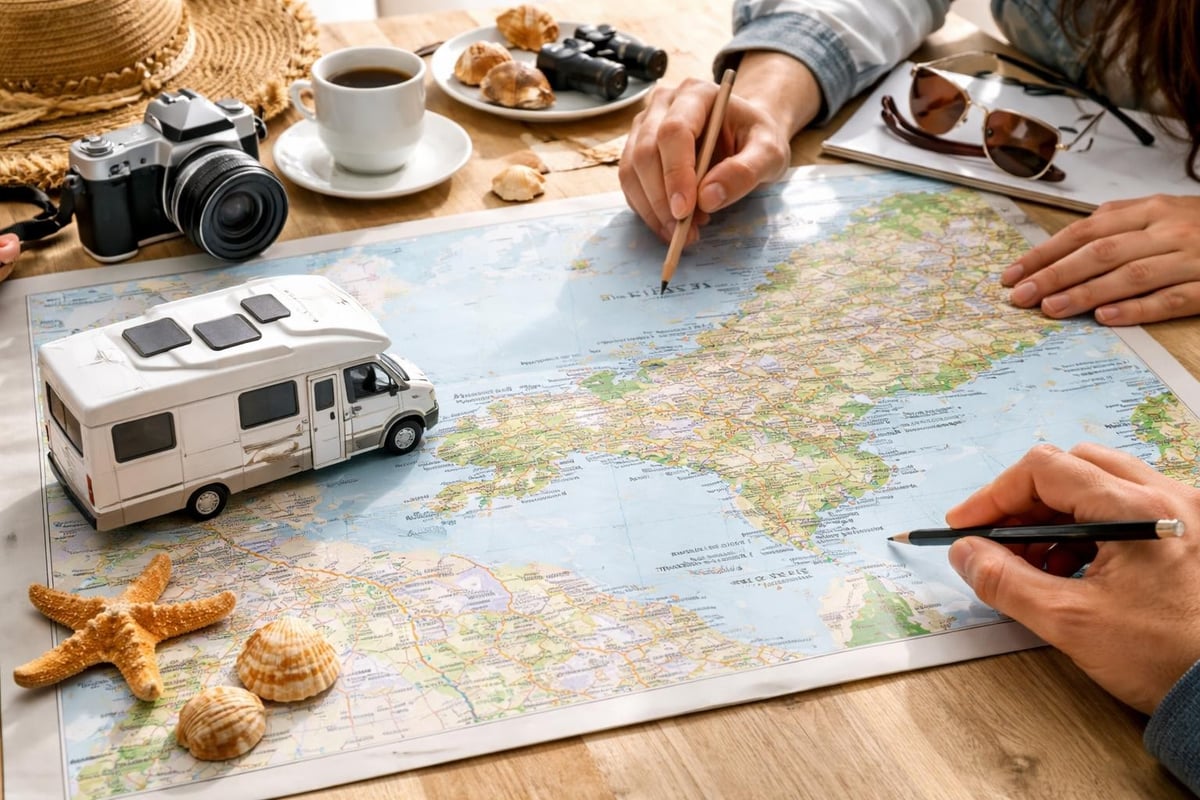
Cornwall offers tremendous variety in motorhome accommodation, from basic overnight stops to fully-serviced holiday parks. Understanding your options helps match facilities to your travel style.
Certificated Locations (CLs) and Certificated Sites (CSs) provide small, often family-run sites limited to five units. These offer peaceful, intimate settings, frequently in spectacular locations. Many operate year-round and welcome short-notice bookings outside peak season.
Touring parks provide comprehensive facilities including:
The Camping and Caravanning Club maintains an extensive network of sites across Cornwall, many offering member discounts and advance booking options.
Motorhome stopovers represent a growing sector, often attached to pubs, farm shops, or attractions. These typically offer basic facilities (sometimes just parking) at lower costs, perfect for one-night stops whilst touring.
| Timeframe | Strategy | Flexibility |
|---|---|---|
| 6+ months ahead | Secure preferred sites for July-August | Limited availability for changes |
| 3-6 months ahead | Good choice for June and September | Some flexibility remains |
| 1-3 months ahead | Spring and autumn widely available | Excellent flexibility |
| Last minute | Winter and weekday opportunities | Maximum flexibility |
When arranging cornish motorhome hire, coordinate your vehicle collection dates with your first night's campsite booking. This ensures you're not rushing across unfamiliar territory late in the day.
Cornwall's distinct cultural identity sets it apart from the rest of England. The Cornish language, though dormant for two centuries, has experienced significant revival, and you'll notice bilingual signage throughout the region.
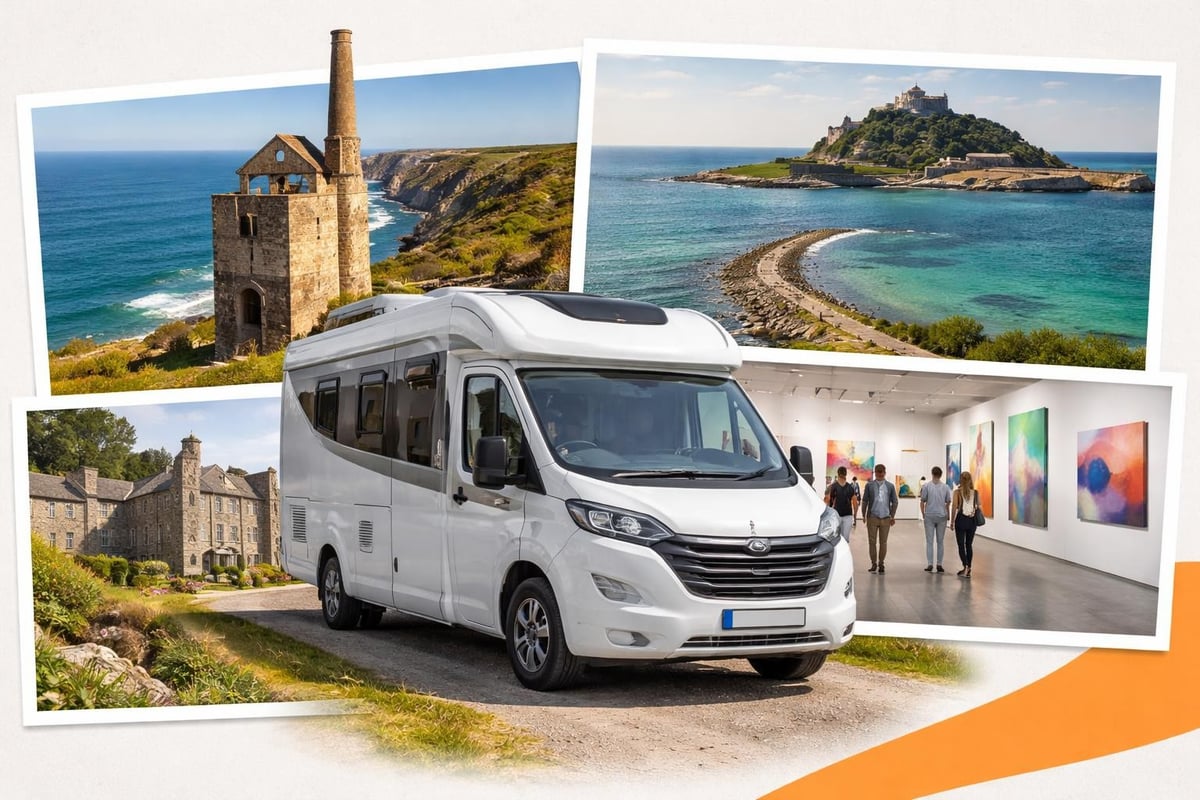
Cornwall's mining heritage earned World Heritage Status in 2006. The landscape remains dotted with engine houses, testament to the tin and copper mining that once dominated the economy. Many sites offer motorhome parking, including:
The National Trust manages numerous properties across Cornwall, from grand estates like Lanhydrock to coastal landscapes including Kynance Cove and Bedruthan Steps. Members receive free parking at most locations, a significant benefit when touring by motorhome.
St Michael's Mount rises dramatically from Mount's Bay, accessible via causeway at low tide or boat during high water. The castle and subtropical gardens reward exploration, whilst the surrounding area offers multiple motorhome-friendly car parks.
The Tate St Ives brings world-class contemporary art to Cornwall's north coast. The gallery's clifftop location provides stunning ocean views, whilst the Barbara Hepworth Museum and Sculpture Garden sits minutes away in the town centre.
Eden Project remains Cornwall's flagship attraction, though motorhome parking requires booking ahead during peak season due to space limitations. The biomes showcase global biodiversity, whilst the outdoor gardens demonstrate sustainable growing techniques relevant to Cornwall's climate.
Successfully navigating Cornwall by motorhome requires awareness of certain practicalities that differ from other UK regions.
Fuel stations become sparser as you travel further west. Fill up regularly rather than waiting for the warning light, particularly before heading to remote peninsulas. Major supermarkets in larger towns offer the most competitive pricing.
LPG availability varies considerably. Plan refilling stops in advance if your motorhome uses gas for heating and cooking. Apps specifically designed for motorhome travel provide updated information on LPG stations throughout Cornwall.
Most established campsites provide chemical toilet disposal points and fresh water taps. However, if you're using aires or stopovers, you'll need to locate dedicated facilities. Several coastal car parks now include motorhome service points, typically costing £2-5 per use.
Mobile signal remains patchy in some coastal areas and throughout Bodmin Moor. Download offline maps before travelling to remote locations. Many campsites now offer WiFi, though bandwidth may be limited during peak season when sites reach capacity.
Cornwall supports numerous local producers, from farm shops selling vegetables and dairy products to fish markets offering daily catches. Many villages host weekly markets, perfect for stocking up on regional specialities.
Supermarkets exist in all major towns, though smaller than city-centre equivalents. The main concentrations are:
Cornwall's maritime climate creates distinct seasonal patterns that significantly influence motorhome travel experiences. Understanding these helps set realistic expectations and plan appropriate activities.
March through May brings wildflower displays that transform coastal paths and moorland. The South West Coast Path, which encircles Cornwall's entire coastline, becomes particularly rewarding during spring months. Temperature gradually increases, averaging 12-15°C, though rain remains frequent.
Easter holidays mark the beginning of the main tourist season. Many attractions reopen after winter closures, though accommodation remains more affordable than summer months. This represents an excellent time for cornish motorhome hire if you prefer quieter beaches whilst still enjoying reasonable weather.
June delivers long daylight hours without peak-season crowds, making it arguably the optimal month for Cornish motorhome travel. July and August see temperatures reaching 18-22°C, though this attracts maximum visitors. Beach car parks fill quickly, and narrow lanes become congested during peak times.
The Cornwall Beach Guide provides detailed information on individual beaches, including parking facilities, lifeguard coverage, and dog restrictions (most beaches ban dogs between Easter and October). This resource proves invaluable when planning daily itineraries.
Water sports peak during summer months. Surfing remains possible year-round, but warmer waters make it more enjoyable for beginners. Coasteering, kayaking, and stand-up paddle boarding operators run throughout the season.
September and October offer outstanding value, with accommodation costs dropping significantly whilst weather often remains pleasant. The landscape transforms as bracken turns golden-brown, creating spectacular photographic opportunities.
Harvest season brings food festivals celebrating Cornish produce. The Falmouth Oyster Festival and various food markets throughout October showcase regional specialities. Many restaurants offer seasonal menus featuring game, mushrooms, and autumn vegetables.
November through February delivers Cornwall's quietest period. Many campsites remain open, offering reduced rates and peaceful settings. Storm-watching becomes a genuine activity, particularly along the north coast where Atlantic swells create dramatic displays.
Christmas in Cornwall presents a unique experience. Towns like St Ives and Padstow decorate extensively, whilst traditional events include Montol Festival in Penzance (celebrating winter solstice) and various carol services in historic churches.
Cornwall's varied habitats support remarkable biodiversity, from marine mammals to rare butterflies. Motorhome travel allows you to position yourself near the best wildlife-watching locations.
Basking sharks appear in Cornish waters between April and October, often visible from coastal paths as they feed near the surface. The Marine Conservation Society runs surveys that welcome public sightings, contributing to scientific understanding of these gentle giants.
Grey seals breed at various locations around the coast, with colonies accessible from several beaches. Godrevy, Porthcurno, and Sennen Cove offer reliable seal-watching opportunities. Remember to maintain distance (at least 30 metres) to avoid disturbing these protected animals.
Dolphins and porpoises frequent Cornish waters, particularly around headlands where tidal currents concentrate their fish prey. Early morning boat trips from Padstow, Falmouth, and Penzance increase your chances of close encounters.
The Hayle Estuary ranks among Britain's premier birdwatching locations, attracting migratory waders and wildfowl. The RSPB reserve provides excellent facilities, including motorhome-accessible parking. Visit during autumn migration for maximum variety.
Chough, Cornwall's iconic bird featuring on the county crest, has successfully recolonised after local extinction. The dramatic red-billed corvids frequent coastal cliffs, particularly around Lizard Point and the far west.
Cornwall's mild climate supports exotic species that struggle elsewhere in Britain. The Cornwall Heritage Trust highlights various sites where you can explore this botanical richness alongside historic buildings.
Trebah Garden, Glendurgan, and the Lost Gardens of Heligan showcase sub-tropical plants thriving in sheltered valleys. Most provide parking suitable for motorhomes, though checking in advance is advisable for larger vehicles.
Cornwall's culinary scene has evolved dramatically, now rivalling any British region for quality and innovation. Motorhome travel lets you combine restaurants and cafes with self-catering using local ingredients.
Cornish pasties receive Protected Geographical Indication status, meaning only pasties made in Cornwall following traditional recipes can use this designation. Countless bakeries produce variations, from classic beef and vegetable to modern interpretations featuring local fish or cheese.
Seafood dominates coastal menus, often landed the same morning. Crab sandwiches, mackerel pâté, and fish and chips represent quintessential Cornish experiences. Padstow, dubbed "Padstein" after celebrity chef Rick Stein's multiple establishments, has become synonymous with quality seafood dining.
Cream teas spark debate about correct assembly (jam first or cream first). The Cornish method places clotted cream on the scone first, then jam on top, opposing Devon's approach. Sample both and decide for yourself at one of hundreds of tea rooms throughout the region.
Weekly markets provide opportunities to source directly from producers:
Farm shops dot the landscape, many offering vegetables, meat, dairy products, and preserves. These prove perfect for stocking your motorhome kitchen whilst supporting local agriculture.
If you're new to combining cornish motorhome hire with exploring this distinctive region, certain insights help maximise your experience whilst avoiding common pitfalls.
Satnav systems occasionally direct motorhomes down unsuitable lanes. Cross-reference with physical maps or dedicated motorhome navigation apps that account for vehicle dimensions. The OS Explorer maps (1:25,000 scale) for Cornwall provide excellent detail for planning walks and identifying quiet lanes.
Place names often appear in both Cornish and English. Understanding a few common elements helps with navigation: "Pen" means headland or end, "Porth" indicates harbour or cove, "Tre" signifies homestead or settlement. Thus, Penzance literally translates as "holy headland."
Cornwall's narrow lanes require particular techniques:
Reversing cameras prove invaluable, though don't rely on them exclusively. Many Cornish lanes have high hedges that obscure approaching vehicles until the last moment.
Cornwall maintains strong community bonds, and visitors who respect local customs receive warmer welcomes. Simple courtesies include:
Cornwall's tourist-dependent economy means prices often exceed national averages during peak season. However, motorhome travel offers significant savings compared to hotel accommodation.
Daily cost estimates (excluding motorhome hire):
Many attractions offer annual memberships that provide value if you plan extended stays. National Trust and English Heritage membership both cover numerous Cornish properties.
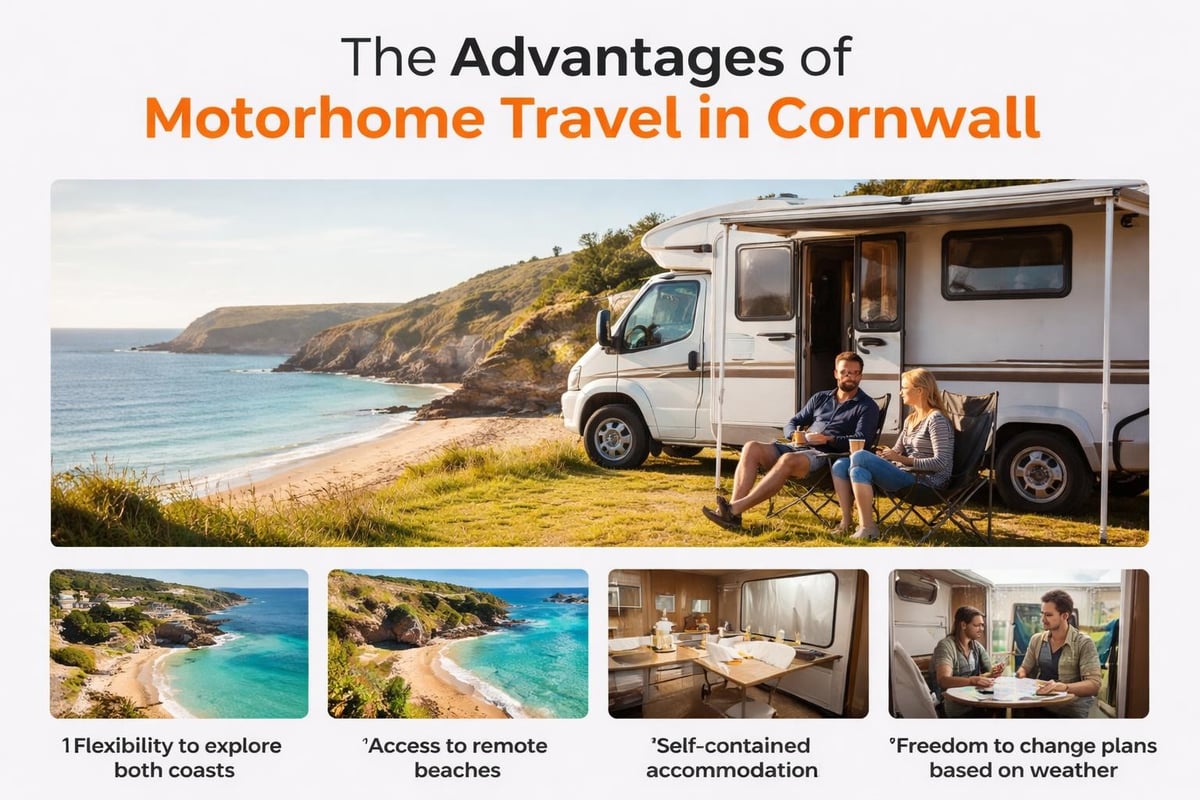
The flexibility that cornish motorhome hire provides truly shines when you embrace spontaneous decisions based on weather, local recommendations, or unexpected discoveries.
Cornwall's weather changes rapidly, often varying between coast and inland, and north versus south coasts. If rain sweeps the north coast, drive to the sheltered south for completely different conditions within 30 minutes. This adaptability represents one of motorhome travel's greatest advantages.
Weather apps specific to marine forecasts (designed for sailors) provide more detailed coastal predictions than general weather services. These help you position yourself for the best conditions each day.
The most memorable Cornish experiences often come from wandering off established routes. Remote coves, clifftop walks, and tiny fishing villages reward those willing to explore beyond major attractions.
Local recommendations prove invaluable. Chat with campsite owners, cafe staff, and fellow motorhomers about their favourite spots. Many of Cornwall's best locations remain unmarketed, known primarily through word-of-mouth.
Cornwall's exceptional light quality attracts photographers worldwide. The maritime atmosphere creates soft, diffused lighting particularly beautiful during golden hours (early morning and late evening).
Iconic locations include:
Dawn visits often provide empty beaches and car parks, perfect for photography without crowds. Your motorhome enables early starts without requiring hotel checkouts.
Planning a Cornwall adventure requires balancing spontaneity with practical preparation, and a motorhome offers the perfect platform for this exploration. From dramatic coastal scenery to rich cultural heritage, Cornwall rewards those who take time to discover its many layers. If you're based in Yorkshire or the North of England, The Camper Co provides excellent motorhome hire options that let you embark on your own Cornish adventure with confidence, offering well-maintained vehicles and expert advice to ensure your journey west becomes truly unforgettable.
Private RV hire has transformed the way British families, couples, and solo travellers explore the stunning landscapes of the United Kingdom. Whether you're dreaming of touring the Yorkshire Dales, discovering the Scottish Highlands, or meandering through the Cotswolds, hiring your own motorhome provides unparalleled freedom and flexibility. This comprehensive guide walks you through everything you need to know about private RV hire, from selecting the perfect vehicle to understanding insurance requirements and planning your ultimate road trip adventure.
Private RV hire refers to renting a motorhome or campervan directly from a specialist hire company for your exclusive use during a specific period. Unlike shared accommodation or guided tours, this option gives you complete control over your itinerary, destinations, and travel pace.
The concept has gained tremendous popularity across Britain, particularly in regions like Yorkshire, where the combination of dramatic countryside, historic market towns, and coastal beauty creates perfect motorhome touring conditions. When you opt for private RV hire, you're essentially renting a home on wheels that includes sleeping quarters, kitchen facilities, bathroom amenities, and comfortable living space.
Private hire differs significantly from other rental arrangements. You have exclusive access to the vehicle throughout your rental period, meaning no sharing with strangers or adhering to group schedules. This privacy extends to all aspects of your journey, from meal times to stopping points.
Key benefits of private motorhome hire include:
The flexibility this arrangement provides proves particularly valuable for families with young children, couples seeking romantic getaways, or groups with specific interests like photography or hiking.
Selecting the appropriate motorhome represents one of the most crucial decisions in your private RV hire journey. Vehicle size, layout, and features should align perfectly with your travel party size, route plans, and comfort expectations.
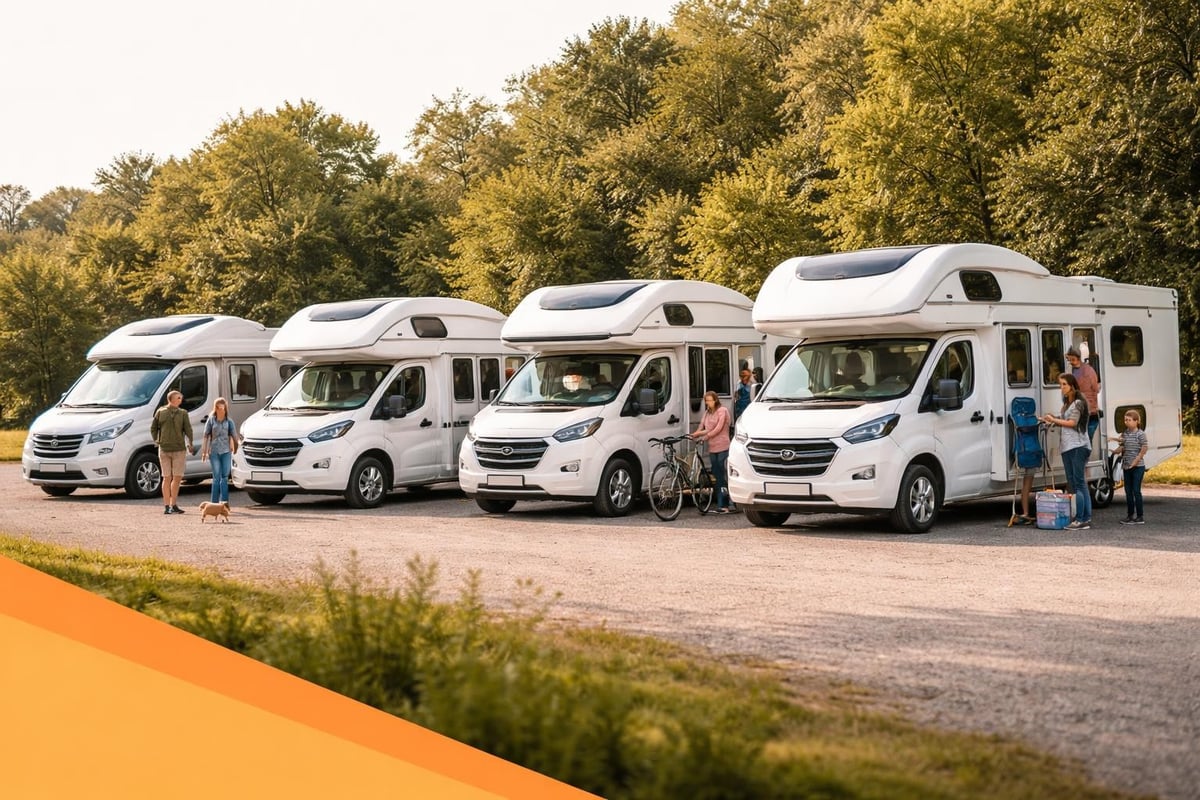
| Berth Size | Ideal For | Typical Features | Best Routes |
|---|---|---|---|
| 2-Berth | Couples, solo travellers | Compact, easy parking, fuel-efficient | Narrow country lanes, city touring |
| 4-Berth | Small families, two couples | Balanced space and manoeuvrability | Mixed terrain, coastal routes |
| 6-Berth | Large families, groups | Maximum space, full amenities | Open roads, extended stays |
Smaller 2-berth campervans offer excellent manoeuvrability through Yorkshire's historic villages and tight country roads. They're perfect for romantic escapes or solo adventures where you prioritize ease of driving over living space.
Mid-sized 4-berth motorhomes strike an excellent balance. They provide ample room for small families whilst remaining manageable on Britain's varied road network. These vehicles typically include separate sleeping areas, full kitchen facilities, and proper bathroom amenities.
Larger 6-berth motorhomes deliver maximum comfort and space. Ideal for extended family holidays or groups of friends, these vehicles often feature fixed double beds, bunk beds for children, spacious dinettes, and comprehensive storage solutions.
Beyond sleeping capacity, several features dramatically impact your motorhome experience:
When arranging private RV hire, discuss these features thoroughly with your hire company to ensure the vehicle matches your expectations and requirements.
Successful motorhome holidays require thoughtful planning balanced with flexibility. The beauty of private RV hire lies in having structure without rigid constraints.
Yorkshire offers extraordinary diversity for motorhome touring. The Yorkshire Dales National Park presents dramatic limestone scenery, whilst the North York Moors deliver heather-covered expanses and charming villages. The Yorkshire coast provides seaside charm from Whitby to Bridlington.
When planning routes, consider:
Create a flexible itinerary that allows spontaneous detours. The joy of private RV hire includes discovering unexpected gems along your route.
Britain boasts thousands of campsites ranging from basic certified locations to fully-serviced holiday parks. Private RV hire gives you freedom to choose sites matching your preferences and budget.
Campsite types to consider:
Book popular sites in advance, especially during school holidays and bank weekends. However, keep some nights flexible for spontaneous stops.
Understanding insurance represents a critical aspect of private RV hire. When renting an RV, insurance coverage typically needs to be arranged through the rental company, as standard motor policies often don't extend to hired motorhomes.
Comprehensive RV rental insurance generally includes several components:
Most hire companies include basic insurance within rental costs, with options to reduce excess payments through additional coverage purchases. Review policy documents carefully, understanding excess amounts, coverage exclusions, and claims procedures.
UK driving licence holders can typically drive motorhomes up to 3,500kg on a standard car licence. Heavier vehicles may require Category C1 entitlement, usually available to those who passed their test before 1997.
International visitors should carry:
First-time motorhome hirers often feel apprehensive about vehicle size and systems operation. Quality hire companies provide comprehensive handovers, but preparing yourself beforehand enhances confidence.
Before collecting your hired motorhome, familiarize yourself with basic operational aspects:
Most concerns prove straightforward once explained. Don't hesitate asking questions during vehicle collection.
Efficient packing maximizes comfort without overloading your motorhome. Weight distribution affects driving characteristics and fuel consumption.
| Category | Essential Items | Optional Extras |
|---|---|---|
| Kitchen | Pots, pans, utensils, plates, cups | Slow cooker, coffee maker, wine glasses |
| Bedroom | Bedding, pillows, towels | Extra blankets, reading lights |
| Bathroom | Toiletries, toilet chemicals, toilet paper | Bathrobes, luxury products |
| Outdoor | Awning, chairs, table | BBQ, outdoor games, bike rack |
| Safety | First aid kit, fire extinguisher, warning triangle | Additional torch, tool kit |
Many hire companies provide basic equipment packages. Discuss what's included when arranging your private RV hire to avoid duplicating items.
Private RV hire offers unique opportunities for memorable experiences. Understanding motorhome etiquette and practical considerations ensures smooth, enjoyable travels.
Establishing gentle daily rhythms enhances motorhome life. Unlike hotel stays with fixed breakfast times and checkout schedules, motorhome holidays flow according to your preferences.
Typical successful approaches include:
The freedom to adjust these patterns represents one of private RV hire's greatest advantages.
Britain's motorhome community proves welcoming and helpful. Fellow motorhomers often share recommendations, tips, and local knowledge.
Ways to connect include:
These connections often lead to lasting friendships and valuable insider knowledge about hidden gems across the UK.
Understanding the complete cost picture helps you budget effectively for private RV hire adventures. Beyond the rental fee, several expenses contribute to overall trip costs.
Fixed costs:
Variable costs:
Private RV hire often proves more economical than traditional holidays when comparing accommodation, dining, and transportation costs combined. A family of four can holiday comfortably for similar or lower costs than hotel-based alternatives.
Maximize value from your motorhome experience through intelligent planning:
Modern motorhome tourism increasingly focuses on environmental responsibility and sustainable practices. Private RV hire allows you to travel consciously whilst enjoying Britain's natural beauty.
Responsible motorhomers adopt practices minimizing environmental impact:
When you explore motorhome travel options, choosing companies committed to sustainability amplifies your positive impact.
Adopting Leave No Trace principles ensures beautiful locations remain pristine for future visitors:
These practices ensure motorhome tourism remains welcomed across the UK.
West Yorkshire and surrounding regions provide exceptional motorhome touring opportunities. Private RV hire from Leeds positions you perfectly for exploring diverse landscapes within easy reach.
The Yorkshire Dales National Park delivers breathtaking scenery perfect for motorhome exploration. Winding valleys, traditional stone villages, and dramatic limestone formations create unforgettable backdrops.
Must-visit locations include:
Numerous campsites throughout the Dales provide excellent bases for walking, cycling, and photography.
Yorkshire's coastline stretches from industrial heritage to seaside charm. The coastal route offers variety unmatched in compact distances.
Drive north from Bridlington through Scarborough to Whitby, experiencing sandy beaches, dramatic cliffs, and historic harbours. Each town presents distinct character whilst maintaining authentic Yorkshire hospitality.
Robin Hood's Bay deserves special mention. This picturesque fishing village, with steep cobbled streets tumbling to the sea, captures hearts instantly. Note that larger motorhomes struggle with village access, but nearby parking accommodates all vehicle sizes.
Private RV hire enables you to explore Yorkshire's rich cultural heritage at your own pace. York, with its magnificent Minster, Viking history, and medieval walls, lies within easy reach.
Smaller market towns like Skipton, Harrogate, and Knaresborough offer charm without overwhelming crowds. These locations provide excellent shopping, dining, and cultural experiences whilst maintaining manageable parking for motorhomes.
Developing basic technical competence transforms good motorhome holidays into great ones. Most systems prove straightforward once understood.
Understanding your motorhome's water systems prevents issues and maintains comfort:
Fresh water: Fill from taps at campsites or service points. Monitor levels daily, especially when not on hook-up. Most motorhomes carry 80-120 litres.
Grey water: Waste from sinks and showers collects in holding tanks. Empty at designated points, never into drains or onto the ground. Tank capacity typically matches fresh water volume.
Toilet systems: Cassette toilets require chemical additives and regular emptying. Modern chemicals prove odour-free and environmentally friendlier than historical alternatives.
Motorhome electrical systems operate on multiple sources:
Understanding which systems draw power from which source helps manage battery life effectively during wild camping or non-hook-up stays.
Britain's motorhoming season extends year-round, though each season presents unique characteristics and considerations.
Spring motorhoming delivers crisp weather, blooming landscapes, and fewer crowds. Lambs populate Yorkshire's fields, whilst daffodils carpet valley floors.
Consider carrying extra warm layers, as spring weather proves unpredictable. Many campsites open Easter weekend, expanding accommodation options.
Summer brings warmest temperatures, longest days, and busiest campsites. School holidays create peak demand, requiring advance bookings for popular locations.
Benefits include:
Autumn provides spectacular colours across Yorkshire's landscapes. Crowds diminish whilst weather often remains pleasant through September and October.
This season proves ideal for private RV hire if you value tranquility over guaranteed sunshine. Harvest festivals, country shows, and seasonal markets enhance cultural experiences.
Winter motorhoming requires proper preparation but offers unique rewards. Modern motorhomes feature excellent heating systems keeping interiors cozy regardless of external temperatures.
Christmas markets, winter walks, and cozy pub evenings create magical experiences. Ensure your motorhome includes proper winterization features like blown-air heating and insulated water systems.
Once you've enjoyed your first private RV hire adventure, many travelers want to extend or repeat the experience.
Extended motorhome holidays allow deeper exploration. Two or three-week hires enable you to venture further whilst maintaining relaxed pacing.
Consider combining regions: start in Yorkshire, progress to the Lake District, explore Scottish Highlands, return via Northumberland's dramatic coast. Extended trips provide better value per day whilst allowing more spontaneous diversions.
Building relationships with your hire company often yields advantages. When you repeatedly choose quality motorhome hire services, companies recognize loyalty through preferential rates, vehicle selection priority, or additional equipment inclusion.
Regular hirers develop familiarity with specific vehicles, streamlining collection processes and maximizing comfort from day one.
Private RV hire opens extraordinary possibilities for exploring Britain's diverse landscapes at your own pace whilst enjoying home comforts throughout your journey. Whether you're planning a weekend escape or extended tour, the freedom and flexibility of motorhome travel creates memories lasting well beyond your return home. The Camper Co provides expertly maintained motorhomes from 2-berth to 6-berth configurations, offering the perfect vehicle for your Yorkshire adventure and beyond, backed by comprehensive support ensuring your private hire experience exceeds expectations from collection to return.
The North Coast 500 has captured the imagination of road trippers across Britain and beyond, transforming Scotland's rugged northern coastline into one of the world's most celebrated driving routes. This spectacular 516-mile circuit takes you through dramatic mountain passes, past pristine beaches, and alongside ancient castles, offering an ever-changing panorama that rivals anything found on the European continent. Whether you're planning your first Scottish adventure or returning to explore alternative nc500 routes, understanding the various options available will help you craft the perfect motorhome journey through the Highlands.
The North Coast 500 follows a circular path starting and ending in Inverness, Scotland's Highland capital. This iconic route was officially launched in 2015 and has since become one of Britain's most sought-after road trip experiences, earning recognition as the UK’s favorite driving route in numerous travel surveys.
The traditional circuit divides into five distinct sections, each offering unique landscapes and attractions:
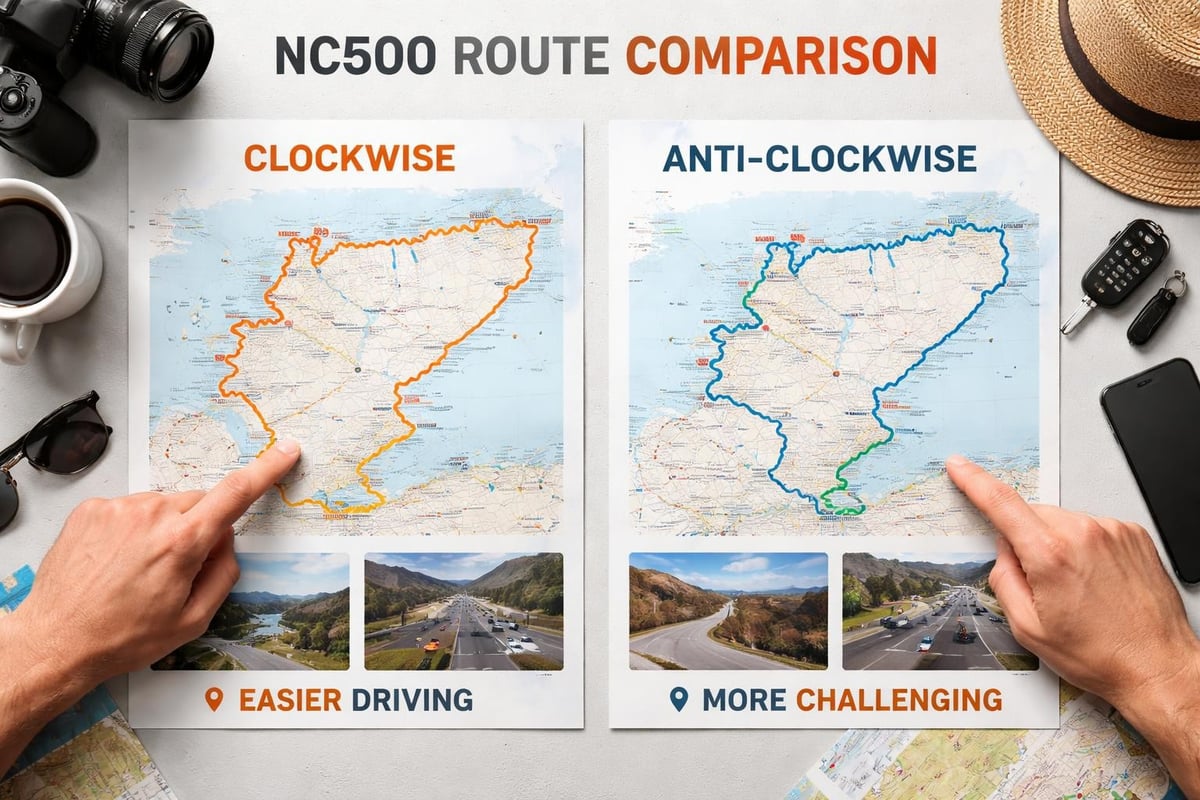
Choosing your direction significantly impacts your NC500 experience. Most travelers opt for an anti-clockwise route, tackling the dramatic west coast first whilst energy levels remain high. This approach also means navigating the infamous Bealach na Bà pass with views on your right-hand side, making photography stops safer and more straightforward.
The clockwise alternative offers its own advantages. You'll encounter gentler gradients initially, building confidence before reaching the more challenging western sections. Additionally, traveling clockwise often means quieter roads, as you'll be moving against the flow of the majority of NC500 traffic.
| Direction | Best For | Main Advantages | Considerations |
|---|---|---|---|
| Anti-clockwise | First-timers, photographers | Better views from driver position, tackle challenges early | Busier routes, more traffic |
| Clockwise | Nervous drivers, off-peak travel | Gentler start, quieter roads | Tougher sections at journey's end |
Whilst the official nc500 routes follow established roads, numerous variations let you customize your journey. These alternatives can help you avoid crowds during peak season, discover hidden gems, or adapt to time constraints and weather conditions.
Time-pressed travelers can complete a condensed version in four to five days rather than the recommended seven. This streamlined approach focuses on major highlights:
This faster pace means less time for spontaneous stops and exploration, but it works beautifully for those with limited holiday allowance. Remember that driving a motorhome requires more time than a car, particularly on single-track roads where passing places demand patience and careful maneuvering.
For those with additional time, extending your NC500 journey creates opportunities to explore inland routes and lesser-known attractions. Popular extensions include:
These variations transform the NC500 from a week-long adventure into a fortnight's comprehensive Highland exploration. Each extension adds unique landscapes and cultural experiences, from ancient archaeological sites to wildlife watching opportunities.
Single-track roads form a significant portion of the NC500, particularly along the western and northern coasts. These narrow lanes, barely wide enough for one vehicle, feature designated passing places at regular intervals. Mastering single-track etiquette proves essential for stress-free motorhome travel.
Key single-track rules:
The official NC500 guidance emphasizes patience and courtesy on these roads. Motorhomes require extra care due to their size and limited visibility, particularly when reversing. Many hire vehicles come equipped with reversing cameras, but practice and confidence build quickly once you've navigated your first few encounters.
Scotland's weather can change dramatically within hours, particularly in the Highlands. Winter brings snow to high passes like Bealach na Bà, which may close temporarily between November and March. Summer offers the longest daylight hours, but midges become prevalent in sheltered areas during calm, warm conditions.
Spring (April to May) and autumn (September to October) often provide the sweet spot for NC500 routes. You'll encounter fewer tourists, more accommodation availability, and pleasant temperatures, though you should always pack for four seasons regardless of your travel dates.
Regardless of which variation you choose, certain locations deserve a place on every NC500 itinerary. These stops showcase the route's incredible diversity, from geological wonders to cultural landmarks.
The western section delivers some of Scotland's most dramatic scenery. Applecross sits at the heart of this region, accessible either via the thrilling Bealach na Bà or the gentler coastal route from Shieldaig. The village's famous inn serves fresh seafood overlooking the bay, with views across to Raasay and Skye.
Achmelvich Beach near Lochinver rivals any Caribbean shoreline, with white sand and turquoise waters (albeit considerably colder). The area provides excellent wild camping opportunities, though always follow the Scottish Outdoor Access Code and use designated motorhome facilities where available.
| Location | Region | Key Features | Motorhome Facilities |
|---|---|---|---|
| Applecross | West Coast | Bealach na Bà pass, seafood restaurant | Limited parking, tight village streets |
| Achmelvich | Northwest | White sand beach, clear waters | Designated motorhome parking available |
| Smoo Cave | North | Sea cave with waterfall | Large car park suitable for motorhomes |
| Dunnet Head | North | Britain's most northerly point | Good parking, café facilities |
Smoo Cave near Durness combines geological wonder with easy access. This massive sea cave features an internal waterfall and allows visitors to explore both by foot and boat. The site provides ample motorhome parking and makes an excellent lunch stop.
Further east, Dunnet Head claims the title of Britain's true northernmost point (despite John o'Groats' fame). The dramatic lighthouse setting offers spectacular clifftop walks and excellent birdwatching opportunities.
The east coast presents a gentler landscape with charming fishing villages like Dornoch, home to championship golf courses and a magnificent 13th-century cathedral. The town offers better motorhome facilities than many western locations, with designated parking and comprehensive services.
Glenmorangie Distillery near Tain provides an excellent introduction to Highland whisky production. Tours run regularly, and the visitor center welcomes motorhome travelers with appropriate parking arrangements.
How long should you allocate for the NC500? The answer depends entirely on your travel style and interests. Responsible travel guides recommend allowing sufficient time to truly experience each region rather than rushing through.
The standard week-long approach allows time for major highlights whilst maintaining a relaxed pace:
This schedule builds in flexibility for weather delays, spontaneous detours, and those unexpected discoveries that make motorhome travel so rewarding. You're not racing against time but savoring the journey at your own pace.
Fourteen days transforms the NC500 from a road trip into an immersive Highland experience. Extra time allows for:
This extended timeframe particularly suits families with children, older travelers seeking a gentler pace, or anyone wanting to truly connect with Highland culture and landscapes.
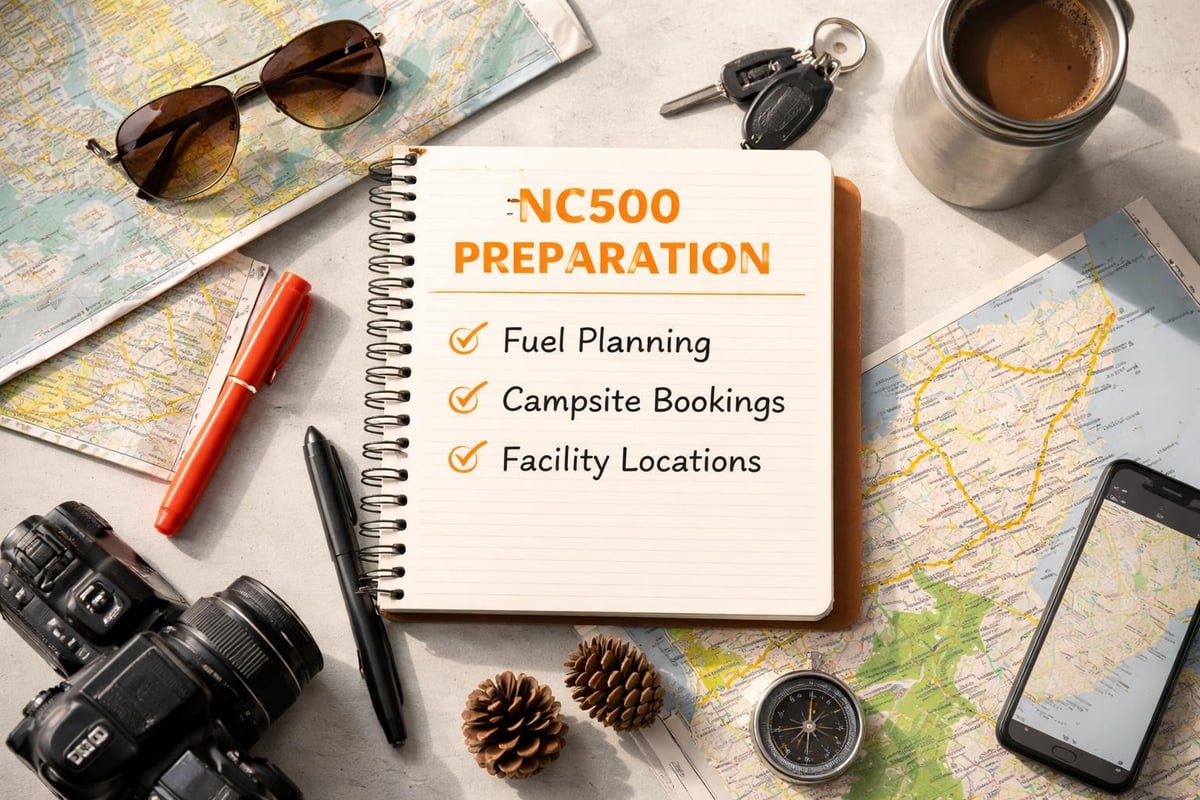
Traveling the NC500 in a motorhome requires specific planning beyond standard road trip preparation. Fuel stations become sparse along western and northern sections, with gaps exceeding 40 miles between pumps. Always fill up when opportunities arise, and never let your tank drop below half full in remote areas.
Essential motorhome preparations:
The RAC’s comprehensive NC500 guide emphasizes the importance of vehicle preparation, particularly for larger motorhomes that may struggle on steeper gradients or tighter corners.
Scotland's generous access laws permit wild camping, but the NC500's popularity has led to restrictions in certain areas. Always use designated motorhome facilities where available, and follow Leave No Trace principles rigorously.
Campsite options along nc500 routes include:
Booking ahead proves essential during peak season, particularly for sites with electric hookups. Many travelers adopt a mixed approach, combining campsite stays with responsible wild camping in permitted areas.
The most rewarding nc500 routes balance famous attractions with unexpected discoveries. Allow time to explore small museums, chat with locals in village shops, and follow intriguing signposts down unmarked roads. These spontaneous moments often create the most lasting memories.
Photography opportunities abound throughout the route. The long summer daylight hours (nearly 24 hours of daylight in midsummer at northern latitudes) provide exceptional conditions for landscape photography. Golden hour lasts for hours, creating perfect conditions for capturing the Highlands' dramatic scenery.
Consider your interests when planning stops. History enthusiasts might prioritize castles and archaeological sites, whilst nature lovers focus on wildlife hotspots and coastal walks. The beauty of motorhome travel lies in this flexibility – your itinerary evolves with your discoveries and preferences.
Many travelers use the NC500 as an introduction to Scottish Highlands exploration, returning to delve deeper into specific regions. The route connects beautifully with other Scottish driving routes, including the equally spectacular coastal roads throughout Argyll and the Hebrides.
Starting your journey from Leeds with a hired motorhome, you'll traverse the stunning landscapes of Northern England before crossing into Scotland. This extended route allows you to discover the Borders, explore Edinburgh, or venture into the Cairngorms before beginning the NC500 proper.
The journey from Yorkshire to Inverness takes approximately seven to eight hours without stops, but smart travelers break this into a two-day journey with overnight stops in the Lake District or Northumberland. This approach ensures you arrive at the NC500 starting point refreshed and ready for adventure rather than road-weary from a marathon drive.
Your return journey needn't retrace the same path. Consider these alternatives:
Each option extends your Scottish adventure whilst providing fresh landscapes and experiences. The flexibility of motorhome travel means you can adapt your return route based on weather, time available, and attractions that captured your imagination along the NC500.
Understanding seasonal differences helps optimize your nc500 routes experience. Recent surveys highlight the route's year-round appeal, but each season offers distinct advantages and challenges.
Summer (June to August) delivers the warmest weather, longest days, and fullest facilities, but also brings crowds, higher prices, and midges. Booking accommodation becomes essential, and popular viewpoints can feel busy during peak hours.
Autumn (September to October) provides spectacular colors as heather blooms purple across the moors and deciduous trees turn golden. Tourist numbers drop significantly after school holidays end, whilst weather often remains pleasant through September.
Winter (November to March) suits experienced travelers seeking solitude and dramatic winter landscapes. Snow-capped mountains provide stunning backdrops, but some facilities close, daylight hours shrink, and weather conditions demand extra caution. High passes may close temporarily during severe weather.
Spring (April to May) brings lengthening days, emerging wildlife, and manageable tourist numbers. Lambing season adds pastoral charm to the agricultural areas, whilst migrating birds return to coastal cliffs and moorlands.
Comprehensive planning transforms good trips into exceptional adventures. Beyond this guide, several resources prove invaluable for NC500 preparation.
The official North Coast 500 website provides regularly updated information about road conditions, events, and new attractions. Their accommodation listings include motorhome-friendly sites, whilst route maps highlight points of interest along each section.
Detailed road atlases remain useful despite digital navigation, particularly given the patchy mobile coverage across remote regions. Ordnance Survey maps at 1:50,000 scale show single-track roads, passing places, and terrain features that help anticipate challenging sections.
Local tourist information centers stock current leaflets about attractions, walking trails, and temporary road closures. Staff provide insider knowledge about quiet viewpoints, recently opened facilities, and weather forecasts for specific areas.
Weather apps prove essential, but supplement them with local knowledge. Coastal areas often experience different conditions than inland glens just miles away, and mountain weather can change dramatically within hours.
The NC500 represents one of Britain's finest motorhome adventures, combining dramatic scenery, rich culture, and the freedom of the open road into an unforgettable journey. Whether you choose the classic circuit or customize your own variation, proper planning ensures you'll experience the Highlands at their magnificent best. The Camper Co provides the perfect vehicles for exploring Scotland's legendary route, with a range of campervans and motorhomes designed for comfort and reliability on Highland roads. Start planning your NC500 adventure today and discover why this spectacular circuit continues to captivate travelers from across the globe.
Your campervan pick up marks the official start of your adventure, and getting this stage right sets the tone for your entire trip. Whether you're collecting your first campervan or you're a seasoned traveller, understanding what happens during collection day ensures a smooth, confident start to your Yorkshire exploration. The process involves more than simply collecting keys – it's about familiarising yourself with your home on wheels, understanding the equipment, and making certain everything's in perfect working order before you drive away.
The collection process typically takes between 45 minutes to 90 minutes, depending on your experience level and the vehicle you've hired. First-time renters naturally need more time to absorb all the information, whilst experienced travellers can often complete the process more quickly.
When you arrive at the depot, you'll be greeted by a member of the hire team who'll guide you through each stage. They'll start by verifying your documentation, including your driving licence, proof of address, and any additional driver details. This administrative stage ensures everything aligns with your booking confirmation and that you're fully covered by insurance.
Bringing the correct paperwork prevents delays and ensures your campervan pick up proceeds smoothly. Here's what you'll need:
Most hire companies now accept digital copies of documents, though it's wise to bring physical versions as backup. Understanding what to expect at pick-up helps you prepare thoroughly.
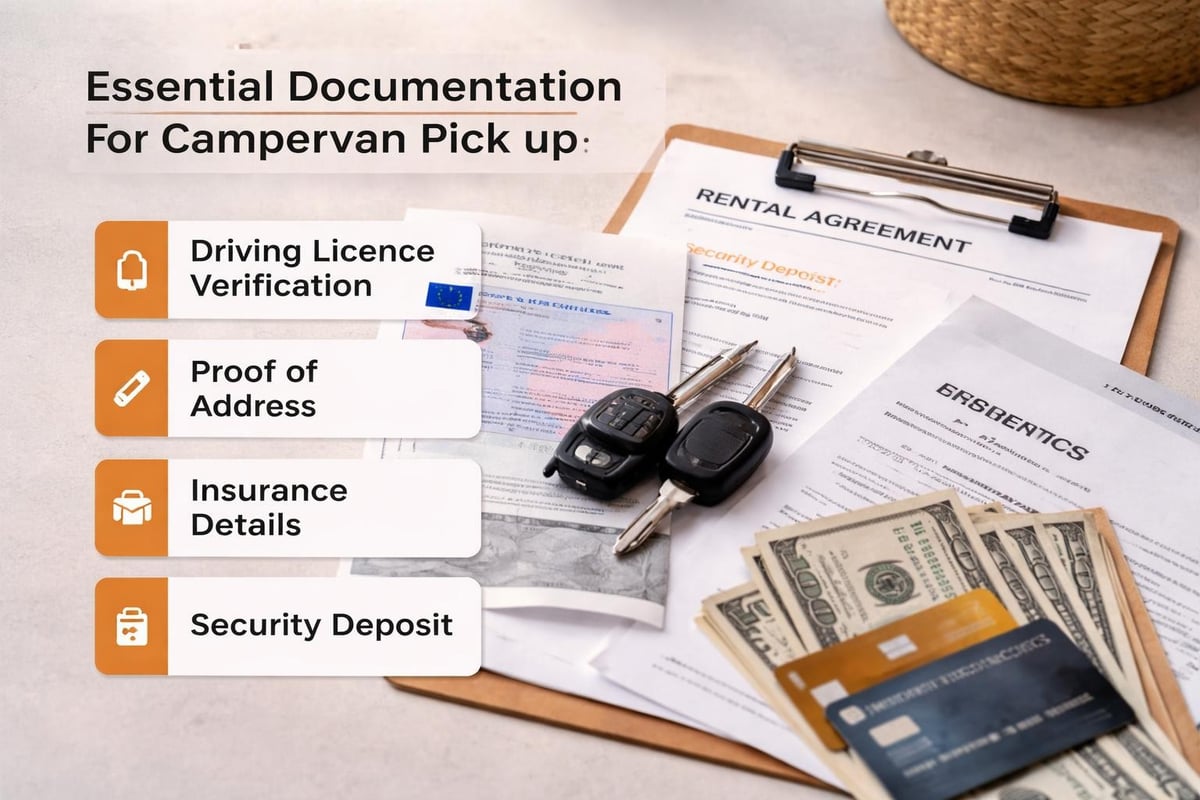
Once documentation is complete, the practical element of your campervan pick up begins. Your hire representative will walk you through every aspect of the vehicle, both inside and out. This comprehensive handover ensures you understand how everything operates and provides an opportunity to ask questions.
The external check serves two purposes: familiarising you with the vehicle's dimensions and documenting any existing marks or damage. Your representative will note every scratch, dent, or blemish on a condition report, which you'll both sign.
Take your time during this stage. Walk around the vehicle yourself and photograph any damage from multiple angles using your phone. These photos provide additional evidence and peace of mind. Checking for existing damage prevents disputes when you return the vehicle.
Pay particular attention to:
The interior demonstration covers everything from basic driving controls to complex living systems. Your representative will show you how each element functions, but don't hesitate to ask them to repeat anything you're uncertain about.
| System | Key Points to Understand |
|---|---|
| Heating | How to operate the blown air or diesel heater, when to use each setting |
| Cooking | Gas bottle location, ignition process, safety cut-off features |
| Refrigerator | Power source selection (12V, 240V, gas), temperature settings |
| Water | Fresh water tank capacity, pump operation, grey water emptying |
| Toilet | Cassette removal, chemical use, disposal locations |
| Electrical | Leisure battery management, hook-up cable use, USB charging points |
| Sleeping | Bed conversion process, bedding storage, privacy blinds |
This stage of your campervan pick up is invaluable. Even if you've hired vehicles before, each model has unique features and quirks. Taking notes or short videos on your phone helps you remember details once you're on the road.
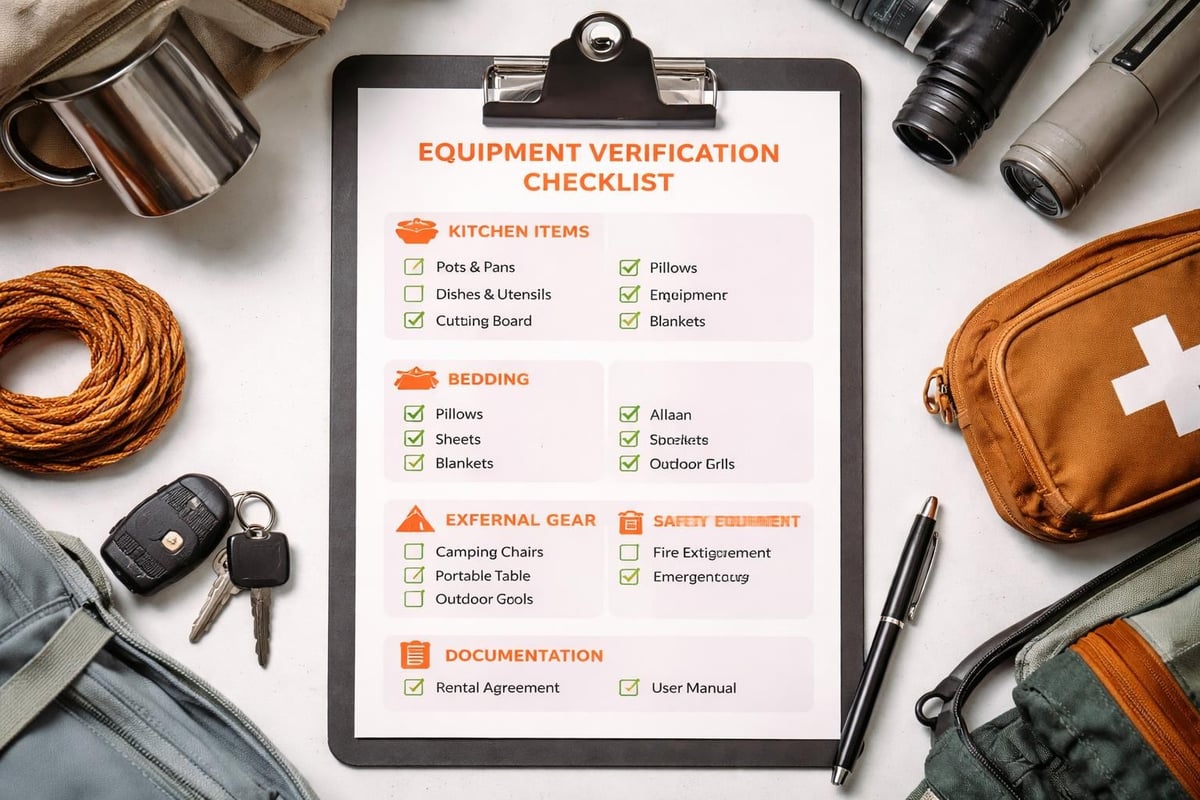
Before you drive away, methodically verify that all promised equipment is present and functional. Creating a checklist beforehand helps ensure nothing gets overlooked in the excitement of collection day.
Walk through the vehicle and tick off each item:
Missing items should be addressed immediately during your campervan pick up, not discovered later at your first campsite. The hire team can quickly resolve any omissions whilst you're still at the depot.
The rental contract contains crucial information about your responsibilities, coverage, and restrictions. Whilst you'll have received this electronically beforehand, the collection day provides an opportunity to clarify any points you're unsure about.
Mileage allowances vary between hire companies and packages. Some include unlimited mileage, whilst others have daily or weekly limits with charges for excess miles. Know your allowance and plan your route accordingly.
Insurance coverage deserves careful attention. Understand your excess amount (the sum you'd pay in the event of damage), what's covered and excluded, and whether you've purchased excess reduction. Some travellers bring separate insurance, which may offer better value depending on your circumstances.
Fuel policy typically requires you to return the vehicle with the same fuel level as collection. Note the fuel type (diesel or petrol) – it's surprisingly easy to forget in the excitement of your campervan pick up.
Geographical restrictions may limit where you can travel. Some agreements prohibit certain roads or require notification for extended trips beyond specific distances from the depot.
When selecting the right rental company, understanding these terms beforehand makes the collection process much smoother.
Most campervan hire arrangements require a security deposit, held on your credit or debit card throughout the rental period. This amount varies depending on the vehicle value and your insurance choices, typically ranging from £500 to £2,000.
The deposit isn't charged (unless damages occur) but is "ring-fenced" or authorised on your card, meaning those funds become temporarily unavailable. Ensure your card has sufficient available credit to cover both the deposit and your travel expenses.
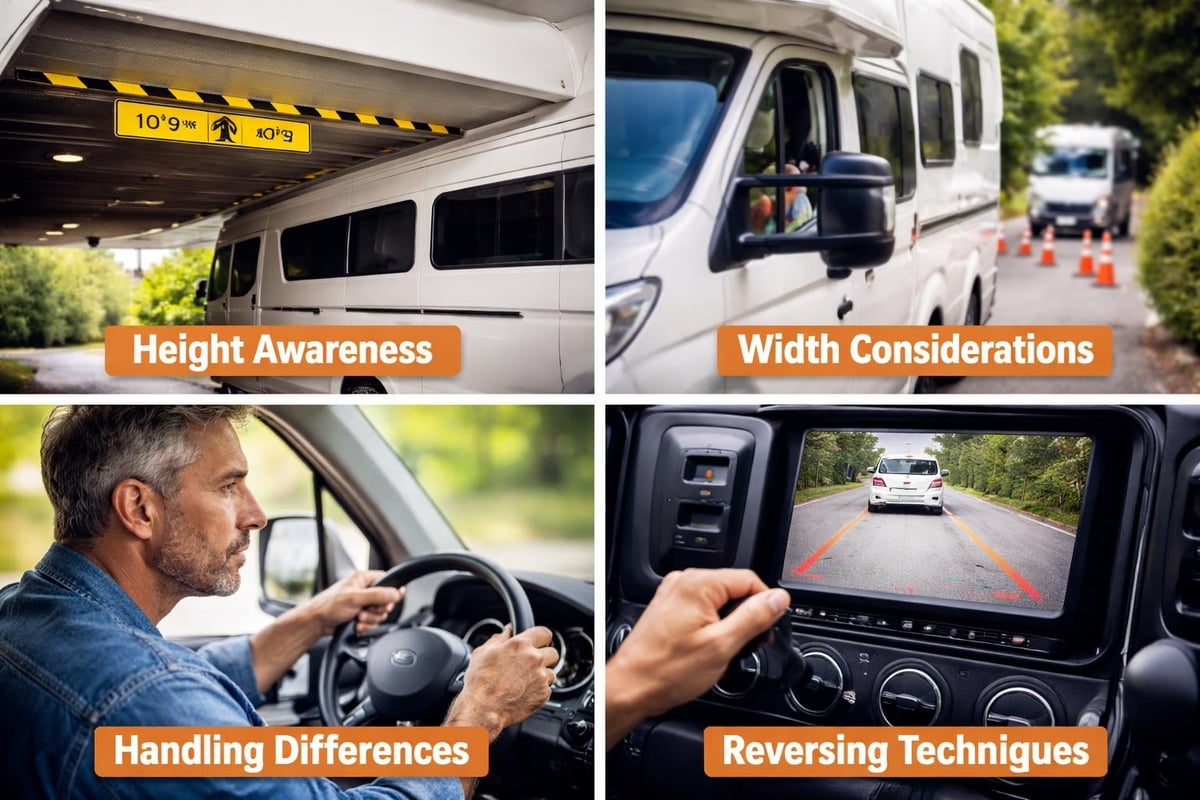
Before leaving the depot, take time to familiarise yourself with the driving position and controls. Campervans handle differently than standard cars, particularly regarding:
Height awareness is perhaps the most critical adjustment. Know your vehicle's exact height and develop the habit of checking for low bridges, car park barriers, and overhanging trees. Many experienced travellers place a height reminder sticker on the dashboard.
Width and length require additional caution when navigating narrow lanes, car parks, and urban areas. Yorkshire's rural roads can be particularly challenging, with tight village streets and single-track sections.
Reversing and manoeuvring takes practice. The rear-view mirror shows less than in a car, making reversing cameras and sensors (if fitted) particularly valuable. Don't hesitate to ask your partner or family members to guide you when parking initially.
| Driving Consideration | Campervan Difference | Adjustment Needed |
|---|---|---|
| Acceleration | Slower, heavier vehicle | Allow more time for overtaking |
| Braking | Longer stopping distance | Increase following distance significantly |
| Cornering | Higher centre of gravity | Reduce speed before bends |
| Parking | Much larger footprint | Choose end spaces, allow extra room |
| Wind resistance | Greater surface area | Expect pulling sensation in strong winds |
Many hire companies offer the opportunity to drive around their car park before departing. Use this time to practice reversing, turning, and getting a feel for the vehicle's dimensions.
Understanding how to manage your campervan's utilities safely is essential for comfortable travel. During your campervan pick up, your representative will demonstrate these systems, but the information can feel overwhelming.
The gas system powers your hob, oven, and sometimes the refrigerator and heating. Key safety points include:
Never sleep with gas appliances running, and always ensure adequate ventilation when cooking.
Campervans typically have two electrical systems: the vehicle battery (for driving) and the leisure battery (for living). Understanding the difference prevents you from draining the wrong battery and being unable to start the engine.
Leisure battery powers:
240V hook-up provides:
Your representative will show you how to connect to campsite electrical hook-ups safely and how to monitor your battery level to avoid running out of power when wild camping.
As your campervan pick up concludes, ensure you're completely comfortable with everything before departing. This is your opportunity to ask any remaining questions, no matter how minor they might seem.
Request the depot's contact details in your phone immediately. Save both the main office number and any emergency or out-of-hours contacts.
Once you've driven away from the depot, find a quiet, safe location (perhaps a supermarket car park) to perform a final, stress-free check before hitting the open road towards your first destination.
Test every system independently:
This systematic approach, done calmly without time pressure, often reveals minor issues that were overlooked during the busy depot handover. If you discover anything concerning, contact the hire company immediately whilst you're still close by.
Browse The Camper Co’s vehicle range to understand the different features across various campervan models.
Before setting off on your Yorkshire adventure, take 20 minutes to organise your belongings sensibly within the campervan. Proper organisation prevents items sliding around during travel and helps you find everything easily.
Weight distribution affects handling and fuel efficiency. Place heavier items low and centrally, using the space beneath fixed seating or beds. Lighter items can go in overhead lockers, but avoid overloading them.
Accessibility matters for frequently used items. Keep these near the door or in easily reached cupboards:
Secure storage is essential. Ensure nothing can fall whilst driving, particularly from overhead lockers. Heavy items like tinned food should be in low cupboards with secure catches. Many travellers use non-slip matting to prevent items sliding.
Even well-prepared hirers sometimes miss important details during their campervan pick up. Being aware of these common oversights helps you avoid them:
These small details can cause significant inconvenience later in your trip. A methodical approach during collection day prevents most issues.
When collecting your campervan from The Camper Co in Leeds, you're perfectly positioned to explore West Yorkshire and the broader region. However, Yorkshire's geography presents specific considerations worth discussing during your campervan pick up.
Road conditions vary significantly across the region. Whilst major routes like the A1 and M62 are straightforward, many of Yorkshire's most beautiful destinations involve narrow, winding roads with steep gradients. The Yorkshire Dales and North York Moors feature particularly challenging routes that require confident campervan handling.
Height restrictions are common in historic Yorkshire towns and villages. Stone bridges and ancient gateways were built long before modern campervans existed. Always know your vehicle height and watch for warning signs.
Weather preparation is essential year-round in Yorkshire. Even summer months can bring sudden weather changes, particularly in elevated areas. Ensure you understand how to operate the heating system efficiently and that you have appropriate clothing for changeable conditions.
Planning your route through The Camper Co’s regional expertise helps you avoid unsuitable roads whilst discovering Yorkshire's hidden gems.
Your campervan pick up isn't just an administrative necessity – it's valuable learning time that directly impacts your holiday enjoyment. Approach it as the first exciting step of your adventure rather than a hurdle to overcome.
Engage actively with the demonstration. Ask questions, take photos, make notes. The hire team wants you to feel confident and comfortable, so they'll happily repeat explanations or demonstrate features multiple times.
Allow sufficient time in your schedule. Don't book your collection for late afternoon if you're planning to drive several hours to your first destination. Morning collections give you the entire day to familiarise yourself with the vehicle and reach your campsite during daylight hours.
Bring a companion if possible. Two people absorb and remember more information than one, and you can divide responsibilities – perhaps one person focuses on the driving aspects whilst the other concentrates on the living systems.
A thorough, unhurried campervan pick up transforms your entire hire experience, giving you the confidence to make the most of your Yorkshire adventure from the moment you drive away. Understanding your vehicle's systems, knowing what equipment you have, and feeling comfortable with the driving dynamics all contribute to a relaxed, enjoyable journey. Whether you're planning a weekend exploring the Dales or a fortnight touring the coast, The Camper Co provides comprehensive handovers and a diverse fleet across Leeds and West Yorkshire, ensuring your collection day sets you up perfectly for the freedom and flexibility of campervan travel.
Exploring the United Kingdom by motorhome offers unparalleled freedom, combining the comfort of home with the thrill of discovery. When planning your next adventure, understanding landcruise motorhome hire options helps you make informed decisions about vehicle selection, rental processes, and journey planning. Whether you're dreaming of Yorkshire's rolling hills, Scotland's dramatic highlands, or Cornwall's stunning coastlines, choosing the right motorhome hire service sets the foundation for an unforgettable experience. This comprehensive guide walks you through everything you need to know about motorhome hire, from fleet options to practical travel tips.
The motorhome and campervan rental market has experienced remarkable growth in recent years, with the global motorhome rental market projected to grow significantly through 2032. This surge reflects a fundamental shift in how people approach travel, prioritizing experiences and flexibility over traditional accommodation.
Motorhome hire companies typically offer several distinct service models. Full-service providers maintain comprehensive fleets with various vehicle sizes, offer detailed customer support, and ensure regular maintenance schedules. Budget operators focus on competitive pricing with simplified booking processes, whilst premium services emphasize luxury vehicles and white-glove customer experiences.
Understanding vehicle classifications helps narrow your options efficiently:
Each category serves different travel styles and group sizes, making vehicle selection a crucial first step in your planning process.
Today's motorhomes incorporate technology and design innovations that enhance comfort significantly. When exploring landcruise motorhome hire options, familiarizing yourself with standard and premium features helps identify the best fit for your needs.
| Feature Category | Standard Equipment | Premium Upgrades |
|---|---|---|
| Kitchen | Two-burner hob, sink, fridge | Three-burner hob, grill, larger fridge-freezer |
| Sleeping | Fixed bed or conversion | Island bed, drop-down bed |
| Bathroom | Toilet, washbasin, shower | Separate shower cubicle, heated floors |
| Heating | Blown-air heating | Underfloor heating, diesel heating |
| Technology | USB charging points | Solar panels, inverters, satellite systems |
Modern motorhomes prioritize energy efficiency and sustainability. Many vehicles now feature solar panels that maintain battery charge during daylight hours, reducing reliance on mains hookups and enabling genuine off-grid adventures.
Safety features deserve careful consideration when selecting your hire vehicle. Contemporary motorhomes include:
Driver assistance systems such as reversing cameras, parking sensors, and blind-spot monitoring make navigating unfamiliar roads considerably easier. First-time motorhome drivers particularly appreciate these technological aids.
Security measures typically encompass alarm systems, immobilisers, and secure locking mechanisms for both habitation doors and storage compartments. Many vehicles also feature safe boxes for valuables.
Fire safety equipment including smoke detectors, carbon monoxide alarms, fire extinguishers, and fire blankets come as standard in properly maintained rental fleets.
Successful motorhome holidays require thoughtful preparation. The diverse fleet of motorhomes available for hire across the UK means you can tailor your vehicle choice to your specific itinerary and preferences.
Yorkshire serves as an exceptional base for motorhome exploration, offering diverse landscapes within short distances. From Leeds, you can reach the Yorkshire Dales National Park in under an hour, whilst the North York Moors and Peak District lie within comfortable day-trip range.
When planning routes, consider these factors:
The Lake District represents one of Britain's most popular motorhome destinations. Understanding motorhome hire options for Lake District exploration helps you prepare for the region's specific challenges, including narrow mountain passes and limited parking in popular villages.
The UK boasts thousands of campsites ranging from basic Certificated Locations (CLs) with five pitches to large commercial parks with extensive facilities. Your vehicle choice influences campsite options, as some smaller sites cannot accommodate larger motorhomes.
Premium campsites typically offer:
Wild camping and overnight parking represent more contentious topics. Scotland's access laws permit responsible wild camping, whilst England and Wales generally require landowner permission. Many motorhomers use pub car parks, obtaining permission from management in exchange for custom.
Understanding rental policies before booking prevents surprises and ensures smooth collection and return processes. When researching landcruise motorhome hire services, familiarize yourself with standard terms and conditions.
Most motorhome hire companies require drivers to be at least 25 years old, though some accept younger drivers with supplementary insurance fees. Standard UK driving licences permit operation of motorhomes up to 3,500 kg (Category B), covering most hire vehicles. Larger motorhomes may require Category C1 licences, typically held by drivers who passed their test before 1997.
Comprehensive information on motorhome hire policies including age requirements and licensing helps ensure you meet all necessary criteria before confirming your booking.
Standard rental agreements include basic insurance covering third-party liability and major damage. Consider these common insurance options:
| Insurance Type | Coverage Level | Typical Excess | Best For |
|---|---|---|---|
| Basic | Third party + major damage | £1,000-£1,500 | Experienced drivers, short trips |
| Standard | Collision damage waiver | £500-£750 | Most hirers |
| Premium | Comprehensive with minimal excess | £100-£250 | Peace of mind, first-timers |
| European | Extended coverage for continental travel | Varies | Cross-channel trips |
Carefully photograph the vehicle's exterior and interior during collection, documenting any existing damage. This protects you against disputes during the return inspection.
The United Kingdom offers incredible diversity within relatively compact geography, making it ideal for motorhome exploration. Each region presents unique attractions and characteristics that influence your planning.
The New Forest combines ancient woodland with charming villages and coastal access. Motorhome hire for New Forest exploration often emphasizes pet-friendly options, as the region's walking trails welcome four-legged companions.
Southern highlights include:
The region's generally milder climate extends the touring season, making it attractive for spring and autumn adventures.
Yorkshire's diverse landscapes range from the industrial heritage of Leeds and Bradford to the wilderness of the Yorkshire Dales and North York Moors. The region combines cultural attractions with outstanding natural beauty.
Yorkshire Dales National Park features limestone formations, spectacular waterfalls, and traditional market towns. Popular routes include the Wharfedale valley and the dramatic descent into Ribblehead, famous for its imposing Victorian viaduct.
North York Moors offers heather-covered moorland, historic abbeys, and coastal villages. The park's relatively quiet roads make it perfect for leisurely motorhome touring, with numerous campsites catering specifically to larger vehicles.
Scotland beckons with its dramatic scenery and welcoming access laws. The North Coast 500 has emerged as a bucket-list route, though its popularity means forward planning proves essential during peak season.
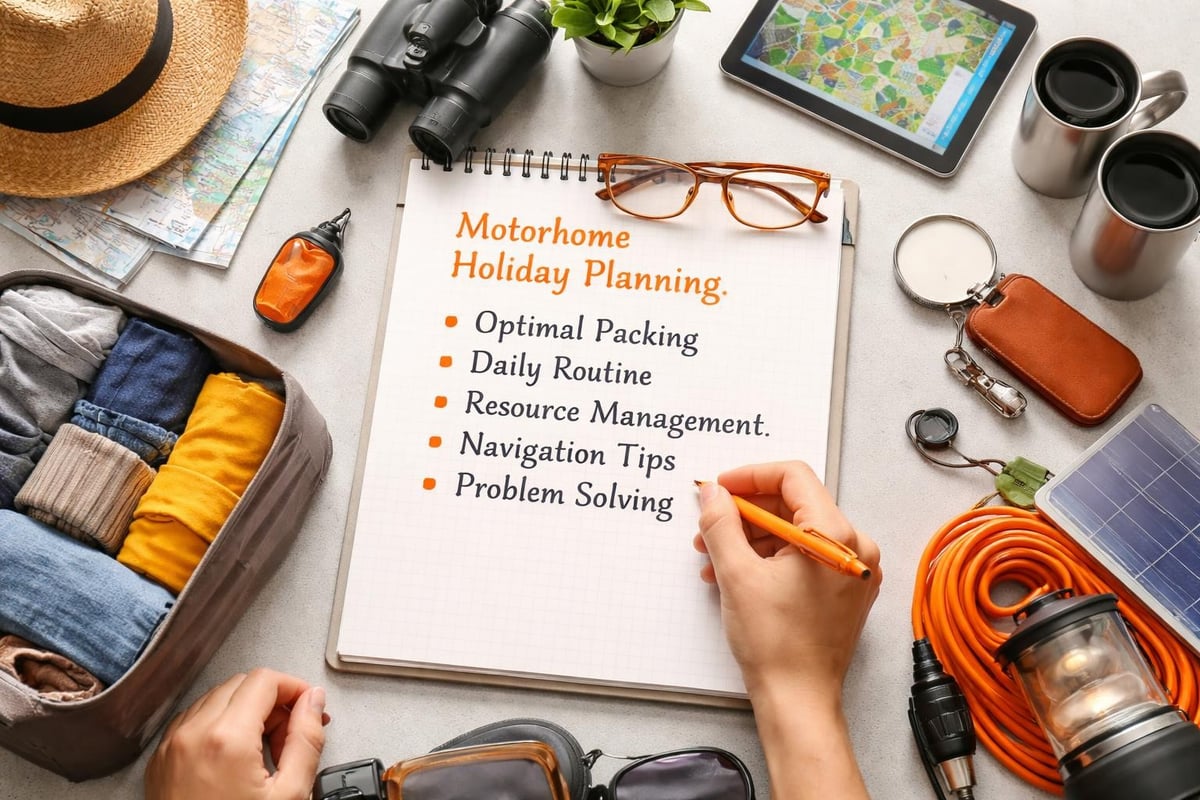
Successful motorhoming combines practical skills with flexible attitudes. First-time hirers benefit from understanding the subtle differences between motorhome travel and traditional holidays.
Establish efficient daily routines that maximize your time and resources:
Morning procedures typically involve emptying grey water, refilling fresh water, checking gas levels, and securing all cupboards and loose items before departure. Most experienced motorhomers complete these tasks in 15-20 minutes.
Evening setup includes leveling the vehicle, connecting to electrical hookup if available, and extending steps and awnings. Taking time to properly level your motorhome significantly improves comfort, particularly for cooking and sleeping.
Water management requires conscious effort, especially when wild camping without hookups. A family of four typically uses 20-30 litres of fresh water daily for cooking, washing, and toilet flushing. Grey water tanks fill proportionally, requiring regular emptying at designated disposal points.
Space limitations demand thoughtful packing. Prioritize multi-purpose items and avoid overpacking:
Weight distribution affects vehicle handling significantly. Store heavy items low and centered, avoiding overloading rear storage compartments.
Understanding your motorhome's systems prevents common issues and enhances self-sufficiency. Hire companies provide comprehensive handovers, but reviewing key systems independently builds confidence.
Modern motorhomes incorporate several interconnected systems:
Learning to monitor these systems ensures comfortable touring regardless of weather conditions.
Most motorhome problems stem from simple causes with straightforward solutions:
Battery drainage often results from leaving lights on or running the water pump excessively without engine charging or hookup. Solution: Regularly check battery levels and use solar charging when available.
Water pump failure frequently indicates empty fresh water tanks rather than mechanical problems. Solution: Always verify water levels before assuming pump malfunction.
Heating issues commonly relate to gas supply problems or air locks in the system. Solution: Check gas bottle connections and bleed air from lines if necessary.
British weather influences motorhome touring throughout the year. Understanding seasonal variations helps optimize your travel timing and preparation.
March through September represents peak motorhome season, offering the most reliable weather and longest daylight hours. However, popularity means:
Summer temperatures occasionally challenge motorhome comfort, as vehicles heat up quickly in direct sunlight. Parking in shade, using window covers, and maximizing ventilation maintains comfortable interior conditions.
October through February offers distinct advantages for adventurous motorhomers:
Lower costs as rental rates drop outside peak season, often by 30-40 percent compared to summer prices. Campsites similarly reduce pitch fees, with some offering extended stay discounts.
Quieter destinations mean popular areas become accessible without crowds. The Lake District, typically congested in summer, transforms into a peaceful winter wonderland.
Festive opportunities including Christmas markets across Yorkshire, Lancashire, and beyond create unique motorhome touring experiences.
Cold weather demands additional preparation, including antifreeze for water systems, extra bedding, and potentially supplementary heating. Many hire companies winterize vehicles after October, limiting availability, so verify seasonal policies when booking.
Maximizing value from your landcruise motorhome hire involves balancing ambitious exploration with realistic capabilities and comfort. First-time hirers commonly overestimate daily achievable distances, leading to rushed experiences and limited enjoyment.
Consider this sample three-day Yorkshire Dales itinerary demonstrating balanced planning:
Day One: Collect vehicle in Leeds, complete familiarization, drive 45 minutes to Grassington (25 miles), explore village, settle into campsite, practice vehicle systems.
Day Two: Morning walk to Linton Falls, afternoon drive through Wharfedale to Kettlewell (15 miles), evening at campsite enjoying surroundings.
Day Three: Scenic drive to Malham (20 miles), walk to Malham Cove, return journey to Leeds via Skipton (40 miles), vehicle return.
Total driving: approximately 100 miles over three days, allowing substantial time for exploration, relaxation, and enjoying the motorhome lifestyle rather than constantly relocating.
Understanding the complete cost structure helps manage expenses effectively:
Many motorhomers find total costs comparable to traditional holidays when accounting for combined accommodation and transport, whilst offering significantly greater flexibility and freedom.
Motorhome hire opens up extraordinary possibilities for exploring Britain's diverse landscapes, from Yorkshire's dramatic dales to Scotland's rugged highlands and Cornwall's stunning coastlines. Whether you're planning your first motorhome adventure or looking to explore new regions, choosing the right vehicle and hire service ensures a comfortable, memorable experience. If you're based in or around West Yorkshire and ready to start your motorhome journey, The Camper Co offers an excellent fleet of campervans and motorhomes perfectly suited for exploring Yorkshire and beyond, with expert local knowledge to help plan your perfect adventure.
The motorhome campervan has revolutionised the way British families explore their homeland, offering an unparalleled blend of freedom, comfort, and adventure. Whether you're contemplating your first hire or you're a seasoned road tripper, understanding the nuances between different vehicle types and what makes a successful motorhome campervan holiday can transform your travel experience. From compact campervans perfect for couples to spacious motorhomes ideal for families, the world of mobile accommodation continues to evolve, bringing new features and possibilities to travellers across West Yorkshire and beyond.
The motorhome campervan market offers remarkable variety, and knowing which category suits your needs is essential before setting off on your Yorkshire adventure.
Coachbuilt models represent the traditional motorhome campervan design, featuring a distinctive over-cab sleeping area that maximises space. These vehicles typically offer:
The National Caravan Council provides detailed specifications for various motorhome campervan classifications, helping you understand what to expect from each category.
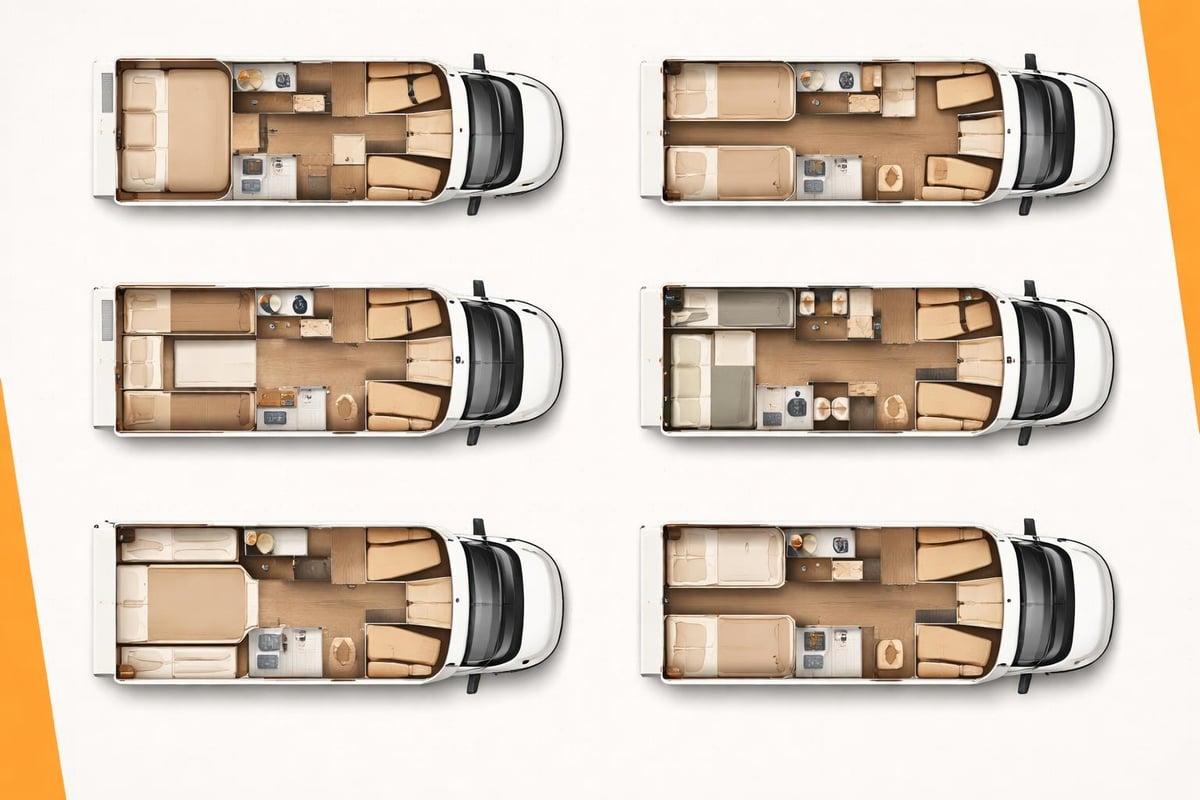
Van conversion motorhome campervan models have surged in popularity thanks to their compact dimensions and urban manoeuvrability. These practical vehicles excel at:
| Feature | Benefit | Best For |
|---|---|---|
| Compact size | Easy parking and navigation | City visits and narrow roads |
| Standard height | Access to regular car parks | Weekend breaks |
| Fuel efficiency | Lower running costs | Budget-conscious travellers |
| Everyday usability | Suitable for daily driving | Flexible travel schedules |
For those seeking luxury, A-class motorhome campervan options deliver premium features in a purpose-built package. The entire vehicle is constructed on a chassis specifically designed for motorhome use, creating a distinctive appearance and enhanced living space.
These high-end models often include panoramic windscreens, drop-down beds, and sophisticated heating systems that extend the camping season well into the British winter months.
Selecting the right motorhome campervan involves balancing practical considerations with your travel aspirations.
The number of berths significantly influences your motorhome campervan choice:
2-Berth Models: Perfect for couples seeking intimacy and simplicity. These compact units offer everything you need without excess space to heat or maintain.
4-Berth Options: The sweet spot for small families or two couples travelling together. Most feature a fixed double bed plus a convertible dinette or drop-down bed.
6-Berth Vehicles: Ideal for larger families, these spacious motorhome campervan models accommodate everyone comfortably but require confidence when navigating country lanes.
When evaluating any motorhome campervan, prioritise these key elements:
The Camping and Caravanning Club’s satisfaction surveys reveal that reliability and layout design consistently rank as the most important factors for motorhome campervan users.
Once you've secured your motorhome campervan hire, proper planning ensures a smooth and memorable journey across Yorkshire and beyond.
Yorkshire's diverse landscape offers countless motorhome campervan-friendly routes:
Britain's camping infrastructure has expanded significantly, offering motorhome campervan travellers varied accommodation options:
| Campsite Type | Facilities | Atmosphere | Price Range |
|---|---|---|---|
| Certificated Locations | Basic (5 units max) | Quiet, rural | £10-15/night |
| Club Sites | Full hookups, showers | Organised, social | £20-35/night |
| Commercial Parks | Extensive amenities | Family-friendly | £25-45/night |
| Wild Camping | None (Scotland only) | Remote, natural | Free |
Always book ahead during peak season (May through September) and verify that your chosen site accommodates your motorhome campervan's dimensions.
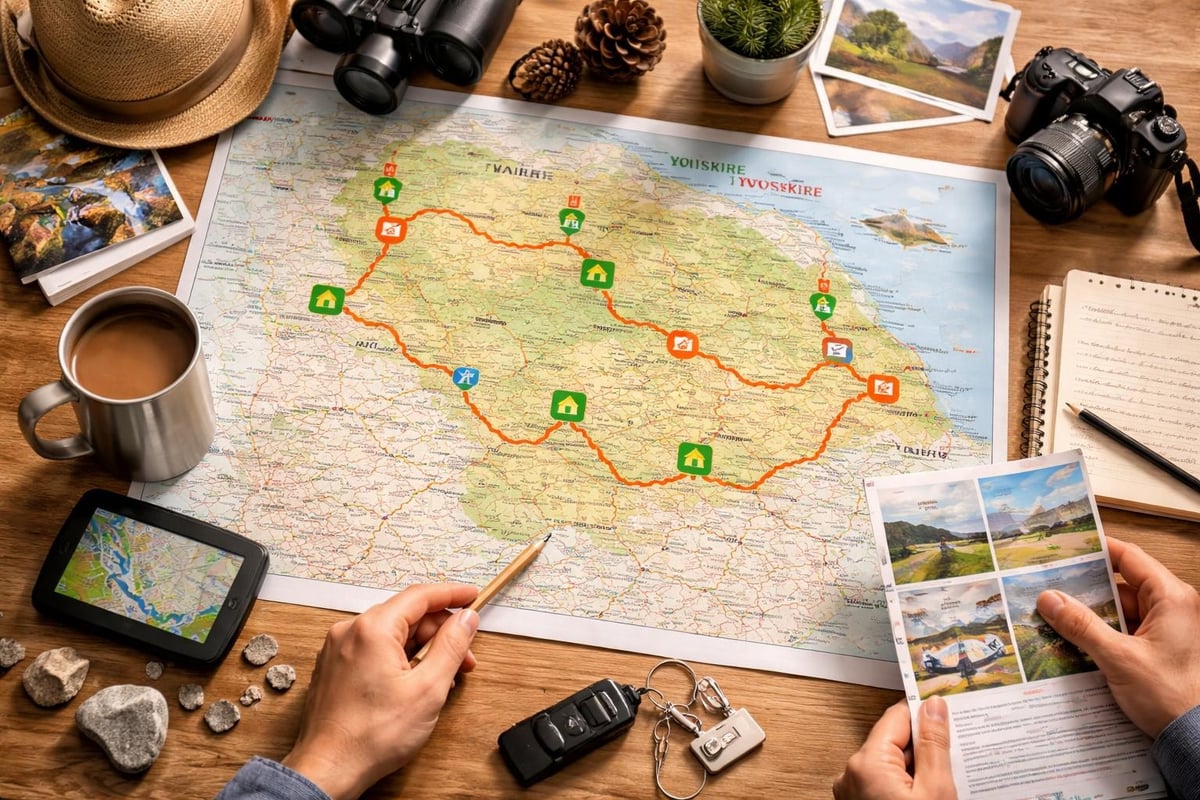
Hiring a motorhome campervan for the first time can feel daunting, but preparation builds confidence quickly.
Before leaving the hire depot, familiarise yourself thoroughly with your motorhome campervan:
Most motorhome campervan models can be driven on a standard UK car licence, but the experience differs from regular car driving:
Height awareness becomes paramount. With vehicles often exceeding 2.8 metres, low bridges and car park barriers present genuine hazards. Many experienced motorhome campervan drivers attach height reminder stickers to their dashboard.
Width judgment requires practice, especially on narrow country lanes typical of Yorkshire villages. Wing mirrors extend your vehicle's width considerably, so allow generous clearance when passing oncoming traffic.
Stopping distances increase significantly due to weight. Anticipate braking needs earlier than in a car, particularly when descending steep hills common throughout the Yorkshire Dales.
Daily life in a motorhome campervan follows rhythms quite different from traditional holidays, creating unique joys and occasional challenges.
Conservation becomes second nature when living in any motorhome campervan. Fresh water supplies typically last 2-3 days for a couple practising sensible usage:
Understanding your motorhome campervan's electrical systems prevents disappointment:
Leisure batteries power 12V systems including lights, water pumps, and USB sockets. Without hookup, expect 24-48 hours of power depending on usage. The comprehensive RV resources explain electrical management in detail, though UK voltage systems differ slightly from American specifications.
Gas supplies typically last weeks, fuelling your hob, grill, and heating. Most motorhome campervan models use standard Calor Gas bottles, readily available at camping shops and some petrol stations.
Limited space demands organisation. Successful motorhome campervan travellers develop systems quickly:
Clothing: Pack versatile layers suitable for unpredictable British weather rather than numerous outfit changes.
Food supplies: Stock essentials but avoid over-provisioning. Yorkshire offers excellent farm shops and local markets perfect for fresh, daily shopping.
Equipment: Multi-purpose items save space. A single pot set serving multiple cooking methods beats specialised equipment.
Each season brings distinct advantages and considerations for motorhome campervan adventures.
Spring offers motorhome campervan travellers moderate temperatures and stunning landscapes awakening from winter:
Peak season demands advance booking but rewards motorhome campervan holidaymakers with:
Practical Motorhome magazine regularly features seasonal touring suggestions tailored to British conditions.
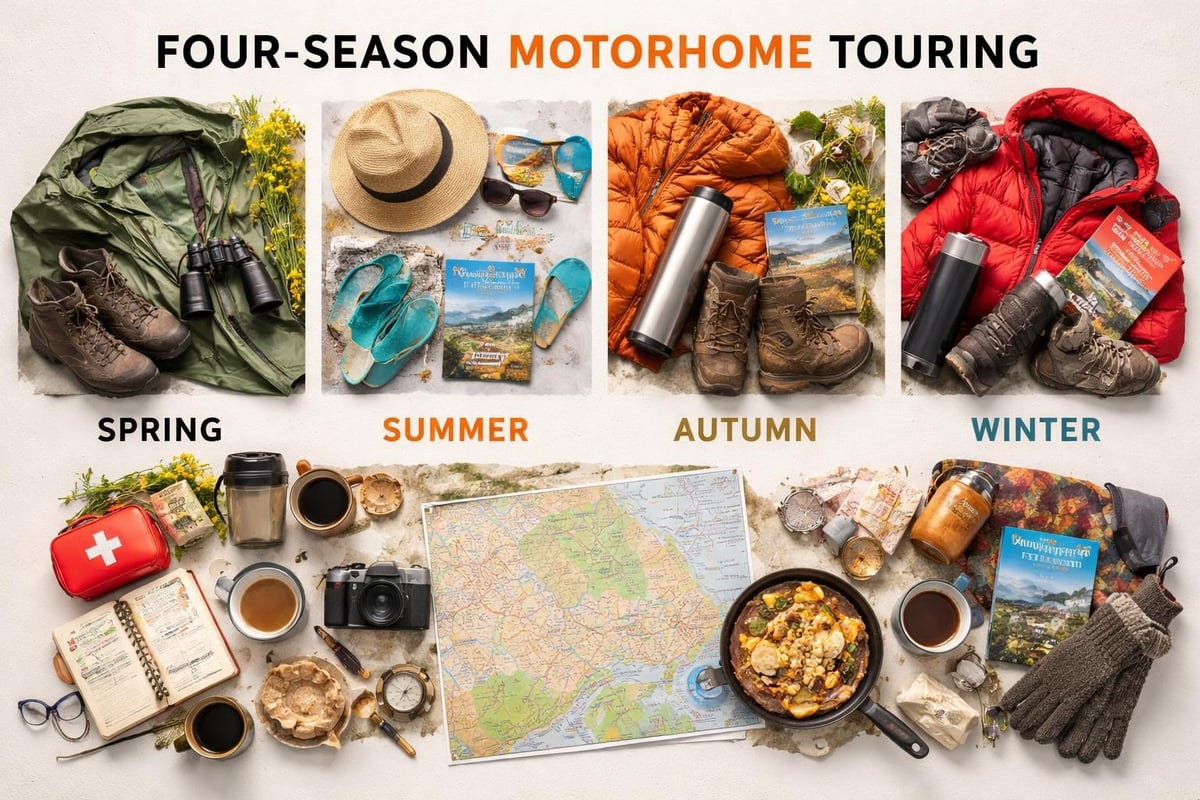
Many experienced motorhome campervan enthusiasts prefer autumn for its unique character:
September combines summer weather with reduced crowds and lower campsite fees.
October showcases spectacular autumn colours throughout Yorkshire's woodlands, particularly stunning in the Dales and Moors.
November requires hardy spirits but offers solitude and dramatically lower accommodation costs.
Modern motorhome campervan heating makes winter touring feasible and rewarding:
| Winter Advantage | Consideration |
|---|---|
| Complete solitude at attractions | Shorter daylight hours |
| Significantly reduced costs | Some facilities closed |
| Cosy evening atmosphere | Potential weather disruption |
| Christmas markets and events | Extra heating fuel required |
Travelling with children in a motorhome campervan creates lasting memories whilst presenting unique organisational challenges.
When hiring a motorhome campervan for family use, prioritise these elements:
Family-focused motorhoming guidance addresses specific considerations from toddlers through teenagers, helping parents maximise enjoyment whilst maintaining sanity.
Successful family motorhome campervan trips balance driving time with regular breaks:
Two-hour rule: Stop every two hours for toilet breaks, leg stretching, and energy burning.
Flexible scheduling: Abandon rigid timetables. If everyone's happy at a particular location, stay longer.
Activity planning: Yorkshire offers countless child-friendly attractions within easy motorhome campervan reach, from steam railways to adventure playgrounds.
Whilst hire vehicles receive professional maintenance, understanding basic systems helps resolve minor issues independently.
Simple daily routines prevent problems developing:
Most motorhome campervan problems resolve easily with basic knowledge:
Water pump cycling: Usually indicates low fresh water tank requiring refilling.
Refrigerator not cooling: Check gas supply, electrical hookup, or 12V connection depending on selected mode.
Heating failure: Verify gas supply and battery charge before suspecting serious faults.
Toilet cassette full: Empty at designated chemical disposal points found at all proper campsites.
The Auto-Sleepers handbook provides detailed operational guidance applicable to most motorhome campervan types.
West Yorkshire and surrounding regions offer exceptional motorhome campervan touring opportunities, combining accessibility with genuine natural beauty.
Starting your motorhome campervan adventure from Leeds positions you perfectly for multiple touring routes:
Yorkshire's compact geography means your motorhome campervan can reach diverse landscapes within two hours:
North: The dramatic coastline around Whitby, Scarborough, and Robin Hood's Bay combines seaside charm with literary connections.
West: The Lake District's eastern fringes offer mountainous grandeur whilst remaining accessible for motorhome campervan exploration.
South: The Peak District National Park presents limestone valleys and traditional villages perfect for leisurely touring.
East: The gentle Yorkshire Wolds and Heritage Coast provide relaxed touring through agricultural landscapes.
Responsible motorhome campervan travel protects the landscapes we cherish whilst ensuring continued access for future generations.
Applying outdoor ethics to motorhome campervan touring means:
Modern motorhome campervan travel can minimise environmental footprint through conscious choices:
Route efficiency: Plan logical touring routes avoiding unnecessary backtracking and excessive mileage.
Local produce: Yorkshire's farm shops and markets offer exceptional local food whilst reducing transportation emissions.
Waste reduction: Carry reusable containers, water bottles, and shopping bags to minimise single-use plastics.
Energy conservation: Use gas heating and cooking where possible, reserving electrical hookup power for essential charging.
Understanding insurance and legal obligations ensures peace of mind during your motorhome campervan adventure.
Comprehensive motorhome campervan hire typically includes:
Always clarify excess amounts and any exclusions before departure. Additional drivers usually require specific declaration.
Most motorhome campervan models under 3,500kg require only a standard UK Category B licence. Vehicles exceeding this weight demand Category C1 licensing, though hire fleets generally remain below this threshold.
European travel requires additional documentation including green cards and appropriate insurance extensions, though many Yorkshire-based motorhome campervan holidays focus on domestic exploration.
The NCC motorcaravan guide outlines essential safety standards ensuring hire vehicles meet rigorous requirements. Reputable hire companies maintain vehicles to these specifications, conducting regular safety inspections and servicing.
Shoulder season and winter motorhome campervan travel offers distinct advantages for flexible travellers.
Hiring outside peak season delivers substantial financial benefits:
Beyond financial savings, quieter periods provide qualitative improvements:
Attractions and historic sites become genuinely enjoyable without summer crowds. Walking trails offer solitude and contemplation impossible during peak periods. Local residents have more time for conversation and recommendations. Your motorhome campervan becomes a cosy refuge from crisp weather, creating hygge-like evenings reading or playing games.
Choosing the right motorhome campervan and planning thoroughly transforms British holidays into adventures filled with flexibility, discovery, and lasting memories. Whether you're drawn to Yorkshire's dramatic landscapes, historic attractions, or simply the freedom of mobile accommodation, understanding vehicle types, seasonal considerations, and practical living aboard ensures successful touring. The Camper Co offers expertly maintained motorhomes and campervans perfect for exploring West Yorkshire and beyond, with friendly guidance helping first-time hirers and experienced travellers alike discover the joys of life on the road.
Planning a motorhome adventure across Yorkshire's stunning landscapes or venturing further afield brings excitement and freedom, but understanding the financial commitment helps you prepare properly. The rent a RV cost varies significantly depending on multiple factors, from the size of your chosen vehicle to the season you're travelling. Whether you're considering a romantic getaway in a compact 2-berth campervan or a family expedition in a spacious 6-berth motorhome, grasping the full picture of rental expenses ensures you can budget confidently and avoid unexpected surprises.
The foundation of any motorhome hire budget starts with the daily or weekly rental rate. In the UK market, these base rates fluctuate considerably depending on vehicle size, age, and specifications. A compact 2-berth campervan typically represents the most affordable entry point into motorhome travel, whilst larger 4-berth and 6-berth motorhomes command premium pricing due to their increased space and amenities.
The rent a RV cost structure directly correlates with vehicle dimensions and sleeping capacity. Consider these typical categories:
Modern fleet vehicles with recent registration years naturally attract higher daily rates than older models. However, newer vehicles often deliver better fuel economy and include contemporary safety features, potentially offsetting some cost differences through reduced running expenses.
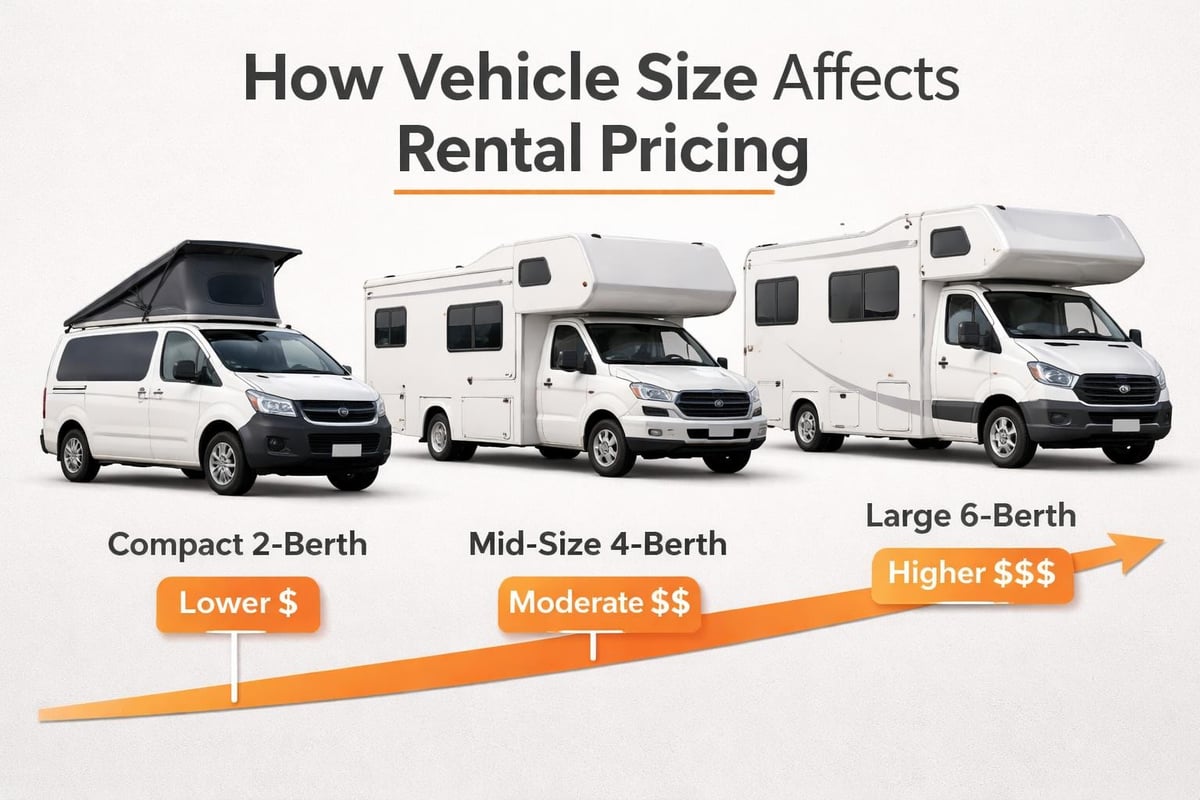
Fleet age plays a substantial role in determining rental costs. Motorhomes registered within the past three years typically command 20-30% higher daily rates compared to vehicles five years or older. This premium reflects not just the vehicle's condition but also improved fuel efficiency, modern safety systems, and reduced likelihood of mechanical issues.
Specification levels further influence pricing. Entry-level motorhomes provide essential amenities including cooking facilities, refrigeration, and basic sleeping arrangements. Mid-range options introduce enhanced comfort features like fixed beds, improved heating systems, and better storage solutions. Premium specifications might incorporate automatic transmission, satellite navigation, bike racks, and sophisticated entertainment systems.
The rent a RV cost experiences dramatic fluctuations throughout the year, with peak summer months commanding significantly higher rates than quieter winter periods. Understanding these seasonal patterns allows savvy travellers to maximise value whilst still enjoying wonderful motorhome experiences.
British school holidays drive substantial demand for motorhome hire, particularly during:
Summer Months (July-August)
Easter and Half-Term Breaks
Bank Holiday Weekends
| Season | Price Premium | Availability | Minimum Hire |
|---|---|---|---|
| Summer Peak | +50-60% | Limited | 7 days |
| School Holidays | +30-40% | Moderate | 5 days |
| Shoulder Season | +10-20% | Good | 3 days |
| Winter Low | Baseline | Excellent | 2 days |
Winter months from November through March represent exceptional value for motorhome enthusiasts willing to embrace cooler temperatures. Daily rates drop to baseline levels, and hire companies often run promotional offers. Yorkshire's winter landscapes possess unique charm, from crisp moorland walks to cosy pub visits, making low-season travel genuinely appealing rather than merely economical.
According to detailed pricing breakdowns from industry sources, understanding seasonal variations helps travellers plan strategically and secure better value.
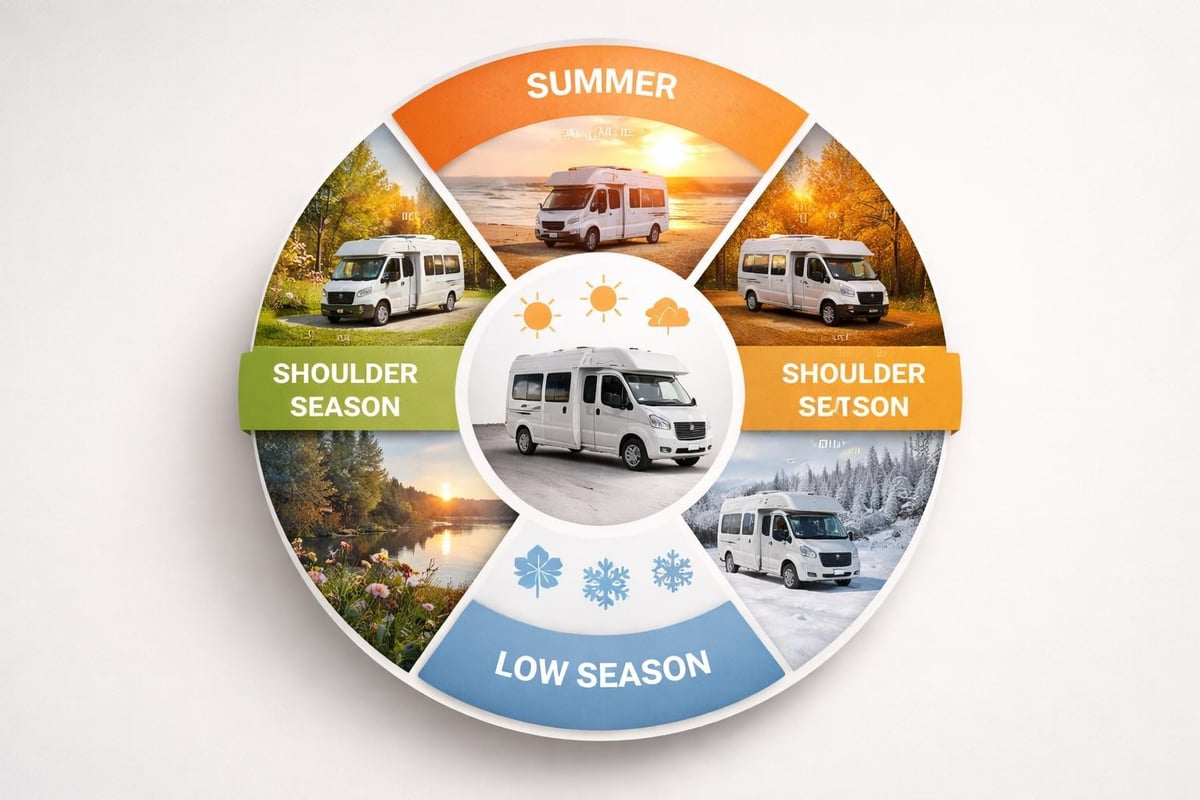
Beyond base rental rates, the complete rent a RV cost includes various supplementary charges that significantly impact total expenditure. Anticipating these additional fees prevents budget surprises and enables accurate trip costing.
Most UK motorhome hire agreements include either unlimited mileage or generous daily allowances. When mileage limits apply, typical structures include:
For extended touring holidays covering significant distances, unlimited mileage packages often prove economical. A fortnight exploring Scotland from a Yorkshire base easily accumulates 1,500-2,000 miles, making excess charges potentially substantial.
Comprehensive insurance coverage represents essential rather than optional expenditure. Standard packages typically include:
Security deposits remain temporarily held against your payment card throughout the hire period, typically ranging from £500-£2,000 depending on vehicle value and insurance level selected. Additional research on comprehensive rental cost factors provides valuable insights into insurance considerations.
Professional cleaning and preparation fees ensure vehicles meet hygiene and presentation standards between bookings. These charges typically structure as:
The rent a RV cost expands when adding convenience equipment and travel essentials. Whilst motorhomes include fundamental living facilities, numerous optional extras enhance comfort and functionality.
Consider these commonly requested extras when budgeting:
Comfort Items
Practical Equipment
Safety and Convenience
Many experienced motorhomers bring personal bedding and towels, immediately saving £50-£100 on typical family hires. Similarly, smartphone navigation apps eliminate dedicated GPS costs whilst providing superior real-time traffic updates.
Whilst not strictly part of rental fees, fuel represents a substantial operational cost affecting overall trip budgets. Motorhomes and campervans typically achieve 20-30 miles per gallon depending on size and driving conditions.
A realistic fuel budget for various journey profiles:
| Trip Type | Distance | Fuel Consumption | Estimated Cost |
|---|---|---|---|
| Yorkshire Weekend | 200 miles | 25 mpg | £45-£55 |
| Lake District Week | 600 miles | 23 mpg | £140-£170 |
| Scotland Fortnight | 1,400 miles | 22 mpg | £340-£410 |
| Wales Tour (10 days) | 900 miles | 24 mpg | £200-£240 |
These calculations assume diesel prices around £1.55-£1.65 per litre, typical for 2026. Fuel efficiency varies with driving style, route terrain, and vehicle loading. Motorway cruising generally delivers better economy than hilly countryside navigation, though scenic routes often prove worth modest efficiency sacrifices.

The rent a RV cost covers your mobile accommodation, but overnight parking fees add to daily expenditure. The UK offers diverse options from fully-serviced sites to wild camping opportunities.
Typical nightly campsite charges include:
Full-Service Sites
Certificated Locations (CL Sites)
Wild Camping and Free Options
A fortnight's motorhome holiday might combine several site types, averaging £25-£30 nightly for balanced comfort and economy. Budget-conscious travellers using CLs and occasional free spots might reduce this to £15-£20 average.
Several less obvious expenses affect the true rent a RV cost beyond headline rental rates and standard additions. Awareness of these hidden charges prevents unpleasant budget overruns.
Standard hire periods typically operate during business hours, roughly 9am-5pm on weekdays. Collection or return outside these windows often incurs supplements:
Planning collection and return within standard hours eliminates these unnecessary costs whilst ensuring full handover time with depot staff.
Self-contained motorhomes with generators for off-grid electrical power may charge for usage:
Many modern motorhomes include solar panels and efficient battery systems, reducing generator dependence. When planning extensive wild camping or sites without electric hookup, factor these power costs into budgets. Additional information about supplementary RV rental expenses highlights various fee structures worth understanding.
Life circumstances occasionally necessitate cutting holidays short, but motorhome hire agreements rarely offer refunds for early returns. The rent a RV cost remains payable for the entire booked period regardless of actual usage duration. Comprehensive travel insurance covering curtailment provides protection against unforeseen circumstances requiring early conclusion.
Understanding complete cost structures enables strategic approaches to reducing the rent a RV cost whilst maintaining enjoyable travel experiences.
Securing bookings well in advance delivers multiple advantages:
Longer hire periods generally achieve better daily rates. A fourteen-night booking typically costs 20-30% less per night than equivalent weekly hire doubled. This reflects fixed preparation costs spread across extended periods plus incentivisation of longer bookings.
Remaining flexible with travel dates allows capitalising on pricing sweet spots. Travelling during September or May delivers pleasant weather whilst avoiding peak premiums. Shoulder season combines 70% of summer's daily sunshine hours with perhaps 60% of rental costs, representing exceptional value.
Mid-week collections rather than Friday departures often attract lower rates even during peak seasons, as demand concentrates on weekend starts aligning with traditional working patterns.
Hiring bedding, towels, and camping furniture adds convenience but inflates costs. Families bringing personal items easily save £75-£150 per hire whilst enjoying familiar comforts. Quality sleeping bags and compact camping equipment represent worthwhile investments for regular motorhome enthusiasts, paying for themselves within 2-3 trips.
The rent a RV cost exhibits geographical variations across the UK, though differences prove less dramatic than seasonal fluctuations. Yorkshire-based hire offers competitive positioning compared to southern England, where property costs and wages push rental rates higher.
Hiring from West Yorkshire provides strategic benefits:
Starting Yorkshire-based adventures eliminates long initial drives, allowing immediate enjoyment of spectacular local landscapes before venturing further afield. The Yorkshire Dales, North York Moors, and stunning coastline provide extraordinary motorhome touring literally from your departure point.
Creating comprehensive budgets ensures the rent a RV cost remains manageable and unexpected expenses don't compromise your adventure. Realistic planning typically allocates:
Daily Cost Components
Weekend Yorkshire Escape (2 nights, 2 people)
Week-Long Scottish Adventure (7 nights, family of 4)
These ranges reflect moderate comfort expectations rather than either budget minimums or luxury maximums. Individual spending patterns, dining preferences, and activity choices significantly influence actual expenditure.
Understanding comprehensive pricing helps travellers make informed decisions aligned with their budgets and expectations. Resources like detailed motorhome rental cost guides offer additional perspectives on expense planning.
Whilst understanding the rent a RV cost remains essential, evaluating true value requires considering experiential benefits alongside financial expenditure. Motorhome holidays deliver unique advantages that traditional accommodation cannot match.
The ability to wake surrounded by changing landscapes, adjusting plans spontaneously, and carrying your accommodation wherever inspiration leads creates priceless memories. Families particularly value the relaxed pace, with children enjoying space to play and parents appreciating the absence of restaurant dining pressures.
Compare motorhome holiday costs against equivalent hotel-based trips:
When evaluated holistically, motorhome hire often delivers superior value compared to conventional holidays of equivalent duration, particularly for families where multiple hotel rooms become necessary.
Those new to motorhome travel naturally focus heavily on the rent a RV cost, but first experiences benefit from prioritising value and support over absolute minimum pricing. Comprehensive guidance exploring available options across the fleet helps newcomers select appropriate vehicles for their specific requirements.
First-time renters frequently debate between compact convenience and spacious comfort. Consider these factors:
Compact 2-Berth Advantages
Larger 4-6 Berth Benefits
Starting with appropriate sizing prevents either cramped discomfort or unnecessary expense for unused capacity. Honest assessment of actual needs trumps assumptions about requirements.
Reputable hire companies provide comprehensive handovers explaining vehicle operation, systems management, and practical usage tips. This support proves invaluable for first-timers, justifying modest price premiums over budget operators offering minimal assistance.
Quality providers ensure you understand waste disposal, water systems, electrical hookups, and general vehicle operation before departure. This knowledge transforms potentially stressful first experiences into confident adventures. Further insights through helpful travel planning resources support preparation and journey optimisation.
Understanding what influences the rent a RV cost empowers you to plan realistic budgets whilst maximising value from your motorhome adventure. From seasonal variations to hidden fees, comprehensive awareness ensures your Yorkshire exploration or extended UK tour remains financially comfortable and thoroughly enjoyable. The Camper Co offers transparent pricing, diverse fleet options from compact 2-berth campervans to spacious 6-berth motorhomes, and expert guidance helping you select perfect vehicles for your specific requirements, whether exploring Yorkshire's magnificent landscapes or venturing further afield across Britain. Discover your ideal motorhome and start planning your next adventure with The Camper Co today.
Exploring York in a campervan offers an unparalleled opportunity to experience one of England's most historic cities whilst enjoying the freedom and flexibility of life on the road. With its magnificent medieval walls, stunning York Minster, and charming cobbled streets, York provides the perfect base for discovering North Yorkshire's diverse landscapes. Whether you're planning a weekend break or an extended Yorkshire adventure, understanding how to navigate the city in your motorhome ensures a smooth, enjoyable experience. From parking regulations to must-visit attractions and nearby camping spots, this comprehensive guide covers everything you need to know for your york campervan adventure.
Navigating parking restrictions represents one of the most crucial aspects of visiting York in a campervan. The city has specific regulations designed to manage motorhome access whilst preserving the historic environment.
York's official guidelines on motorhome parking provide detailed information about designated areas and restrictions throughout the city. Understanding these rules before you arrive saves time, stress, and potential penalties.
York offers several official parking options for motorhomes and campervans:
The park and ride facilities provide excellent value, allowing you to leave your york campervan securely whilst exploring the city centre via frequent bus services. These locations typically operate 24/7, making them ideal for overnight parking when combined with proper camping facilities nearby.
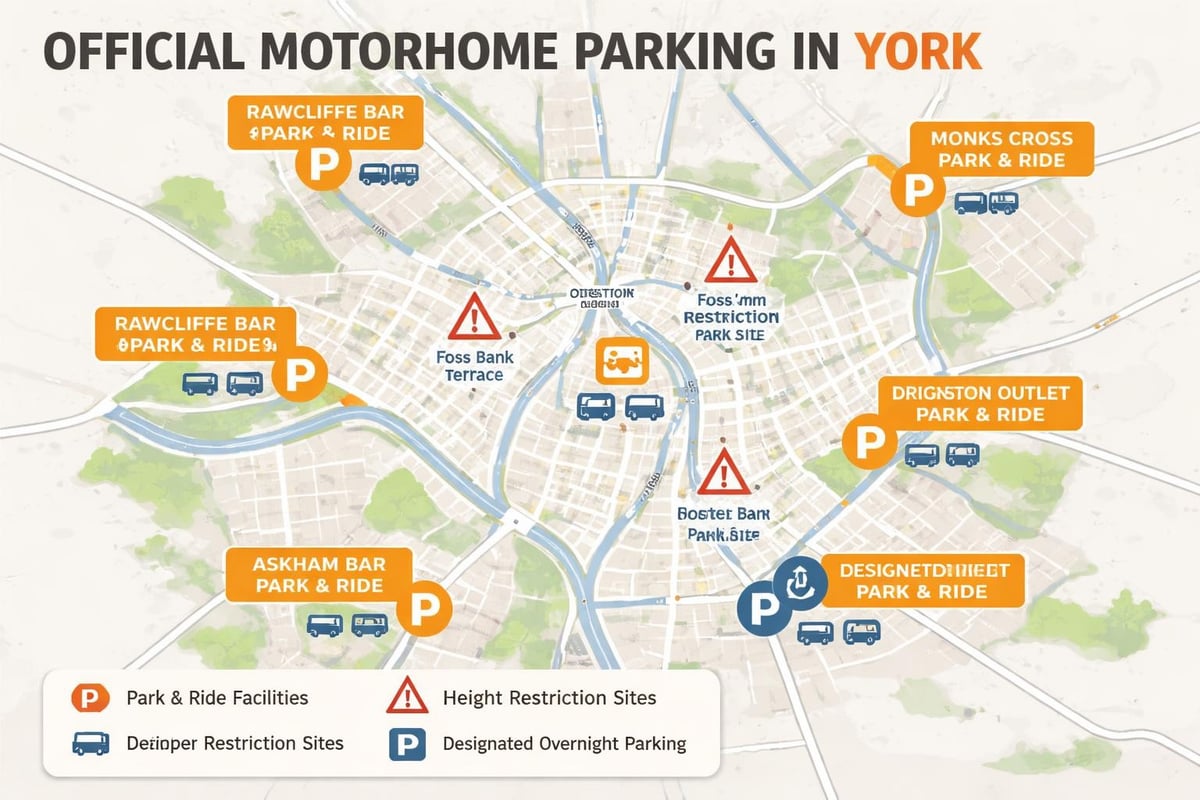
For extended stays or specific circumstances, York Council offers various permit options. Commercial parking permits might be relevant if you're using your campervan for business purposes, whilst guest house parking permits provide alternatives when staying at local accommodations.
Key parking restrictions to remember:
York's compact size makes it wonderfully accessible, with numerous attractions within walking distance once you've parked your york campervan at a suitable location.
York Minster dominates the skyline and deserves at least two hours of exploration. The medieval walls surrounding the city centre offer a fantastic 3.5-kilometre walk with spectacular views. The Shambles, one of Europe's best-preserved medieval shopping streets, transports visitors back in time with its overhanging timber-framed buildings.
Must-visit attractions:
The National Railway Museum offers free parking and represents an excellent starting point for your York exploration. From here, the city centre is just a 15-minute walk along the riverside.
Travelling with children in your york campervan opens up numerous family-oriented attractions. York Maze (seasonal) provides outdoor adventure, whilst York's Chocolate Story offers interactive tours perfect for rainy days. The River Ouse provides lovely walks and boat trips, giving young travellers a different perspective on the city.
| Attraction | Best For | Approximate Time | Parking Nearby |
|---|---|---|---|
| York Minster | History enthusiasts | 2-3 hours | Park and Ride recommended |
| Railway Museum | Families | 3-4 hours | Free on-site parking |
| Jorvik Centre | Interactive learning | 1-2 hours | City centre car parks |
| Castle Museum | All ages | 2-3 hours | Monks Bar car park |
| York Dungeon | Older children | 1-2 hours | Limited street parking |
Creating a well-structured itinerary maximizes your time whilst ensuring you experience York's highlights without feeling rushed. The beauty of campervan travel lies in flexibility, but having a framework helps optimize your visit.
Day One: Historic Heart
Begin at a park and ride facility, taking the bus into the city centre. Walk the medieval walls, visit York Minster, and explore The Shambles. Evening riverside walk along the Ouse provides a peaceful conclusion to your first day.
Day Two: Museums and Culture
Start at the National Railway Museum before heading to the Jorvik Viking Centre. Afternoon visit to York Castle Museum or Yorkshire Museum depending on interests. Consider an evening ghost walk for atmospheric entertainment.
Day Three: Beyond the Walls
Venture into surrounding North Yorkshire. Castle Howard sits just 15 miles northeast, whilst the Yorkshire Dales National Park offers stunning landscapes within an hour's drive. Return to York for a final evening meal.
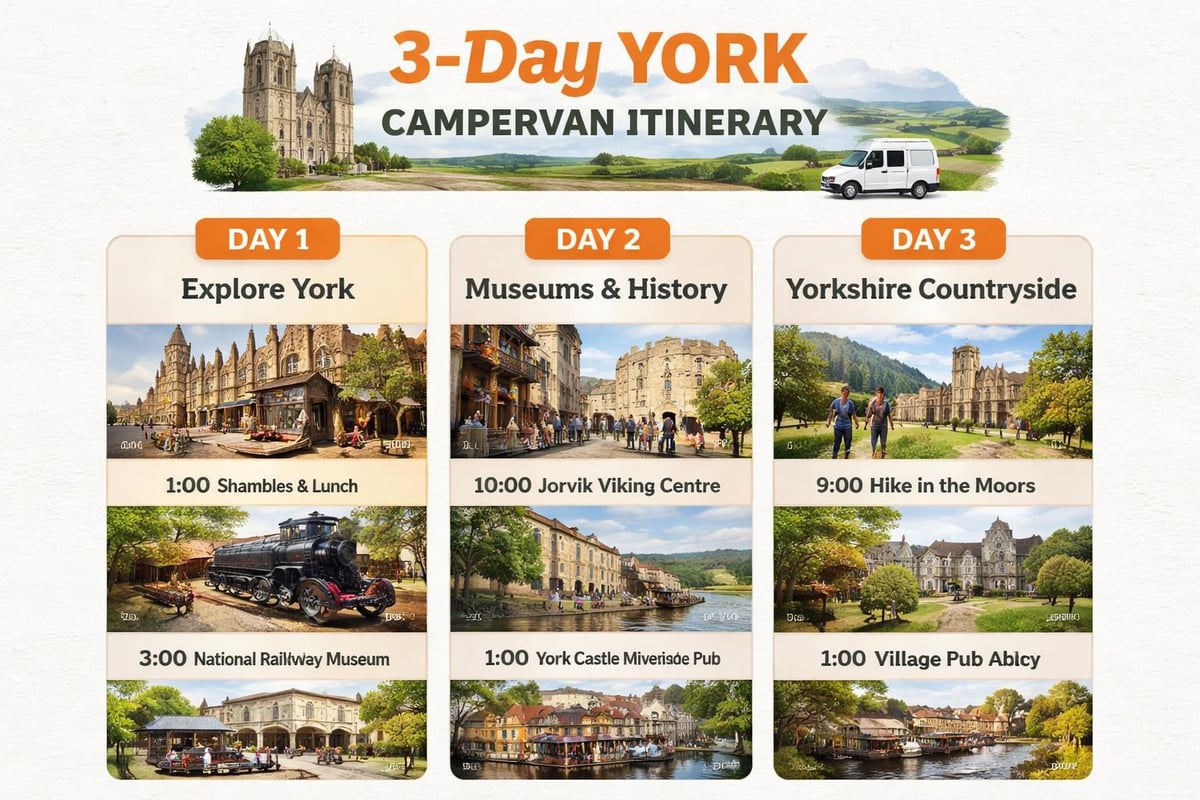
York presents different charms throughout the year, each season offering unique advantages for campervan travellers.
Spring (March-May) brings daffodils to the Museum Gardens and milder weather perfect for wall walks. Easter sees increased visitor numbers but also special events and markets.
Summer (June-August) offers the longest days and warmest weather, though parking becomes more competitive. Book campsites well in advance during school holidays.
Autumn (September-November) provides spectacular foliage and fewer crowds. The York Food Festival in September attracts food enthusiasts from across the country.
Winter (December-February) transforms York into a festive wonderland, with Christmas markets and ice skating. Campervan heating becomes essential, but the atmospheric city compensates for colder temperatures.
Finding suitable overnight accommodation represents a priority for york campervan travellers. Several excellent campsites within easy reach of the city provide the facilities you need whilst maintaining convenient access to attractions.
York's surrounding area hosts numerous campsites catering specifically to motorhomes and campervans. Facilities range from basic overnight stops to full-service holiday parks with extensive amenities.
When selecting your base, consider distance from York, available facilities, and your planned activities. Sites within five miles offer the best balance between accessibility and peaceful surroundings.
Whilst wild camping holds appeal for many campervan enthusiasts, York's popularity and urban setting make it inappropriate for overnight stays in unofficial locations. Responsible travel means using designated facilities, supporting local businesses, and respecting residential areas.
Responsible overnight parking guidelines:
Using York as your central hub opens up incredible opportunities to explore wider Yorkshire. The strategic location provides easy access to both coast and countryside, making it ideal for varied day trips.
The North Yorkshire Moors National Park lies approximately 45 minutes north, offering dramatic moorland landscapes and charming villages like Helmsley and Hutton-le-Hole. Continue east to reach the stunning coastline at Whitby, Robin Hood's Bay, and Scarborough.
Coastal route highlights:
Heading west from York in your campervan brings you to the Yorkshire Dales National Park within an hour. This landscape of limestone valleys, waterfalls, and traditional villages offers endless exploration opportunities.
The Dales provide excellent walking, cycling, and photography opportunities. Popular destinations include Malham Cove, Aysgarth Falls, and the market towns of Skipton and Richmond. Each location offers parking suitable for campervans, though arrive early during peak season.
| Destination | Distance from York | Journey Time | Best For |
|---|---|---|---|
| Yorkshire Dales | 50 miles west | 1 hour | Walking, scenery |
| North York Moors | 35 miles north | 45 minutes | Moorland, villages |
| Whitby | 50 miles northeast | 1 hour 15 mins | Coast, history |
| Castle Howard | 15 miles northeast | 25 minutes | Stately home |
| Harrogate | 25 miles west | 40 minutes | Spa town, gardens |
Successful campervan adventures rely on careful preparation and local knowledge. These practical considerations ensure your york campervan experience runs smoothly from start to finish.
York's narrow medieval streets weren't designed for modern vehicles, making route planning essential. Before setting off, verify your campervan's height, width, and length. Many city centre streets have 7-foot height restrictions, and some areas prohibit vehicles over certain lengths.
Modern navigation apps often include height restriction warnings, but always check signage carefully. The park and ride approach eliminates stress by keeping your york campervan safely parked whilst you explore on foot or by bus.
Water and waste management:
Regular servicing points exist throughout North Yorkshire, though planning ahead prevents urgent needs. Many larger campsites offer motorhome service points for nominal fees, providing convenient solutions during your stay.
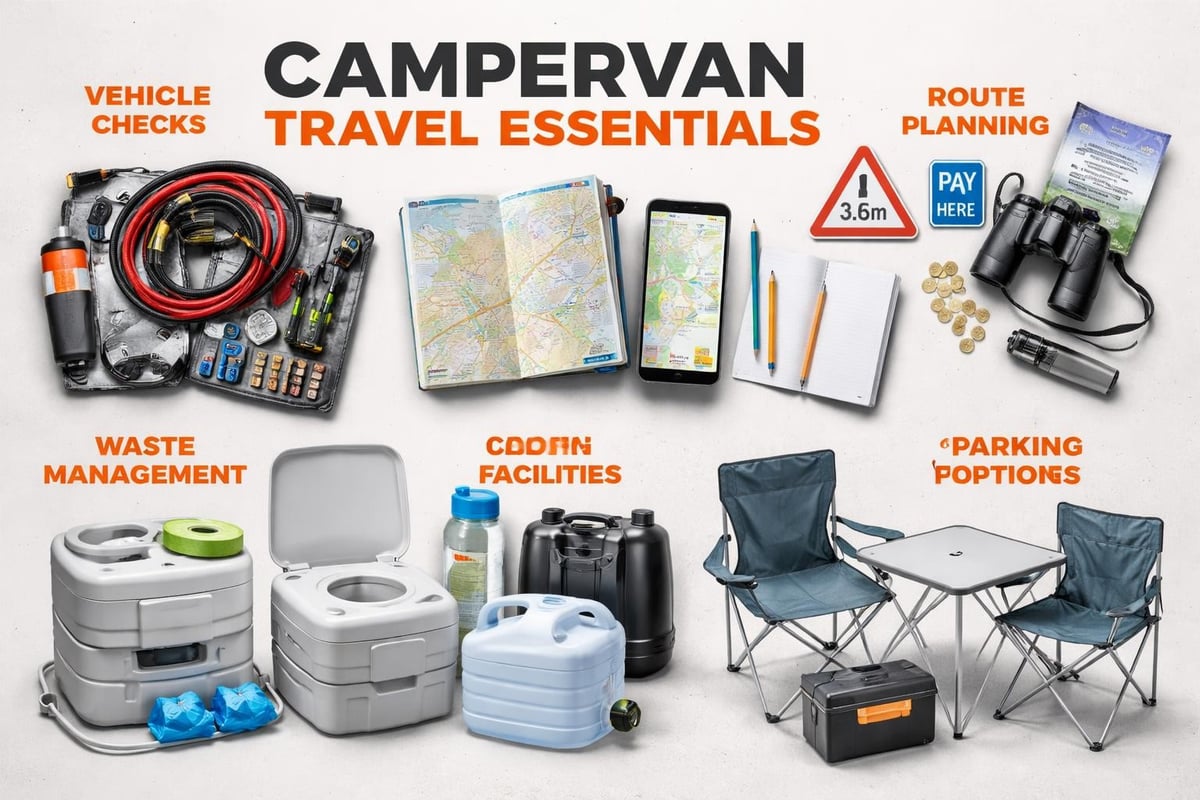
York offers excellent shopping opportunities for stocking your campervan kitchen. The city centre hosts regular markets selling fresh, local produce, whilst supermarkets on the outskirts provide convenient parking for larger vehicles.
Best provisioning locations:
Yorkshire weather famously changes quickly, requiring campervan travellers to prepare for all conditions regardless of season. Your york campervan adventure demands proper equipment and flexible planning.
Waterproof clothing remains essential throughout the year. Even summer days can bring unexpected showers, whilst winter visits definitely require warm, weather-resistant gear. Layering provides the best approach to Yorkshire's changeable climate.
Recommended equipment:
When weather disrupts outdoor plans, York's excellent indoor attractions provide perfect alternatives. Museums, historic buildings, and shopping centres offer shelter whilst maintaining your holiday enjoyment.
Monitor weather forecasts throughout your stay, adjusting plans accordingly. The flexibility of campervan travel means you can easily modify itineraries, taking advantage of sunny spells or finding indoor entertainment during rain.
Yorkshire's renowned food scene adds another dimension to your york campervan adventure. From traditional Yorkshire puddings to modern farm-to-table restaurants, the region celebrates its culinary heritage.
No York visit completes without sampling proper Yorkshire pudding, ideally as part of Sunday lunch at a traditional pub. Betty's Tea Room represents a York institution, though expect queues during peak times. The Shambles Market offers street food representing cuisines from around the world.
Must-try local specialities:
Many campervan travellers enjoy cooking in their vehicles, and York's markets provide perfect ingredients. Local butchers, bakers, and greengrocers supply everything needed for memorable meals enjoyed at scenic camping spots.
York's restaurant scene caters to all tastes and budgets. From Michelin-starred establishments to cosy bistros, the city offers exceptional dining experiences. Booking ahead is recommended, especially during weekends and holiday periods.
The riverside area provides numerous eateries with outdoor seating during warmer months. Evening meals here combine excellent food with beautiful views across the Ouse, creating memorable holiday moments.
York's welcoming atmosphere extends to visiting campervan travellers. Understanding local customs and connecting respectfully with residents enhances your experience whilst supporting the community.
Choose independent shops, cafes, and restaurants when possible, supporting York's vibrant business community. Farmers' markets connect you directly with local producers, offering authentic Yorkshire products whilst contributing to the regional economy.
Many campsites are family-run operations where friendly owners share insider knowledge about the area. These conversations often reveal hidden gems missed by standard guidebooks, enriching your york campervan adventure with authentic local experiences.
York's popularity brings challenges including congestion and environmental pressure. Responsible campervan travellers minimize their impact whilst maximizing positive contributions.
Sustainable travel practices:
If you're based in West Yorkshire and considering a york campervan adventure, starting your journey from Leeds provides convenient access. Camper van hire in Huddersfield and surrounding areas offers excellent options for exploring Yorkshire's attractions whilst maintaining the flexibility to explore at your own pace.
Maximizing your york campervan experience involves balancing planned activities with spontaneous discoveries. Leave room in your itinerary for unexpected finds, whether that's a charming cafe, interesting shop, or scenic viewpoint.
York provides countless photographic opportunities. Early morning light on York Minster creates stunning images, whilst evening shots along the river capture the city's romantic atmosphere. The surrounding countryside offers landscape photography possibilities throughout the seasons.
Best photography locations:
Your york campervan adventure creates memories extending beyond sightseeing. Evening meals cooked at scenic campsites, spontaneous conversations with fellow travellers, and the freedom to explore at your own pace all contribute to an unforgettable experience.
Keep a travel journal documenting your journey, noting favourite locations, memorable meals, and interesting discoveries. These records become treasured reminders of your Yorkshire adventure, inspiring future travels and helping you share recommendations with fellow enthusiasts.
Thorough preparation ensures your york campervan journey begins smoothly and continues without unnecessary complications. Checking these final details before departure prevents common issues and enhances overall enjoyment.
Verify your campervan's roadworthiness before setting off. Check tyre pressures, fluid levels, lights, and brakes. Ensure you carry all necessary documentation including insurance, breakdown cover details, and campsite booking confirmations.
Pre-departure checklist:
Whilst spontaneity appeals to many campervan travellers, booking at least your first night's accommodation provides peace of mind. Popular sites near York fill quickly, especially during summer months and holiday periods. Advance booking guarantees a spot whilst allowing flexibility for subsequent nights.
Consider booking directly with campsites rather than through third-party platforms. This often secures better rates whilst supporting site owners directly. Many campsite operators share valuable local knowledge when you book, enhancing your planning with insider tips.
Planning a york campervan adventure combines historical exploration with the freedom of mobile travel, creating an unforgettable Yorkshire experience. Understanding parking regulations, choosing suitable campsites, and balancing city attractions with countryside exploration ensures you make the most of this remarkable region. Whether you're visiting York's magnificent medieval centre or venturing into the surrounding Dales and Moors, campervan travel provides the perfect way to discover Yorkshire's diverse attractions at your own pace. The Camper Co offers a comprehensive range of campervans and motorhomes from their Leeds base, providing everything you need for exploring York and the wider Yorkshire region with comfort, flexibility, and complete freedom.
The world of mobile travel has evolved dramatically over recent years, with discerning adventurers seeking comfort without compromising on freedom. A luxury converted van represents the pinnacle of this evolution, combining high-end amenities with the versatility of life on the road. Whether you're planning weekend escapes across Yorkshire's stunning landscapes or extended tours through Scotland's highlands, understanding what makes these vehicles special can transform your entire travel experience.
A luxury converted van goes far beyond basic camping facilities. These sophisticated vehicles incorporate premium materials, cutting-edge technology, and thoughtful design principles that rival boutique hotel accommodations.
The distinction starts with build quality. Where standard conversions might use laminate surfaces and basic fixtures, luxury versions feature solid wood cabinetry, stone countertops, and designer lighting systems. Every element is carefully selected for both aesthetics and durability.
Key features that distinguish luxury conversions include:
The luxury van market continues to evolve, with manufacturers and conversion specialists incorporating sustainable materials and modular designs that adapt to different travel scenarios.
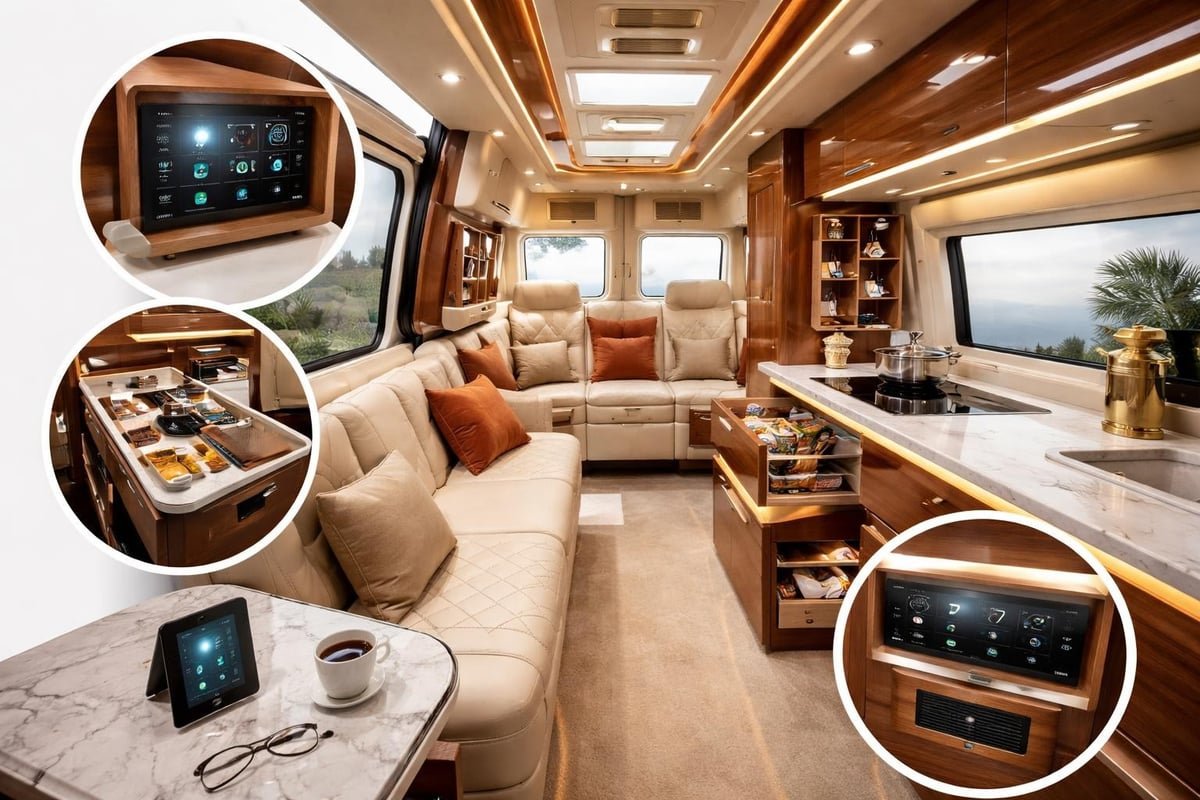
Designing the perfect luxury converted van involves careful consideration of how you'll actually use the space. Modern conversions offer remarkable flexibility through innovative layout solutions.
Fixed layouts provide stability and often allow for larger furniture pieces. These work brilliantly for couples or small families who prioritize comfort over maximum sleeping capacity. A fixed rear bed with premium mattress, complemented by a spacious lounge area, creates a genuine home-from-home feel.
Convertible layouts maximize versatility. During the day, you enjoy a generous seating area with dining table. Come evening, the space transforms into sleeping quarters. The best luxury conversions make this transformation effortless through gas-strut mechanisms and precision engineering.
| Layout Type | Best For | Key Advantages | Considerations |
|---|---|---|---|
| Fixed Rear Bed | Couples, frequent travelers | Permanent sleeping area, larger bed options | Reduced living space |
| Rock and Roll Bed | Families, day use priority | Maximum daytime space | Less comfortable than fixed bed |
| Elevating Roof Bed | Additional capacity | Extra sleeping without floor space | Requires pop-top roof |
| L-Shaped Lounge | Social gatherings | Spacious seating, converts to double bed | Complex conversion mechanism |
The kitchen area in a luxury converted van deserves particular attention, as it's where you'll prepare meals and gather throughout your journey. High-end conversions treat this space with the respect of a professional galley.
Expect to find dual-fuel hobs that operate on both gas and electric, giving you options whether you're on hookup or wild camping. Compressor refrigerators with freezer compartments maintain consistent temperatures far more effectively than absorption models, crucial for longer trips.
Luxury kitchen specifications typically include:
Water systems in premium conversions often feature larger tanks (100+ litres fresh water) with sophisticated monitoring systems. Some incorporate water filtration, allowing you to drink directly from the tap rather than relying on bottled water.
Luxury doesn't mean sacrificing cleanliness or comfort. Premium conversions dedicate serious thought to bathroom facilities, often incorporating full wet rooms that feel genuinely spacious.
The finest luxury converted van bathrooms feature porcelain toilets with ceramic basins, thermostatic shower mixers that maintain consistent temperature, and clever ventilation systems that prevent condensation issues. Heated towel rails, backlit mirrors, and quality fixtures create an environment that feels nothing like "roughing it."
Space management is crucial. Sliding doors save room compared to hinged alternatives, whilst wall-mounted storage keeps essentials organized without cluttering surfaces. Some conversions incorporate fold-away sinks or compact combination units that integrate toilet, sink, and shower within minimal footprint.
Today's luxury converted van is essentially a smart home on wheels. Technology integration has reached sophisticated levels, controlled through smartphone apps or wall-mounted touchscreens.
Smart technology integration allows you to monitor and control multiple systems simultaneously. Check your battery levels, adjust heating, control lighting, and monitor water tanks from a single interface.
Entertainment systems in luxury conversions rival home setups. Expect integrated sound systems with multiple speakers, smart TVs that connect to mobile data, and even satellite systems for those who refuse to miss important broadcasts whilst traveling.
Climate control extends beyond basic heating. Premium conversions often feature:
Power systems deserve special mention. Luxury conversions typically feature substantial lithium battery banks (300Ah+), high-output solar panels, and inverters capable of running mains appliances. This electrical independence means you can enjoy all modern conveniences whilst exploring remote locations.
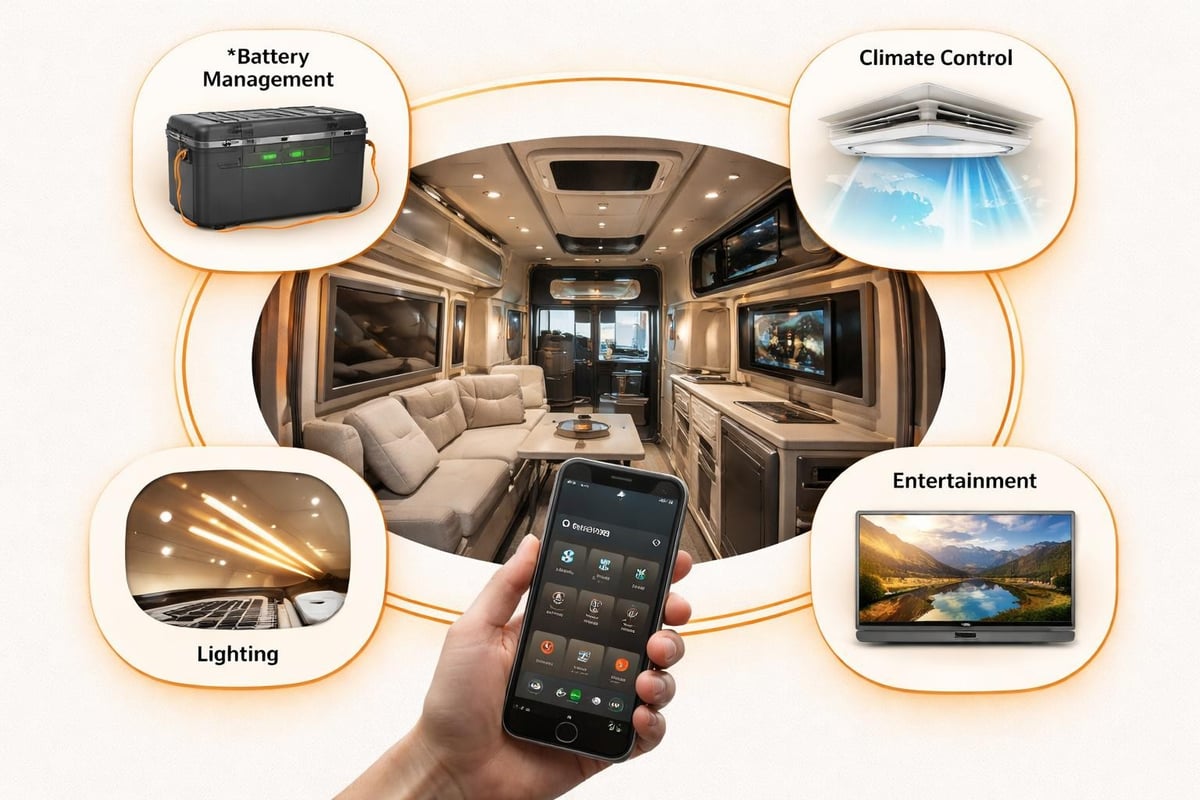
The living area in a luxury converted van should feel genuinely relaxing, somewhere you'd happily spend entire evenings rather than merely tolerate. Premium conversions achieve this through careful furniture selection and space planning.
Captain's chairs in the cab often swivel to face rearward, integrating with the living space. In luxury conversions, these aren't basic seats but heated, ventilated thrones with lumbar support and multiple adjustment points. Some feature massage functions for those long driving days.
Rear seating demands equal attention. The best conversions use furniture-grade foam with supportive cushioning, upholstered in materials that balance durability with comfort. Consider how seating converts to beds, ensuring the mechanism is smooth and the resulting sleeping surface genuinely comfortable.
Luxury means never compromising on what you can bring. Sophisticated storage systems in premium conversions maximize every centimeter whilst keeping belongings accessible and organized.
Overhead lockers benefit from soft-close mechanisms and interior lighting. Internal organization systems with adjustable dividers prevent items shifting during travel. Some luxury conversions incorporate wardrobe spaces with hanging rails, something rarely seen in standard builds.
External storage matters equally. Garage areas beneath rear beds swallow substantial luggage, outdoor equipment, or even bicycles. The finest conversions include removable boxes or drawers within these spaces, making it simple to extract what you need without unpacking everything.
| Storage Area | Typical Capacity | Best Uses | Premium Features |
|---|---|---|---|
| Overhead Lockers | 200-400 litres | Clothing, dry goods | Soft-close, LED lighting |
| Under-seat | 100-200 litres | Shoes, accessories | Drawer systems |
| Rear Garage | 400-800 litres | Outdoor gear, cases | Removable boxes, tie-down points |
| Kitchen Drawers | 50-100 litres | Cooking equipment | Full extension, dividers |
Yorkshire's weather demands serious insulation, and luxury converted van specifications reflect this necessity. Premium conversions don't just meet basic standards but exceed them substantially.
Multi-layer insulation systems combine different materials for optimal performance. Closed-cell foam provides excellent thermal properties whilst managing moisture. Acoustic insulation reduces road noise, creating a peaceful interior environment. Thermal barriers behind wall panels prevent cold bridging through the vehicle's metal frame.
Windows receive particular attention. Double-glazed units with thermal breaks dramatically reduce heat loss compared to single-pane alternatives. Some luxury conversions incorporate heated windscreens and cab windows, preventing condensation whilst maintaining visibility.
The growing popularity of sustainable innovations means modern luxury conversions increasingly feature eco-friendly insulation materials derived from recycled or natural sources, without compromising thermal performance.
When considering a luxury converted van, you'll face a fundamental choice between purchasing a professionally converted vehicle or commissioning a custom build. Each approach offers distinct advantages.
Professional conversions from established specialists deliver reliability and warranty coverage. These companies understand regulatory requirements, safety standards, and proven design principles. Their experience shows in details you might overlook, from wiring looms to weight distribution.
Benefits of professional conversions include:
Custom builds allow complete personalization. Working with conversion specialists, you specify every detail from layout to light switches. This route suits those with specific requirements or wanting unique features unavailable in standard builds.
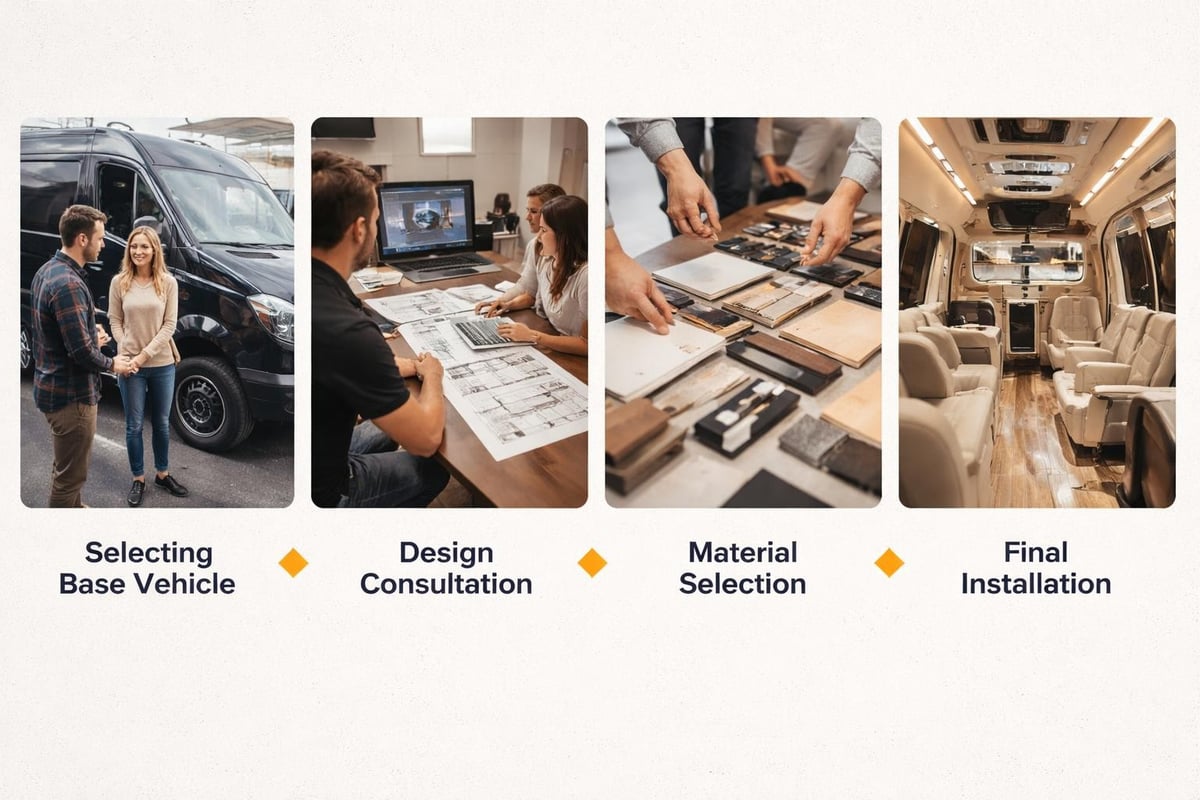
A luxury converted van represents substantial investment, with prices ranging from £50,000 to well over £100,000 depending on specifications and base vehicle. Understanding this investment helps make informed decisions.
Base vehicle selection significantly impacts costs. Mercedes Sprinter, Volkswagen Crafter, and Ford Transit form popular foundations, each offering different characteristics. Newer Euro 6 engines provide better emissions compliance and often improved fuel economy, important for both running costs and future-proofing against emission zone restrictions.
Conversion quality varies enormously. Premium materials and craftsmanship command higher prices but deliver superior longevity and user experience. Cutting corners on build quality might save initially but often costs more through repairs and reduced enjoyment.
The beauty of a luxury converted van lies in its versatility for exploring Britain's diverse landscapes. Unlike larger motorhomes, these vehicles navigate standard parking spaces and narrow country lanes whilst still providing premium accommodation.
Yorkshire alone offers endless exploration opportunities. Park up in Whitby and enjoy fresh seafood whilst overlooking the harbour. Explore the Yorkshire Dales with a comfortable base that moves with you. Access remote locations larger vehicles simply cannot reach.
Length restrictions affect where you can travel. Most luxury van conversions measure under 6 metres, allowing access to car parks and ferry services without length supplements. This practicality extends your travel options considerably.
Fuel economy matters for regular use. Modern luxury converted vans typically achieve 30-35 mpg, far superior to larger motorhomes. Combined with lower ferry costs and easier parking, the running costs remain surprisingly manageable despite the initial investment.
Proper insulation and heating systems mean a luxury converted van serves you year-round, not just during summer months. Winter camping in Scotland becomes genuinely appealing when you're warm, dry, and comfortable.
Four-season capability requires specific features beyond basic heating. Condensation management through effective ventilation prevents moisture buildup. Heated water systems stop tanks freezing. Triple-glazed windows in extreme builds provide additional thermal protection.
Summer travel benefits equally from quality conversion work. Roof vents, ideally with integrated fans, maintain air circulation. Tinted windows reduce solar gain. Some luxury conversions incorporate air conditioning, though this adds weight and complexity.
Investing in a luxury converted van makes sense only if properly maintained. Quality conversions actually simplify maintenance through accessible service points and quality components.
Regular checks should cover both the base vehicle and conversion elements. Engine servicing follows manufacturer schedules. Conversion-specific maintenance includes:
Many luxury conversion specialists offer servicing packages, familiar with their own work and able to source replacement parts efficiently. This ongoing relationship proves valuable for warranty claims and upgrade possibilities.
Professional storage during extended non-use periods protects your investment. Indoor storage prevents weather damage and reduces security concerns. If storing at home, covers designed specifically for campervans protect paint and prevent moisture accumulation.
Understanding the regulatory environment ensures your luxury converted van remains road-legal and properly insured. Recent changes to motorhome taxation and emissions zones affect how you use your vehicle.
Vehicle classification matters significantly. Proper conversion should result in your V5C document showing "motor caravan" as the body type. This classification affects taxation, insurance premiums, and access to certain areas. Converting vehicles requires specific criteria meeting DVLA standards, including proper sleeping accommodation, cooking facilities, and storage.
Insurance for luxury conversions requires specialist policies. Standard van insurance won't cover conversion value or provide appropriate liability coverage. Specialist motorhome insurers understand these vehicles and offer policies reflecting their true value and use.
Emissions compliance increasingly affects urban access. London's Ultra Low Emission Zone and similar schemes in other cities restrict older vehicles. Choosing Euro 6 compliant base vehicles ensures widest access and future-proofs against tightening regulations.
The van life experience transforms completely in a luxury setting. What might feel like camping in a basic conversion becomes genuinely comfortable living in a premium build.
Daily routines become pleasurable rather than challenging. Making morning coffee in a well-equipped kitchen with proper worktop space differs enormously from balancing a camping stove. Showering in a spacious wet room rather than campsite facilities changes how you feel about extended trips.
Working remotely becomes genuinely viable. Proper desk space, comfortable seating, and reliable power systems support laptop work. Some luxury conversions incorporate dedicated office areas, acknowledging that many owners work whilst traveling.
Social aspects improve with quality conversions. Entertaining friends in a beautiful interior with proper seating and dining space creates memorable experiences. You'll find yourself choosing to spend evenings in your van rather than seeking alternative accommodation.
Your first trip in a luxury converted van should showcase its capabilities whilst allowing you to familiarize yourself with systems and features. Yorkshire provides perfect territory for this inaugural adventure.
Start with a weekend journey to accessible locations. The North York Moors offer stunning scenery with good facilities for newcomers. Practice setting up in campsites before attempting wild camping, learning how systems work with hookup available.
Plan routes considering your vehicle's dimensions. Whilst luxury vans navigate most roads, extremely narrow lanes or height-restricted areas need avoiding. Sat-nav systems designed for motorhomes account for these limitations.
Various van conversion ideas and designs demonstrate how different layouts suit different travel styles. Experience will teach you how your specific conversion works best, whether maximizing social space or prioritizing sleeping comfort.
Test all systems early in your trip. Understanding how everything works before you need it prevents frustration. Learn your fresh water consumption rate, how quickly batteries deplete, and heating system operation. This knowledge builds confidence for more ambitious adventures.
A luxury converted van opens remarkable possibilities for exploring the UK in genuine comfort, combining boutique accommodation quality with the freedom to travel wherever inspiration takes you. Whether you're planning weekend escapes across Yorkshire's dramatic landscapes or extended tours through Britain's most beautiful regions, experiencing this style of travel in a premium vehicle transforms the entire adventure. The Camper Co offers expertly maintained campervans and motorhomes for hire throughout Leeds and West Yorkshire, providing the perfect opportunity to experience the luxury van lifestyle before committing to ownership, with a diverse fleet catering to everyone from couples seeking cozy weekend breaks to families planning extensive touring holidays.


